
Laser Dentistry — What It Is Genuinely Better At
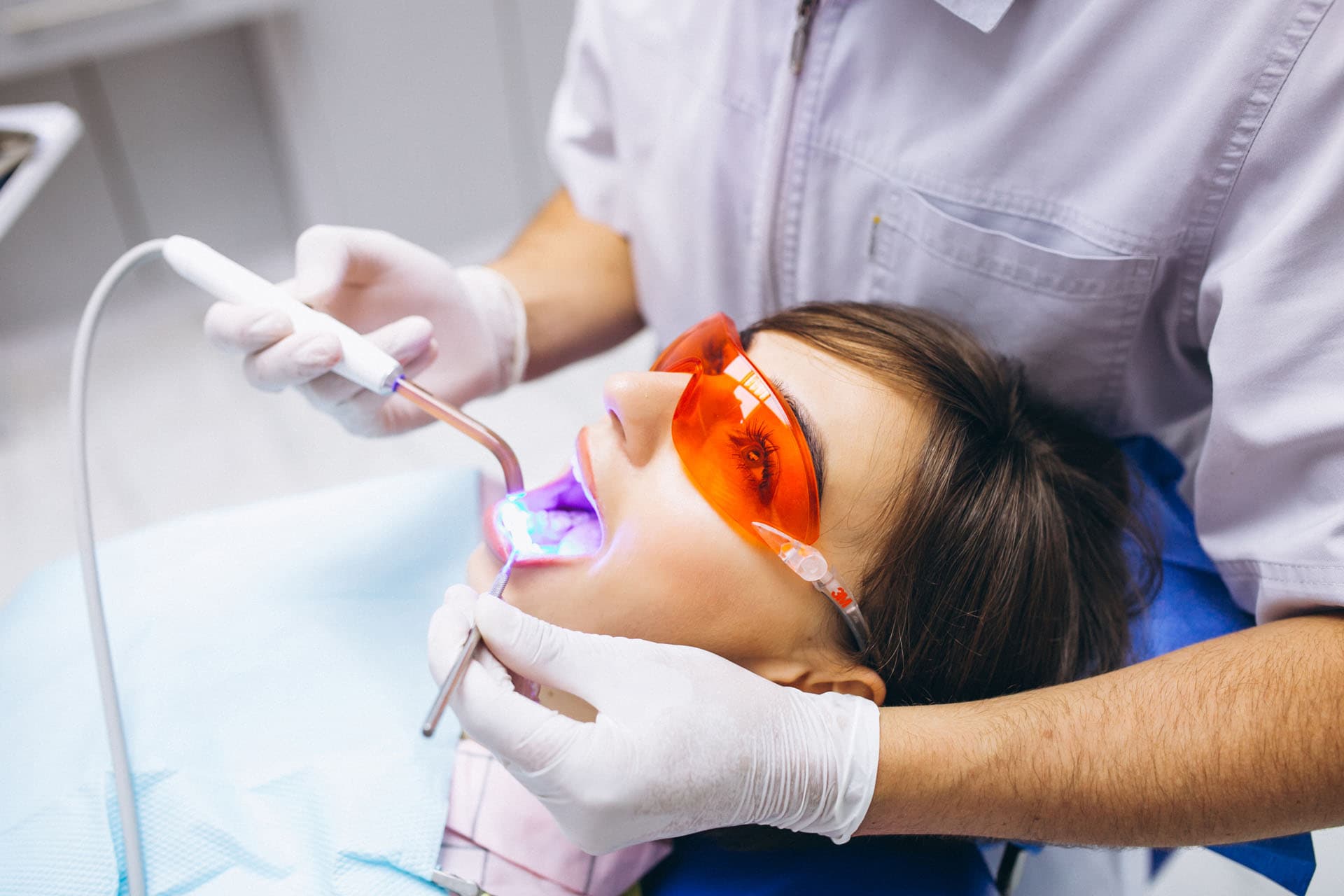
"Laser dentistry" is often presented as dentistry's next generation, which makes it sound like the drill is on its way out. It is not, and framing it that way makes the technology harder to judge rather than easier. A dental laser is an instrument with a specific set of things it does better than the alternative, a set of things it does about as well, and a set of things it cannot do at all. Knowing which list your procedure falls on is the whole of it.
There is no such thing as "a laser"
The first thing worth knowing is that dental lasers are not one device. They are grouped by what their wavelength is absorbed by.
Soft-tissue lasers — diode and Nd:YAG types — are absorbed by pigment and water in gum tissue. They cut and coagulate soft tissue well and are useless on enamel.
Hard-tissue lasers — the erbium family — are absorbed by water and the mineral in tooth structure, so they can work on enamel and dentine as well as on gum.
A clinic with a soft-tissue diode cannot do laser cavity preparation with it, whatever the brochure says. If a hard-tissue application is being proposed, it is entirely reasonable to ask which type of laser is in the room.
Where the laser genuinely wins
Soft-tissue surgery. This is the strongest case, and it is not close. Gum contouring, removing a small lesion, releasing a tongue-tie, exposing a tooth, reshaping tissue before a crown — a laser cuts and seals simultaneously. In practice that means a nearly bloodless field, which lets the dentist see what they are doing, and often no sutures at all. For gum reshaping in cosmetic work the improved visibility directly improves the result.
Bleeding control. Sealing small vessels as it works matters most in patients who bleed more readily — and it makes many soft-tissue procedures possible without the packing and sutures that used to follow them.
Reduced need for anaesthetic in some minor soft-tissue work, which is a genuine benefit for people whose dental anxiety is largely about the injection.
Comfort afterwards. Less tissue trauma tends to mean less swelling and less post-operative painkilling. This is one of the more consistent patient-reported differences.
Where it is a reasonable alternative, not a clear win
Gum disease treatment. Laser-assisted periodontal therapy is used as an adjunct — alongside thorough scaling and root planing, which remains the foundation of periodontal treatment. The laser can help decontaminate the pocket and remove diseased tissue. It does not replace the mechanical removal of deposit below the gum, and the evidence for how much it adds is more mixed than marketing tends to suggest. Offered as an addition to a proper periodontal plan it is sensible. Offered instead of one, it is not.
Removing decay. Erbium lasers can prepare cavities with very conservative removal of healthy structure, and often with less of the vibration and noise that people dread. It is slower for large cavities, and for some restorations the surface a drill leaves is better suited to bonding the filling.
Whitening. Light-activated whitening is common. Most of the shade change comes from the gel; how much the light adds is debated.
Where it does not apply
Lasers do not place fillings, fit crowns, do root canals end to end, move teeth, or replace surgical extraction of an impacted tooth. If a treatment plan reads as though a laser is doing all of your dentistry, that is a marketing document.
The questions worth asking
- Which laser, and what is it for? Soft or hard tissue, and does that match the procedure being proposed?
- What training does the operator have on this specific device? Laser dentistry is safe in trained hands and the training is device-specific. This is a normal question with a real answer.
- What is the conventional alternative, and what does it cost? Laser procedures often carry a premium. Sometimes it buys a materially better experience; sometimes it buys very little.
- Are eye protection and the safety protocol standard here? Everyone in the room, including you, should be wearing it.
The honest position
A dental laser is excellent at soft-tissue work, useful as an adjunct in periodontal treatment, situationally good for conservative decay removal, and irrelevant to a large amount of routine dentistry. That is a genuinely positive assessment — it just is not the one the word "future" implies.
If you have been told you need gum treatment or a soft-tissue procedure, ask whether a laser approach suits your case and what the trade-offs are. Sometimes the honest answer will be that the conventional technique is better for what you need, and a clinic willing to say so is the one to trust with the times a laser really is the right tool. Book an examination at Indiranagar or Bellandur.