
Q-Switch Laser in Bangalore
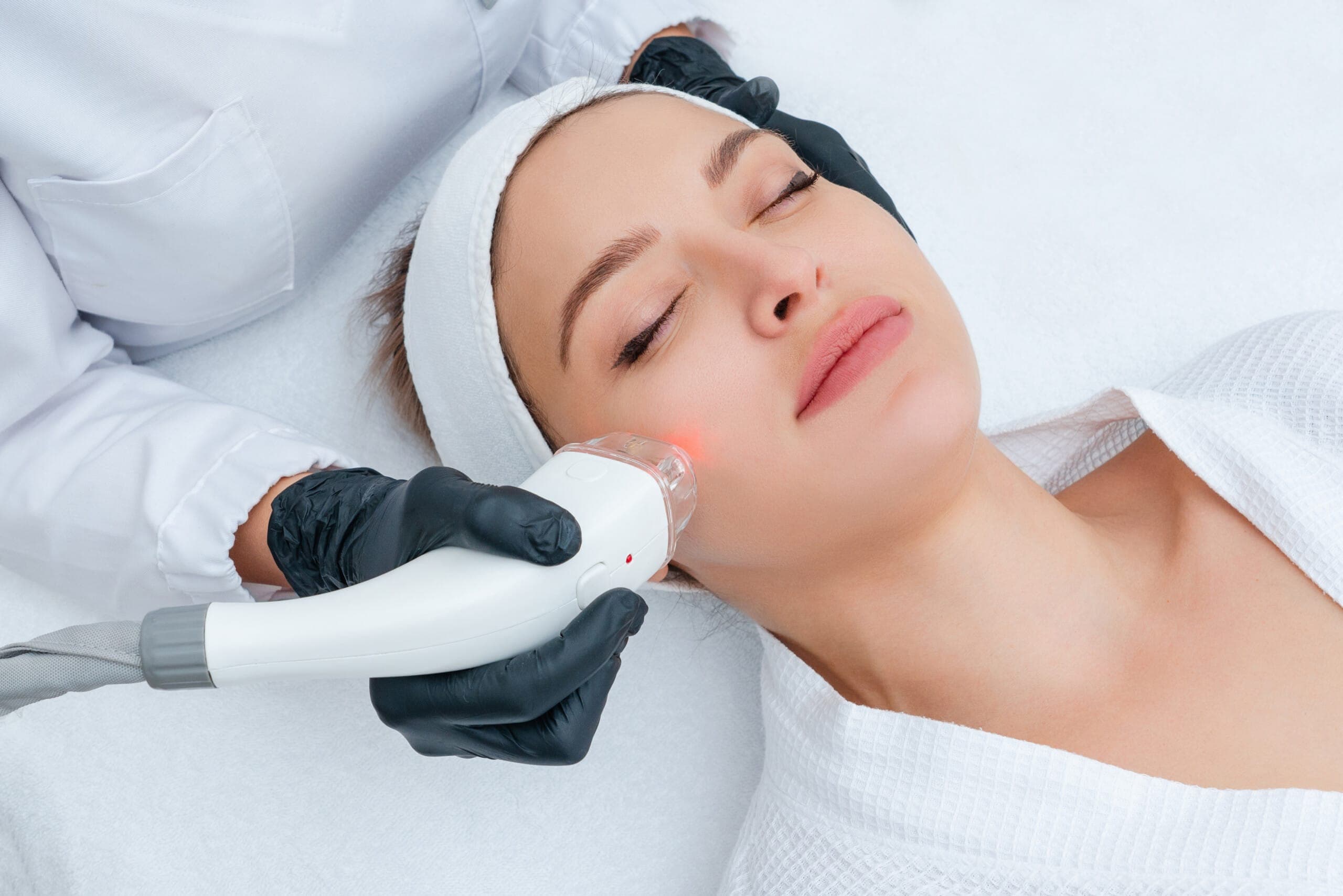
The Q-Switch laser delivers extremely short, high-energy pulses that shatter unwanted pigment into particles small enough for the body to clear, while leaving the surrounding skin intact. It is used for freckles, sun spots, acne marks, melasma, laser toning and tattoo removal.
Is this you?
What it does for you
Targets pigment, not skin
The pulse is short enough to shatter pigment particles while surrounding tissue barely heats, which is what makes it usable on deeper skin tones that burn easily with other lasers.
Works on deep as well as surface pigmentation
Melasma and dermal pigment sit below the level a peel can reach. Q-Switch energy penetrates to that layer, which is why it is a mainstay for stubborn pigmentation.
Effective on tattoo ink
The same mechanism breaks up tattoo pigment into fragments the immune system carries away, over a course of sessions.
No downtime
There is nothing to recover from on the day. Most patients go straight back to work, with the treated skin settling fully over about a week.
Clears acne marks and birthmarks
Flat, pigmented post-acne marks and many birthmarks respond well, often where topical depigmenting agents alone have plateaued.
Performed in a sterile clinical setting
Sessions are carried out by a doctor with eye protection and controlled energy settings, and the plan is adjusted between visits based on how your skin responded.
How the treatment works
Pigment assessment
Your doctor identifies what the pigmentation actually is — sun damage, melasma, post-inflammatory marks — since the cause decides the settings and the number of sessions.
Preparation
Exfoliants, bleaching creams and retinoids are stopped three days ahead and sun exposure avoided for two weeks, so the skin is in a safe baseline state.
The laser session
With eye shields in place, short high-energy pulses are passed over the area, breaking pigment into particles small enough for the body to clear.
Clearance and review
Fragmented pigment is removed by your immune system over the following weeks. Sessions are spaced to allow that, and your doctor reviews the response before each one.
Side effects, honestly
Most patients experience none of these. Some patients, in rare cases, may notice the following — listed because you deserve the full picture before you decide.
Redness and temporary darkening
Treated pigment often looks darker before it lifts, and mild redness is common. Both settle over roughly a week. This is expected, not a sign the treatment has gone wrong.
Sun sensitivity and rebound pigmentation
Sun exposure after a session is the main cause of pigmentation returning or worsening. Daily SPF 50 and avoiding direct sun for a week are not optional parts of the plan.
Melasma needs realistic expectations
Melasma is a chronic, relapsing condition. Laser toning manages it well, but maintenance and topical treatment are usually part of holding the result long term.
When it should not be done
Active bacterial, fungal or viral skin infection including herpes simplex, psoriasis in the area, skin cancer, and pregnancy or breastfeeding all rule out treatment for now.
About this treatment
Q-Switching refers to how the laser stores and releases energy: it holds the pulse back until it can be fired in billionths of a second. That matters clinically, because pigment absorbs the energy and shatters before the surrounding skin has time to heat up. Longer pulses would burn — which is exactly the problem with using the wrong laser on deeper skin.
That property makes the Q-Switch laser the workhorse for pigment on Indian skin. Freckles, sun spots, flat post-acne marks and birthmarks sit at the surface; melasma and dermal pigment sit deeper than a peel can reach. Tattoo ink is the same problem in a different form, which is why one device handles both.
None of it happens in a single visit. The laser only fragments the pigment; it is your immune system that carries the fragments away, over the following weeks. Around six sessions is typical for pigmentation, more for tattoos, and the single biggest predictor of a disappointing result is sun exposure between them.
Questions patients ask
How many Q-Switch laser sessions will I need?
Is Q-Switch laser safe for Indian skin?
Does the treatment hurt?
Can a tattoo be removed completely?
How long does it take to heal?
How long before pigmentation fades?
Will the pigmentation come back?
Related at The Aesthetic Edge
Get a doctor's read before you decide anything
₹500 consultation, waived off against your treatment. Indiranagar or Bellandur — closed Wednesdays.
General information, not medical advice — your treatment is decided at an in-person consultation. Terms & Conditions