
Bridges & Crowns in Bangalore
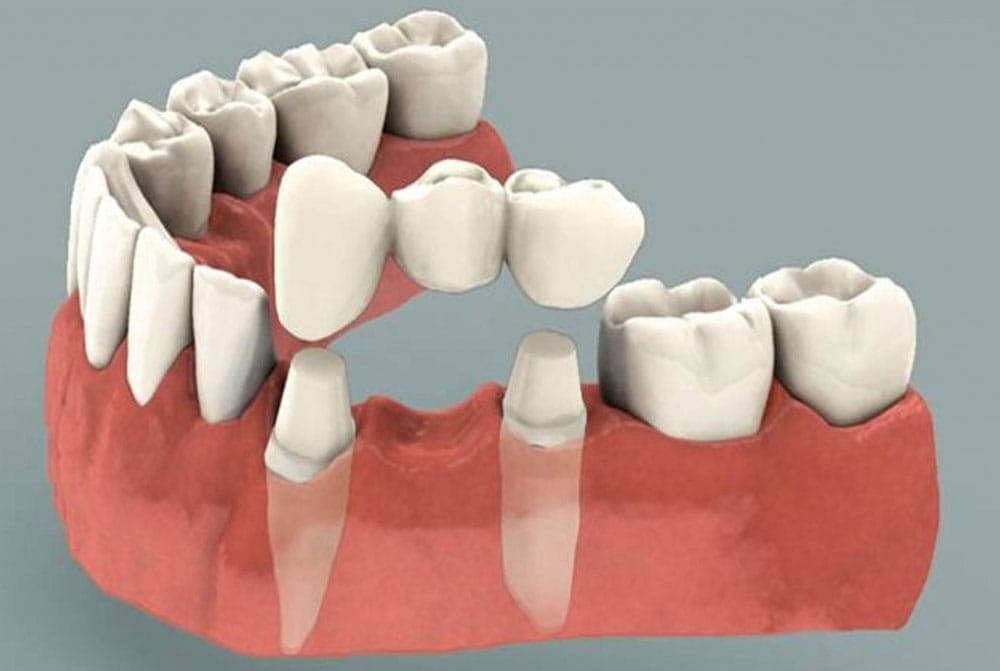
A crown is a cap fitted over a weakened, cracked or heavily filled tooth to restore its strength and shape. A bridge spans a gap left by a missing tooth, with the replacement tooth carried by crowns on the teeth either side. Both are custom-made to match your own teeth in shade and shape.
Is this you?
What it does for you
Restores biting and chewing
A crowned tooth takes full chewing load again, and a bridge lets you chew across a gap instead of avoiding that side of your mouth.
Protects a weakened tooth from splitting
A tooth that is cracked, heavily filled or root-treated is at real risk of fracturing. A crown holds it together and takes the force off the remaining tooth structure.
Matched to your own teeth
Shade, shape and size are chosen against the teeth on either side, so a well-made crown is difficult to pick out.
Stops neighbouring teeth drifting
Teeth move into an unfilled gap, and the opposing tooth over-erupts into it. Filling the space keeps the arch and the bite stable.
Spreads chewing forces evenly
Restoring a gap or a broken-down tooth returns the load to where it belongs instead of concentrating it on a few remaining teeth.
A fixed solution, not a removable one
Unlike a partial denture, a bridge is cemented in place. There is nothing to take out, and nothing to remember at night.
How the treatment works
Evaluation and planning
Examination and X-rays to confirm the tooth or supporting teeth can carry the restoration, then agreement on material and shade.
Preparation
The tooth is reshaped under local anaesthesia and an impression or digital scan is taken for the laboratory.
Temporary restoration
A temporary crown or bridge protects the prepared tooth and maintains appearance and function while the final one is made.
Fitting and review
The final restoration is tried in, adjusted for bite and contact, and cemented, with a review to confirm it has settled comfortably.
Side effects, honestly
Most patients experience none of these. Some patients, in rare cases, may notice the following — listed because you deserve the full picture before you decide.
Sensitivity after preparation
The prepared tooth is often sensitive to hot and cold while the temporary is in place, and briefly after final cementation. It usually settles.
Enamel removal is permanent
Preparing a tooth for a crown, and preparing the teeth either side for a bridge, removes tooth structure that does not grow back. Those teeth will always need a restoration afterwards.
A bridge involves healthy neighbours
If the teeth beside the gap are sound, a bridge means cutting into them. An implant avoids that, and is worth discussing before choosing.
Cleaning under a bridge takes technique
Plaque collects beneath the false tooth and cannot be reached by normal flossing. Without a threader or interdental brush the supporting teeth are at risk of decay and gum disease.
The temporary can come loose
Temporary crowns are cemented lightly on purpose. Avoid sticky and hard foods on that side, and contact the clinic if it comes off rather than waiting.
About this treatment
Body copy for the evergreen SEO page goes here.
Questions patients ask
What is the difference between a crown and a bridge?
How long do crowns and bridges last?
Will it look obvious?
Should I have a bridge or an implant?
How many appointments will I need?
How do I clean under a bridge?
Does getting a crown hurt?
Related at The Aesthetic Edge
Get a doctor's read before you decide anything
₹500 consultation, waived off against your treatment. Indiranagar or Bellandur — closed Wednesdays.
General information, not medical advice — your treatment is decided at an in-person consultation. Terms & Conditions