
Laser Hair Reduction in Bangalore
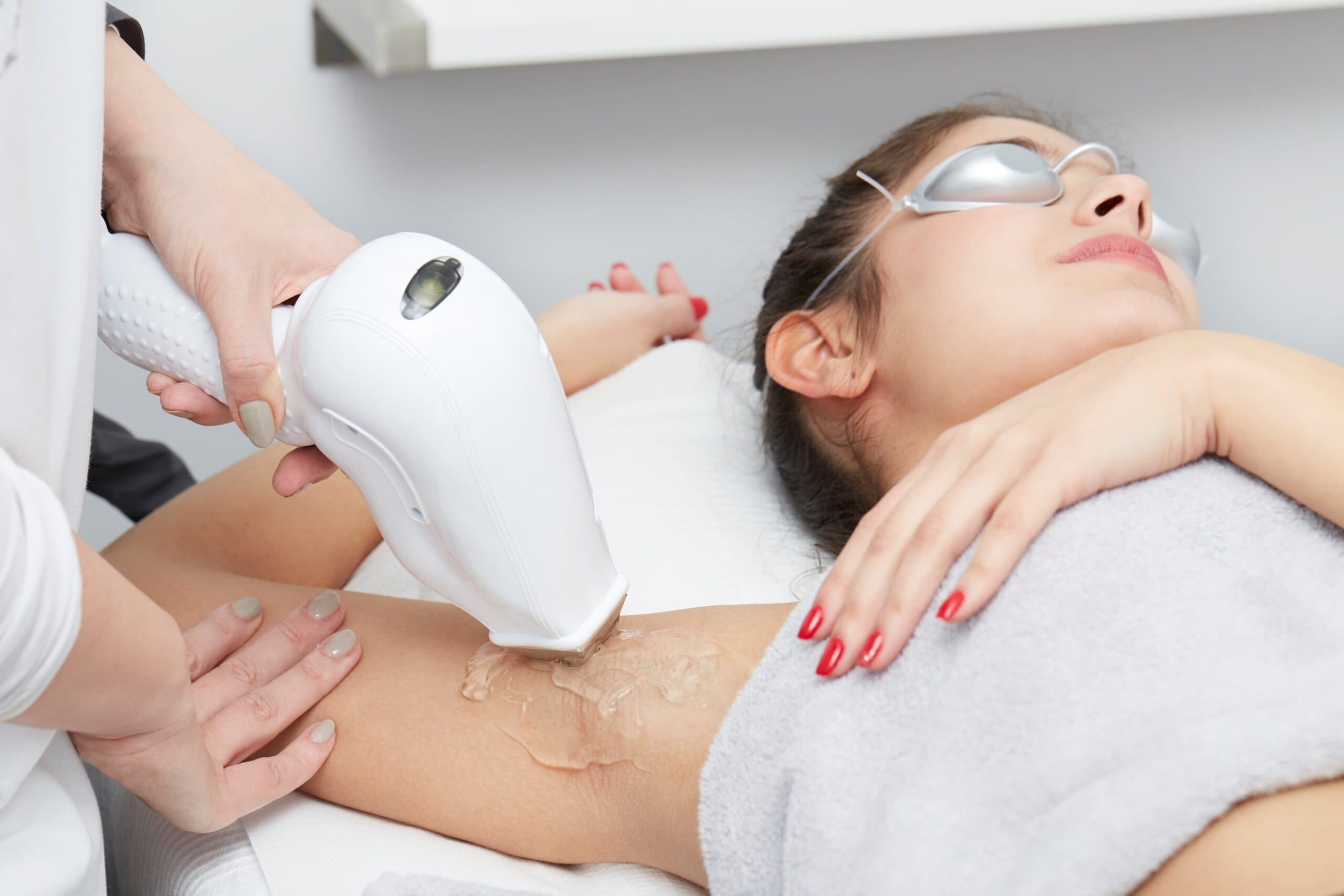
Laser hair reduction uses light absorbed by the pigment in the hair to disable the follicle at its root, so hair grows back finer and sparser with each session. We use FDA-approved diode laser technology, which is well suited to Indian skin tones.
Is this you?
Laser Hair Reduction — course price by area
- Upper lip, chin, brows or ears(each area)
- ₹1,499₹1,042save 30%
- Underarms or sidelocks(each area)
- ₹1,499₹1,042save 30%
- Half back
- ₹3,999₹2,792save 30%
- Face
- ₹4,999₹3,492save 30%
- Bikini
- ₹4,999₹3,492save 30%
- Full arms(underarms included)
- ₹4,999₹3,492save 30%
- Full back
- ₹5,999₹4,192save 30%
- Tummy
- ₹5,999₹4,192save 30%
- Full legs(upper lip included)
- ₹6,999₹4,892save 30%
- Full body
- ₹14,999₹8,334save 44%
What it does for you
Long-lasting reduction, not a weekly routine
A completed course leaves most patients with markedly less hair that grows back finer and lighter, replacing a repeating appointment with occasional maintenance.
No razor bumps or stubble
Because the follicle is treated rather than the hair cut at the surface, the burn and prickly regrowth that follow shaving do not return between sessions.
Fewer ingrown hairs
Ingrowns happen when hair curls back under the skin after waxing or shaving. Reducing the hair at the follicle is what stops the cycle.
Suited to Indian skin tones
Diode laser technology with integrated cooling is chosen specifically because it treats deeper skin more safely than older systems, which is the main historic risk with hair lasers.
Smoother skin between sessions
Skin is left smoother and less irritated than it is on a waxing cycle, with no scarring, blistering or the irritation that repeated waxing causes.
Sessions fit around a working day
Treatment is quick, needs no recovery time, and sensitivity typically settles within a day or two, so nothing has to be planned around.
The four steps, one at a time
A diagram of how the treatment works, step by step. Play it through, or jump to whichever part you want to understand.
1. Consultation and assessment
Your doctor checks skin tone, hair colour and thickness, reviews any medication or condition that affects suitability, and sets the course.
See the Treatment in Action
How the laser actually works, straight from the clinic's own channel.
It's All About the Machine
Why the laser you use matters
Side effects, honestly
Most patients experience none of these. Some patients, in rare cases, may notice the following — listed because you deserve the full picture before you decide.
Redness and sensitivity
The usual response, typically lasting a few hours to two days. A cold compress helps. Persistent redness or blistering should be reported to the clinic.
Sun sensitivity
Treated skin reacts more strongly to UV. Sun exposure before or after a session raises the risk of burns and pigmentation, so sunscreen and shade matter for the whole course.
Temporary pigment change
Occasional lightening or darkening of the treated area can occur, particularly on deeper skin tones, and usually settles. Correct settings for your skin type are what keep this uncommon.
When it is not suitable
Laser hair reduction is not recommended during pregnancy, or for people with vitiligo or other autoimmune skin conditions. Tell your doctor about either at consultation.
About this treatment
Laser hair reduction works on a simple principle: the pigment in a hair absorbs laser light far more readily than the surrounding skin does, so energy travels down the shaft and heats the follicle enough to disable it. The greater the contrast between hair and skin, the cleaner that targeting is — which is why older lasers struggled on deeper skin tones and why the diode systems used here, with integrated cooling, are the appropriate choice for Indian skin.
The part worth understanding before you book is why it takes a course. A follicle can only be disabled while it is in its active growth phase, and at any moment only a fraction of your hair is. Six to eight sessions, spaced out, is what it takes to catch each follicle in that window. It is also why "one session did nothing" is a misreading of how the treatment works rather than a sign it has failed.
And it is a reduction. Some follicles survive; some regrow later; hormonal changes can prompt new growth entirely. What a completed course reliably delivers is far less hair, growing back finer and lighter, with occasional maintenance instead of a permanent waxing appointment. Any clinic promising total permanent removal is overstating what the technology does.
Questions patients ask
Is laser hair removal permanent?
How many sessions will I need?
Does laser hair reduction hurt?
Is it safe?
When will I see results?
Which areas can be treated?
Can I wax between sessions?
Is it safe on Indian and deeper skin tones?
Can laser treat facial hair on the upper lip and chin?
How much does laser hair removal cost in Bangalore?
What does full body laser hair removal include?
Do you offer laser hair removal for men?
Does laser hair removal work if my hair growth is caused by PCOS?
Does laser work on grey, white or very fine hair?
Is IPL the same as laser, and can either give permanent hair removal?
Related at The Aesthetic Edge
Get a doctor's read before you decide anything
₹500 consultation, waived off against your treatment. Indiranagar or Bellandur — closed Wednesdays.
General information, not medical advice — your treatment is decided at an in-person consultation. Terms & Conditions