
Wisdom Teeth Removal in Bangalore
Wisdom teeth are the third molars at the very back of the mouth, usually appearing in the late teens or early twenties. There is often not enough room for them, so they come through at an angle or stay partly buried. Removal is recommended when they are causing problems or are likely to.
Is this you?
What it does for you
Resolves impaction
A wisdom tooth without room to emerge properly becomes impacted, which causes pain, recurrent infection and pressure on the tooth in front. Removing it addresses the cause.
Stops repeated gum infection
A partly erupted wisdom tooth leaves a flap of gum that traps bacteria and food, causing pericoronitis. It tends to recur until the tooth is out.
Protects the second molar
An angled wisdom tooth presses into the root or crown of the healthy molar in front, which can cause decay or resorption in a tooth well worth keeping.
Prevents cysts around buried teeth
A tooth retained in the jaw can develop a cyst in its follicle, which enlarges over time and damages surrounding bone. It is uncommon but is why buried teeth are monitored.
Makes the area cleanable
Wisdom teeth sit where a brush barely reaches, so decay and gum disease start there and spread forwards. Removing them simplifies hygiene at the back of the mouth.
Ends the recurring pain cycle
Most patients have been managing flare-ups with painkillers and antibiotics for months. Extraction removes the cause rather than treating each episode.
How the treatment works
Consultation and X-rays
Medical and dental history, examination, and imaging to map the tooth's angle and the position of its roots relative to the nerve and sinus.
Treatment plan
How many teeth are being removed, in what order, the anaesthesia used, and what to expect from recovery.
Extraction
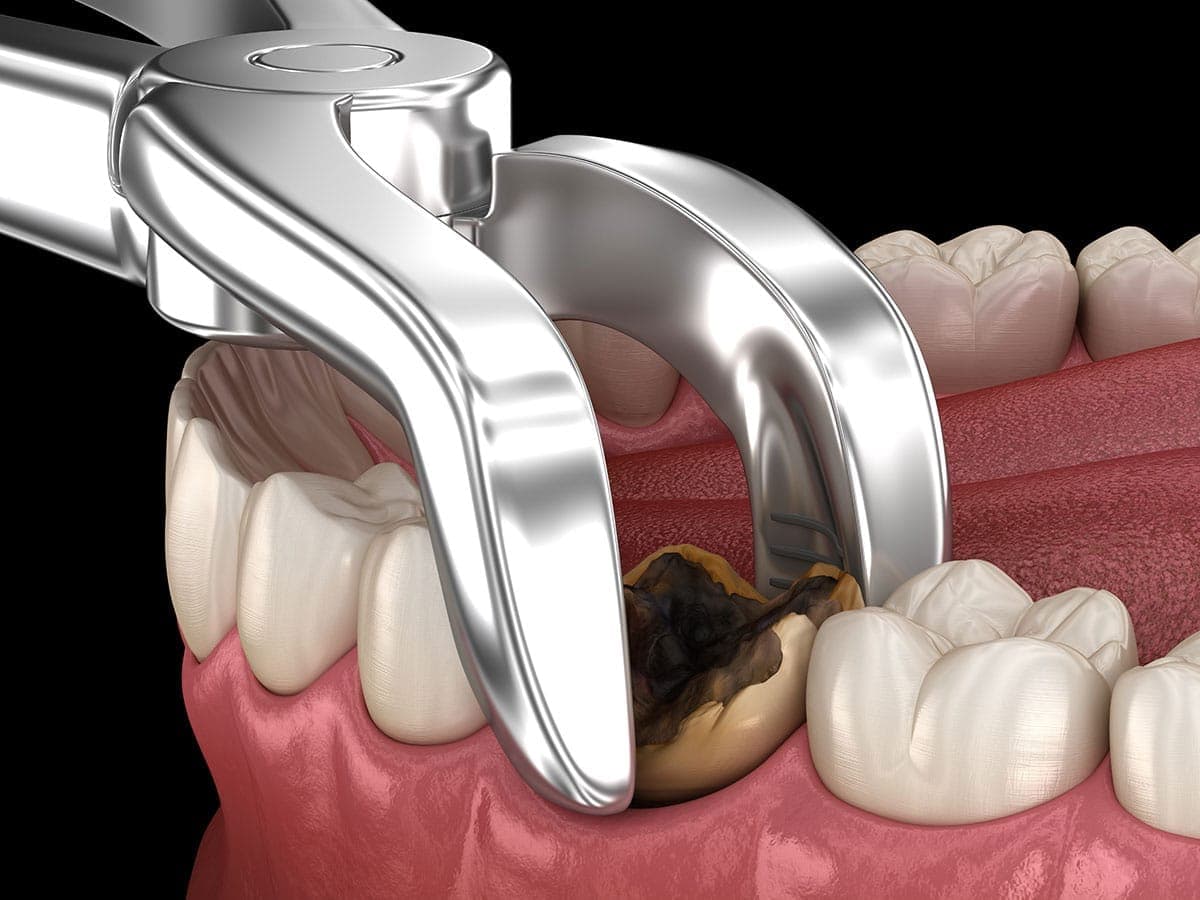
The tooth is removed under anaesthesia, sectioned if impacted, and the socket is cleaned and sutured where required.
Recovery and review
Aftercare instructions, then a follow-up to confirm the sockets are healing and to remove any non-dissolving stitches.
Side effects, honestly
Most patients experience none of these. Some patients, in rare cases, may notice the following — listed because you deserve the full picture before you decide.
Swelling, bruising and limited jaw opening
Expected after a surgical extraction. Swelling usually peaks on day two or three and then settles. Cold compresses in the first day help.
Bleeding
Some oozing for the first day is normal and is controlled by biting on gauze. Persistent bleeding should be reported to the clinic.
Dry socket
If the blood clot is lost, the socket becomes acutely painful a few days after extraction. It is treatable, and the risk is reduced by not smoking, not rinsing vigorously and not using a straw in the first days.
Nerve involvement in the lower jaw
Lower wisdom tooth roots can lie close to the nerve supplying the lip and chin. Temporary numbness or tingling is uncommon, and lasting change rarer still. This is exactly what the pre-operative X-ray is for, and it should be discussed with you before the procedure.
Infection of the socket
Less common, and treatable. Increasing rather than decreasing pain after day three, a bad taste, or fever should prompt a call to the clinic.
About this treatment
Body copy for the evergreen SEO page goes here.
Questions patients ask
Do all wisdom teeth need to be removed?
Is wisdom teeth removal painful?
How long does recovery take?
When is the best time to have them out?
Can all four be removed at once?
What should I eat afterwards?
When should I call the clinic after the procedure?
Does every wisdom tooth need removing?
Related at The Aesthetic Edge
Get a doctor's read before you decide anything
₹500 consultation, waived off against your treatment. Indiranagar or Bellandur — closed Wednesdays.
General information, not medical advice — your treatment is decided at an in-person consultation. Terms & Conditions