
Dental Fillings / Teeth Fillings in Bangalore
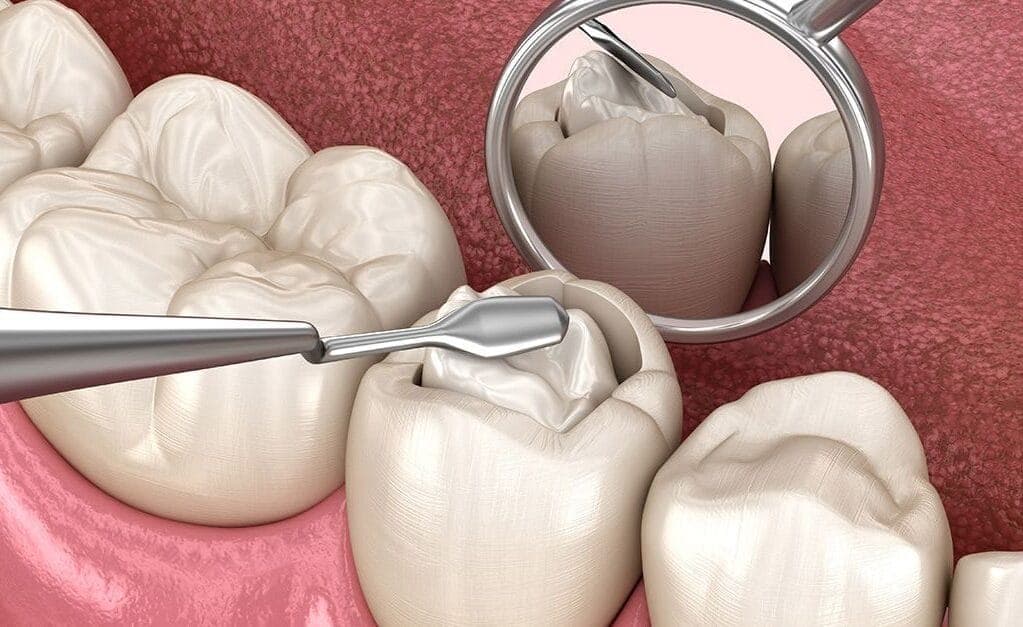
A filling repairs a tooth damaged by decay or a fracture. The decayed part is removed, the cavity cleaned, and the space rebuilt with a material that restores the tooth's shape and function. Tooth-coloured composite is the usual choice, so the repair is not visible.
Is this you?
What it does for you
Stops decay spreading
Decay does not stop on its own. Removing it and sealing the cavity prevents it reaching the pulp, which is the point at which a filling is no longer enough.
Avoids larger treatment later
A cavity caught early is a filling. The same cavity left alone becomes a root canal and a crown, or an extraction. This is the whole argument for treating it now.
Tooth-coloured and invisible
Composite resin is shade-matched to the surrounding enamel and bonded to the tooth, so a repaired tooth does not announce itself the way a metal filling does.
Keeps the natural tooth structure
Only the decayed tissue is removed. The healthy part of the tooth is preserved and reinforced, rather than the whole tooth being cut down.
Restores normal chewing
Rebuilding the tooth's shape and biting surface means it takes load properly again, and food stops packing into the cavity.
Works anywhere in the mouth
Fillings repair molars, premolars and front teeth, including chipped edges, with the material chosen to suit the position and the chewing forces there.
How the treatment works
Assessment
Examination and X-ray where needed to confirm the extent of the decay and whether a filling is the right treatment.
Preparation
The tooth is numbed if required, the decayed tissue removed, and the cavity cleaned and shaped to hold the filling.
Placement
The material is placed, contoured to the tooth's natural shape and hardened with a curing light.
Bite check and polish
The bite is adjusted so the filling sits level, and the surface is polished to a smooth finish.
Side effects, honestly
Most patients experience none of these. Some patients, in rare cases, may notice the following — listed because you deserve the full picture before you decide.
Temperature sensitivity
Sensitivity to hot and cold for a few days after placement is common, particularly with a deep filling, and normally settles on its own.
A filling that feels high
If the tooth feels like it hits first when you bite, come back to have it adjusted. Leaving it causes ongoing soreness and can crack the filling — it takes a couple of minutes to correct.
A deep cavity may still need a root canal
Where decay has reached close to the nerve, the pulp can remain inflamed after the filling. If pain persists or worsens, root canal treatment may be required. Your dentist should warn you of this before starting.
Fillings do not last forever
Fillings wear, chip and can leak at the margins over the years, letting decay start again underneath. This is why they are checked at routine appointments rather than assumed to be permanent.
About this treatment
Body copy for the evergreen SEO page goes here.
Questions patients ask
Does getting a filling hurt?
How long do dental fillings last?
What types of filling are available?
How do I know if I need a filling?
Can I eat straight after a filling?
Are there alternatives to a filling?
Should I replace my old silver fillings?
Who does a tooth filling, and what is the appointment like?
Related at The Aesthetic Edge
Get a doctor's read before you decide anything
₹500 consultation, waived off against your treatment. Indiranagar or Bellandur — closed Wednesdays.
General information, not medical advice — your treatment is decided at an in-person consultation. Terms & Conditions