
Laser Dentistry in Bangalore
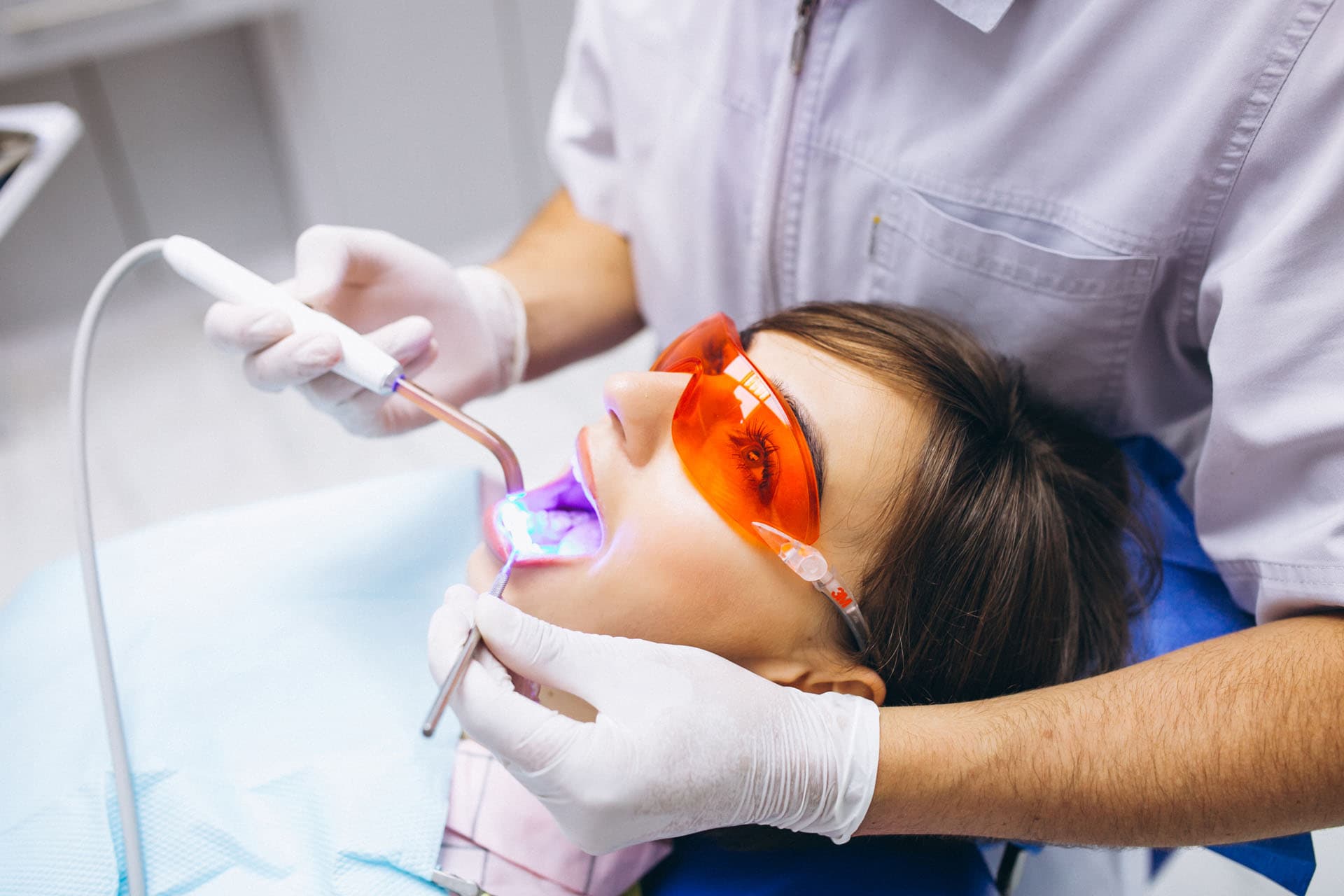
Laser dentistry uses focused light energy in place of some conventional instruments. It is not a treatment in itself but a technique used within others — gum therapy, gum contouring, removal of soft-tissue lesions and certain cavity work — chosen where it is more precise or less invasive than the alternative.
Is this you?
What it does for you
Precise targeting of tissue
The beam can be directed at diseased or excess tissue while sparing what is healthy alongside it, which matters most in gum work where margins are fine.
Often less discomfort
Many soft-tissue laser procedures are more comfortable than their conventional equivalents, and some minor ones can be done without an injection.
Less bleeding during soft-tissue work
The laser seals small blood vessels as it works, so the field stays clearer and there is generally less bleeding than with a scalpel.
Often quicker healing
Less trauma to surrounding tissue and less need for sutures in soft-tissue procedures typically means a more comfortable recovery.
Useful across several procedures
The same technology supports gum disease therapy, gum contouring, removal of soft-tissue lesions and certain cavity preparation, rather than serving one narrow purpose.
Helpful for anxious patients
Avoiding the drill's noise and vibration, and sometimes the injection, removes two of the specific things that make dental anxiety worse.
How the treatment works
Assessment
Examination and medical history to confirm laser treatment suits your procedure, with the conventional alternative explained alongside it.
Preparation and safety
Protective eyewear for everyone present, and anaesthesia where the procedure requires it.
The procedure
The laser is applied at settings matched to the tissue and the treatment, with progress checked throughout.
Aftercare and review
Procedure-specific aftercare instructions, then a follow-up to confirm healing.
Side effects, honestly
Most patients experience none of these. Some patients, in rare cases, may notice the following — listed because you deserve the full picture before you decide.
Temporary sensitivity or soreness
Mild sensitivity or tenderness at the treated site for a few days is the most common effect and typically resolves quickly.
Swelling of treated gum tissue
Some swelling or tenderness of the gums after soft-tissue work is normal and settles as the area heals.
Eye protection is mandatory
Laser light can damage the eyes. Protective eyewear is worn by the patient and everyone in the room for the whole procedure — this is not optional.
Not suitable for every procedure
Lasers cannot replace conventional instruments in all situations. Existing fillings cannot be removed with one, and many restorative procedures still need a drill. Your dentist will say where it does and does not apply.
Anaesthesia is still often needed
The "no injection" advantage applies to some minor soft-tissue work, not to laser dentistry generally. Assume anaesthesia unless told otherwise for your specific procedure.
About this treatment
Body copy for the evergreen SEO page goes here.
Questions patients ask
What is laser dentistry?
Is laser dentistry safe?
Which procedures can be done with a laser?
Will I still need an injection?
How does it compare to conventional treatment?
Are there side effects?
Is it more expensive than conventional treatment?
Related at The Aesthetic Edge
Get a doctor's read before you decide anything
₹500 consultation, waived off against your treatment. Indiranagar or Bellandur — closed Wednesdays.
General information, not medical advice — your treatment is decided at an in-person consultation. Terms & Conditions