
What Is Advanced Gum Treatment? A Plain-English Explanation
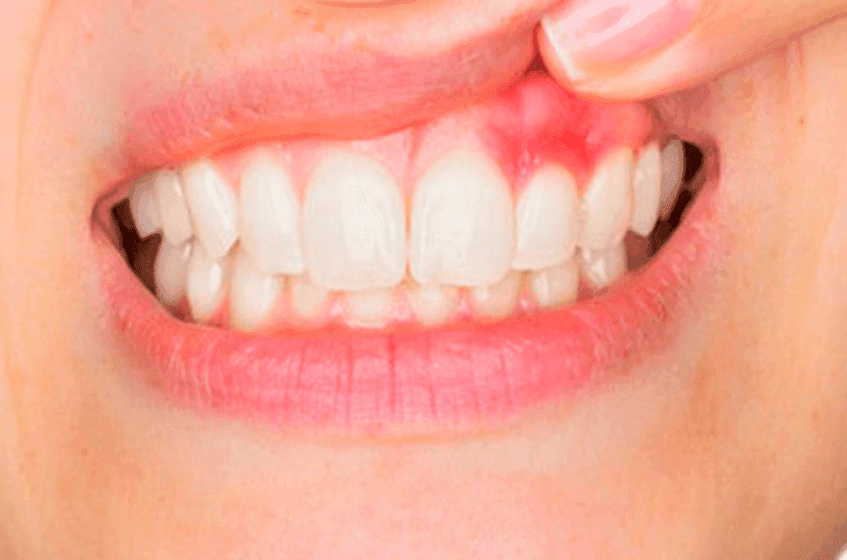
Advanced gum treatment is the care gum disease needs once it has moved past what a routine cleaning can address — specifically, once pockets have formed around the teeth and the supporting bone has begun to be lost. It combines deep cleaning below the gumline with laser therapy or minimally invasive surgery, chosen according to how far the disease has progressed. The aim is to make the pockets shallow enough that you can keep them clean yourself, which is what stops the problem relapsing.
That is the whole definition. Everything below is the detail behind it, in the order a patient usually wants it.
What is a "pocket", and why does everything depend on it?
A healthy gum sits snugly against the tooth. When disease sets in, that seal detaches and a space opens between gum and root — the pocket. Bacterial deposits collect on the root surface inside it, which is where the disease actually lives.
This matters for one practical reason: a toothbrush cannot get in there, and neither can a routine clean. So the depth of your pockets is what decides whether cleaning is enough or whether you need Advanced Gum Treatment. Reducing that depth is the whole objective, because shallower pockets are pockets you can maintain at home, and home maintenance is what makes a result hold instead of returning within months.
How is this different from a normal scaling appointment?
A routine Scaling & Polishing cleans the tooth surfaces at and just below the gumline. It is the right treatment for a great many people and it is not a lesser version of this.
Advanced treatment is different in three specific ways. It goes deeper, into the pockets themselves — deep scaling and root planing on the root surfaces inside them. It is done under local anaesthesia, because at that depth it needs to be. And it may involve laser or surgical access to reach what instruments alone cannot. It is for disease that has already affected the supporting bone, not for disease that has not.
If you are not sure which category you are in, that is not something to settle by reading. It is settled by measurement, which is the next point.
What happens first?
Full periodontal charting — pocket depths measured around every tooth and written down. Not a glance, not an estimate: a number per site.
This is the step people are most tempted to skip and the one that decides everything else. The treatment is matched to the stage, and the stage is a set of measurements. Early disease is often managed with cleaning and better home care alone; more advanced cases need the deeper or surgical work. A plan proposed before charting is a plan proposed without the information that determines it.
What does the treatment itself involve?
It depends on what the charting found, and it is usually staged rather than done in one sitting.
Deep cleaning below the gumline. Deep scaling and root planing clears the bacterial deposits off the root surfaces inside the pockets. This is the foundation of everything else, and for many patients it is the bulk of the treatment.
Laser therapy or minimally invasive surgery, where needed. These target diseased tissue while sparing healthy tissue, which generally means less discomfort afterwards than traditional flap surgery. Laser Dentistry is one of the tools used here rather than a separate treatment you choose instead.
Regenerative procedures, in selected cases. Where support has been lost, grafting and regenerative techniques can rebuild some of the bone and tissue around a tooth. Suitability depends on the pattern of the defect and is assessed case by case — the shape of the loss matters as much as the amount.
Grafting for recession, where appropriate. Receding gums expose sensitive root surfaces and make teeth look long. Covering exposed roots is a functional gain as much as a cosmetic one, because exposed root surface is both sensitive and harder to keep clean.
Appointments are usually split by quadrant, with maintenance appointments after. Local anaesthesia is used for the deep cleaning and any surgical steps, and every stage is carried out by a dentist.
Can bone and gum that is already lost be grown back?
Sometimes, and partially. That is the honest answer and it is worth stating before you hear a more encouraging version somewhere else. Regenerative procedures can rebuild support in favourable defect patterns. They cannot restore everything that has been lost, and your dentist should be specific about what is realistic for your particular case rather than describing the technique in general terms.
Which is why the timing argument matters more than the technique argument. Gum disease is the leading cause of adult tooth loss, and treating it while there is still supporting bone is the difference between keeping a tooth and replacing it later. The bone you still have is easier to protect than to rebuild.
How long does recovery take?
Deep cleaning usually means a few days of tenderness. Surgical or regenerative procedures take longer — often a couple of weeks for the gums to settle, and months for the underlying healing to complete. Sensitivity can persist for several weeks, which is normal rather than a sign something has gone wrong.
Because the work is often split by quadrant, plan it as a sequence of appointments across a few weeks rather than a single event, and tell us early if you have a date you are working around.
What does maintenance look like afterwards?
More frequent cleaning than before — typically every three to four months rather than the usual interval. This is not an upsell; it is the half of the treatment that happens after the treatment. Pocket depths that have been reduced stay reduced only if what caused them is kept off the root surfaces, and three to four months is the rhythm that does that.
Practically, in Bangalore, that means three or four appointments a year at either our Bellandur or Indiranagar clinic, and it is worth putting them in your calendar when the course finishes rather than waiting until something bleeds again.
When is it worth being assessed?
If you have been told you have "gum problems" and nothing has been measured, or if a previous cleaning helped for a few weeks and then the same symptoms came back, those are both reasons to have proper charting done. A relapse within months is often a sign that the disease was deeper than a routine clean could reach, rather than a sign that nothing works.
Where to start
Start with the assessment and the charting, not with choosing between techniques — the measurements decide which of them apply to you. Book an appointment and ask for your pocket depths to be explained to you tooth by tooth. It is your record, and it is the clearest picture of where your gums actually stand.