
The "Vampire Facial", Minus the Marketing
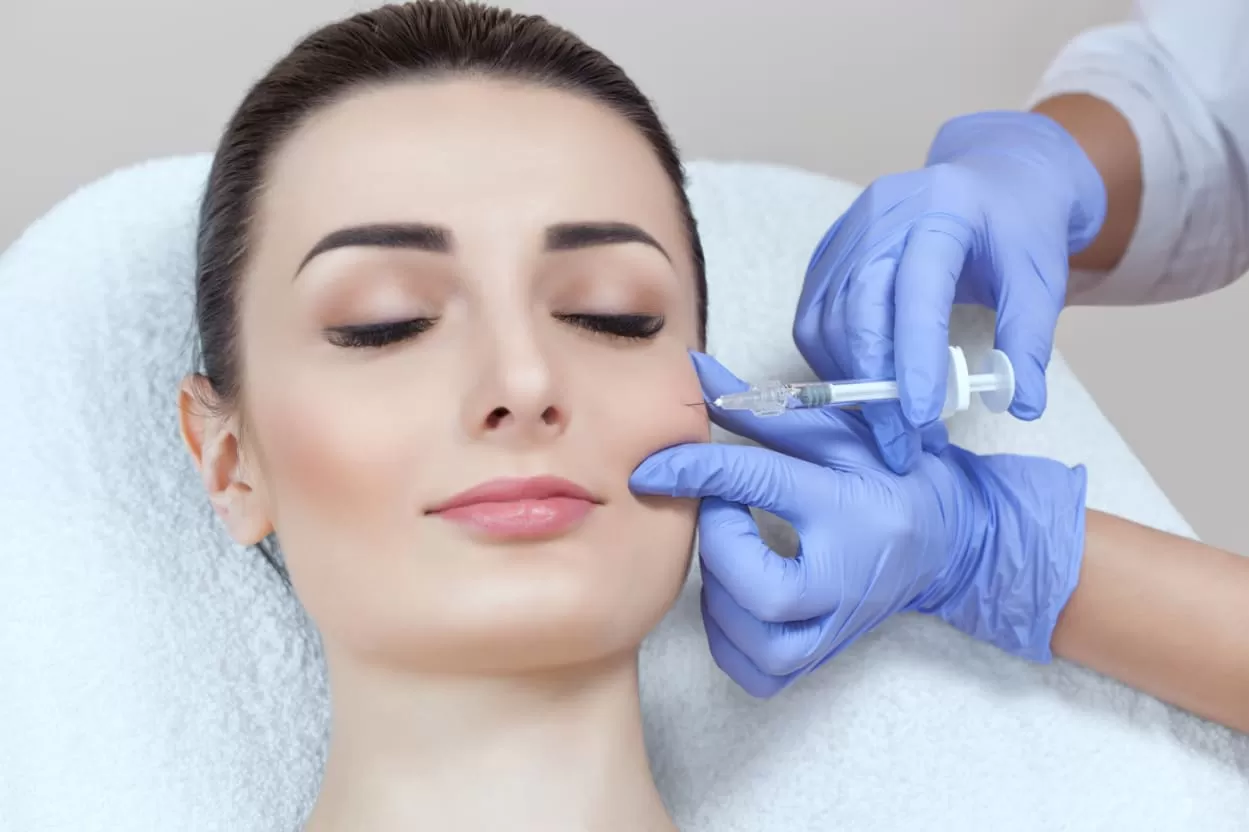
"Vampire facial" is a marketing name, and it has done the treatment no favours. It promises something dramatic and slightly gothic; what platelet-rich plasma actually does is narrower, slower and genuinely useful. Understanding which of those you are buying is most of the value in this article.
What PRP is
A small volume of your blood is drawn, exactly as for a routine blood test, and spun in a centrifuge. Spinning separates the components by density, and the platelet-rich fraction is drawn off. Platelets carry growth factors and signalling proteins that the body uses in tissue repair. Delivered into skin, they prompt a repair response — collagen production and cell turnover — in an area that was not actually injured.
Because it comes from you, allergy to the material itself is essentially not a concern. That is a real advantage and it is not the same as "no risks": it is still needles, still blood, still a procedure that has to be done properly.
The job it is actually good at
PRP is a skin quality treatment. Over a course, it tends to improve:
- fine lines and crepey texture
- the appearance of acne scarring, particularly rolling scars
- dullness and uneven tone
- early laxity, modestly
Here is the boundary that matters, and it is the one most often blurred: PRP improves the quality of the skin you have. It does not replace lost volume and it does not lift tissue that has descended. If your concern is hollowing under the eyes or along the cheeks, that is a volume problem and PRP is the wrong tool — skin boosters or Profhilo address hydration and quality by a different route, and fillers address volume outright.
A treatment that improves texture will not change shape, no matter how many sessions you buy.
Why it is almost always combined with microneedling
On its own, plasma applied to intact skin does not get far — the barrier is doing its job. So PRP for the face is usually delivered either through microneedling, which creates temporary channels, or by fine injection.
That has a consequence worth knowing: a good part of the result you see from a "vampire facial" is the microneedling. The two work together — the needling creates a controlled healing stimulus, the plasma feeds it — but if someone offers you plasma smeared onto unbroken skin, you are paying for a very expensive serum.
What a course looks like, honestly
Improvement is gradual and cumulative. Most people need three or more sessions, spaced several weeks apart, with maintenance afterwards. Change in texture and tone continues developing for months after a session, because you are waiting on collagen, and collagen takes its time.
Expect redness and mild swelling for a day or so afterwards, and possible pinpoint bruising. Nothing that needs time off, but not something to book the day before a wedding either.
Results vary considerably between people. Age, smoking, sun damage and general health all affect how well skin responds to a repair signal — which is the whole mechanism here.
The safety questions, which are not optional
PRP involves drawing, handling and re-introducing your blood. Done in a proper clinical setting that is routine. Done casually it is the one aesthetic treatment with a genuine bloodborne-infection risk, and there have been well-publicised cases internationally where poor practice at unregulated premises caused real harm.
So ask, plainly:
- Is every component single-use? Tubes, needles, cannulas, microneedling cartridges. Nothing that touches your blood should have touched anyone else's, and nothing should be re-sterilised.
- Is my sample labelled and never out of sight? Your blood should be identifiable as yours at every step.
- What system is used to prepare the plasma? A closed, purpose-made kit is the answer you want.
- Who performs it? This is a medical procedure and should be done by medically trained staff.
A clinic that answers those four questions comfortably is telling you what you need to know. A clinic that finds them awkward is telling you something too.
Is it worth it?
For someone in their thirties or forties whose skin looks tired and textured rather than fallen, PRP over a proper course is a sensible, low-drama option that uses their own biology. For someone expecting a lift, or expecting one session to do something visible, it will disappoint — not because it failed, but because it was asked to do a job it does not do.
Book a consultation at Indiranagar or Bellandur and ask which of texture, volume and position is actually driving what you see in the mirror. The answer decides the treatment, and it is not always this one.
If it is your hair rather than your skin you are thinking about, the scalp version is a different conversation — PRP for hair loss covers it.