
Clear Aligners — The Things Adults Find Out in Month Three
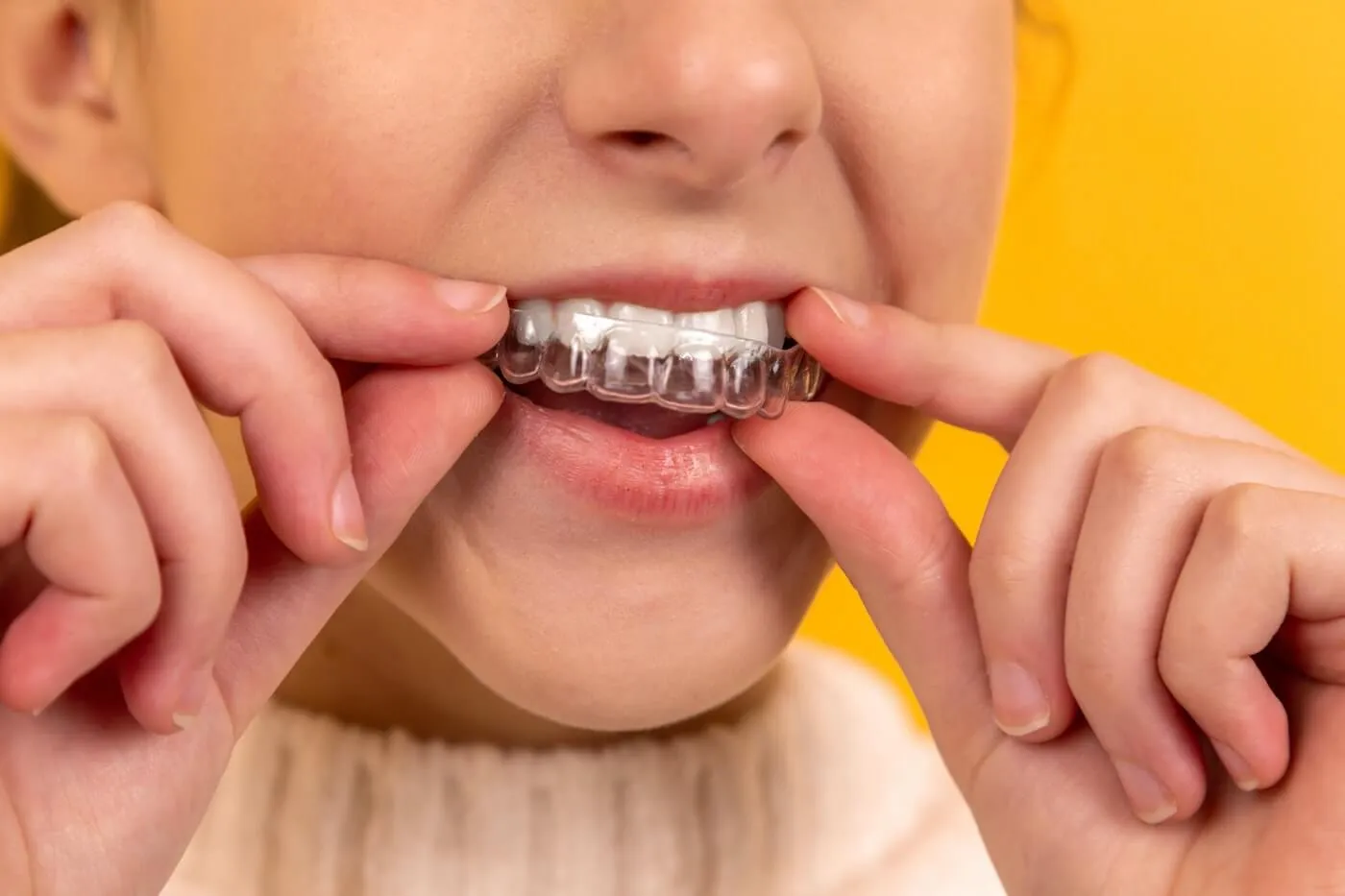
Clear aligners are a genuinely good piece of technology and the reason adults who would never have worn metal brackets now get their teeth straightened. None of what follows is an argument against them. It is the set of things patients tend to discover a few months in, which would have been much easier to hear before starting.
The 22-hour rule is the whole treatment
Aligners need 20 to 22 hours of wear a day. That is not a guideline with padding in it. Each tray applies a small force over a set period, and the tooth only moves while the tray is on it.
Removable sounds like freedom, and it is — no food restrictions, and you can actually floss. But it quietly transfers responsibility from the appliance to you. Fixed braces work while you sleep, eat and forget about them. Aligners work only when you have chosen to wear them, and the arithmetic is unforgiving: two hours a day of slippage is roughly a tenth of the force the plan assumed.
What that looks like in practice is not dramatic failure. It is teeth that stop "tracking" — the tray no longer seats fully because the tooth is not where the plan expected it to be — and treatment quietly extends by months while additional aligners are made. The dentist can usually tell from the fit alone.
Practical arithmetic that helps: two meals plus one tea break, done briskly, costs about ninety minutes. A long dinner with drinks costs three hours. You get roughly one of those a week.
They are not as invisible as the photographs
Most aligner treatment needs attachments: small tooth-coloured composite bumps bonded to certain teeth to give the tray something to push against. They are how rotations and uprighting are achieved at all. They are tooth-coloured and much less visible than brackets — but they are visible up close, they can pick up stain from coffee and tea, and they stay on for the duration.
Many cases also need interproximal reduction: a very small amount of enamel polished from between crowded teeth to create the space to align them. It is routine, painless and well within safe limits, and it is also the sentence that patients say nobody mentioned. Ask whether your plan includes it and how much.
And they do affect speech for the first few days. It settles.
Which cases they suit
Aligners handle crowding, spacing and many mild to moderate bite problems very well.
They are less predictable for large rotations of round teeth, significant uprighting of tipped molars, closing large extraction spaces, and skeletal discrepancies where the jaws rather than the teeth are the problem. Those cases are still better served by fixed appliances, sometimes combined with other treatment.
The assessment that establishes which of those you have — an examination with X-rays and a proper bite assessment — is the single most important appointment in the process. It is also the one that a treatment plan generated from photographs cannot substitute for. If aligners genuinely cannot deliver what you want, that is worth knowing now rather than eighteen months and a full fee later.
That is the practical reservation about mail-order aligner services: a plan built from impressions you took yourself, with no X-rays and nobody examining your gums, has no way to detect the problems that make a case unsuitable — or to notice untreated gum disease, which orthodontic force will make worse.
What the treatment actually runs like
Assessment. Examination, X-rays, bite assessment, and a straight answer on suitability and alternatives.
Digital planning. A scan is taken and the movement sequence designed, including how many aligners and how long. You will usually be shown a simulation of the planned outcome. Treat it as the plan's intention, not a guarantee — it is a projection, and how closely reality follows it depends heavily on the previous section.
Wearing them. Trays swapped on schedule. Most discomfort is in the first day or two of each new tray and is best described as pressure.
Reviews. Periodic checks on whether teeth are tracking to plan. Refinements — a further short series of aligners to finish movements that did not complete — are common and often planned for. Ask upfront how many refinements are included in the fee, because this is where quoted prices most often diverge from final ones.
Retention. See below, because it is not a footnote.
Retention is not the end of treatment, it is the rest of it
Teeth move back. Not sometimes — as a rule. They are held in bone by fibres that retain a memory of the old position for a very long time, and left alone they will drift toward it. This is true of every orthodontic treatment ever performed, aligners and braces alike.
Which means retainers are permanent, in the sense that some form of retention continues indefinitely: usually a fine wire bonded behind the front teeth, a removable retainer worn nightly, or both. Nightly wear tapering to a few nights a week is typical, but it does not stop.
Anyone who quotes you for aligners without discussing what holds the result afterwards has quoted you for the interesting part and left out the part that determines whether you still have straight teeth in five years.
What to get in writing
Before you commit, ask for the plan in writing: expected duration, number of aligners, whether attachments and enamel reduction are involved, how many refinements are included, what happens if teeth stop tracking, what retention consists of, and what retainers cost to replace.
Book a consultation at Indiranagar or Bellandur. Aligner treatment is a year or more of your life and a real amount of money; the appointment that tells you honestly whether it will work is worth more than the one that tells you it will.