
Teeth Whitening — What Shade You Can Actually Reach
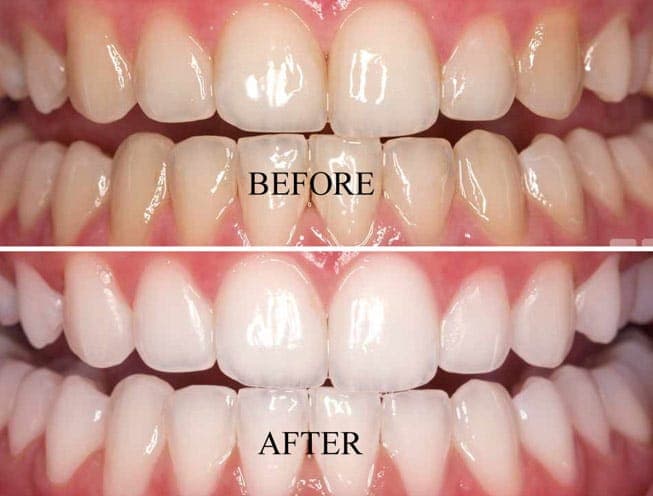
The most common disappointment in teeth whitening is not that it failed. It is that it worked exactly as it should, and the result was not what the person had pictured — because whitening acts on natural tooth structure and on nothing else, and nobody had explained what that ruled out.
Two different kinds of discolouration
Extrinsic staining sits on the outside of the enamel. Coffee, tea, red wine, tobacco, and in this part of the world regular paan and strongly coloured foods, all deposit onto the surface over years. This is the staining that responds best and fastest.
Intrinsic discolouration is in the tooth itself. Enamel thins with age and lets the naturally yellower dentine beneath show through, which is why teeth look darker at fifty than at twenty even in someone who has never touched coffee. Certain medications taken during tooth development, trauma to a single tooth, and excess fluoride during childhood also produce intrinsic changes.
Whitening gel works on both, but not equally. Surface staining lifts readily. Age-related yellowing improves. Deep intrinsic staining — the banded discolouration from tetracycline, for instance, or a single tooth that darkened after an old injury — often responds poorly or unevenly, and is usually better addressed another way. A single dark tooth in particular is a different problem with a different solution, and whitening the other nineteen will make it stand out more, not less.
The restoration trap
This is the one that catches people, so it gets its own heading.
Whitening does not change the colour of crowns, veneers, bridges or composite fillings. Those materials are colour-matched to your teeth at the moment they are made. Lighten the teeth around them and they stay exactly where they were — so a front tooth with an old composite filling, or a crown that currently blends in, can end up visibly darker than everything beside it.
That is not a reason to avoid whitening. It is a reason to plan in the right order: whiten first, let the shade settle, then replace visible restorations to match the new colour. Doing it the other way round means paying for the same crown twice.
In-clinic and take-home
In-clinic whitening uses professional-strength agent applied under controlled conditions, with the gums and soft tissue isolated and protected throughout. It produces a visible change in a single visit and suits people working to a date — a wedding, a shoot, an occasion.
Take-home kits use custom trays moulded from impressions of your own teeth, with professional-strength gel used daily over one to two weeks. The custom tray is the entire point: it holds gel against the teeth and away from the gums. Results are comparable to in-clinic for most people, spread out and at your own pace.
Many patients end up doing both — in-clinic to establish the shade, take-home trays kept for top-ups later. That is usually the most economical route over a few years, because the trays are made once.
A note on the strips and gels sold over the counter: the ones sold with a professional-looking box and no supervision vary a great deal in what they contain. A one-size mouthpiece puts gel on gum as readily as on enamel, and high-strength product used unsupervised, on a mouth nobody has examined, is where the burns and the prolonged sensitivity come from.
Sensitivity, which is normal and manageable
Some sensitivity during or shortly after whitening is common. It is usually short-lived, and it is not a sign of damage — the gel temporarily increases the permeability of the enamel.
Say so at the outset if your teeth are already sensitive. It changes the plan rather than cancelling it: lower-concentration gel over a longer period, desensitising agent before and after, and shorter wear times all work. Very few people genuinely cannot be whitened; plenty are whitened uncomfortably because nobody asked.
Why the check-up comes first, and what it usually finds
Whitening a mouth that has an untreated problem is at best uncomfortable and at worst unsafe. Gel reaching decay, an exposed root surface, or inflamed gum tissue hurts, and the underlying problem is still there afterwards.
There is also a cheerier reason for the examination. A meaningful share of what people want whitened is not staining in the tooth at all — it is deposit on it. A scaling and polish removes more surface discolouration than most patients expect, and a fair number leave that appointment deciding they do not need whitening this year after all. That is a good outcome, even though it is a smaller invoice.
Keeping it
Whitening is not permanent, and how long it holds is mostly about habits: the staining drinks, tobacco, and consistency with brushing, flossing and check-ups. A practical trick for the fortnight after treatment, when teeth are most absorbent — if it would stain a white shirt, it will stain your teeth.
Top-up whitening with your trays extends the result indefinitely at very little cost, which is the strongest argument for having trays made even if you start with an in-clinic session.
If whitening is on your mind, book an examination at Indiranagar or Bellandur first. It settles which of the two kinds of discolouration you have, what your existing dental work will do, and whether you need whitening at all — and those three answers decide everything else.