
Is Volite a Course of Sessions? An Honest Answer
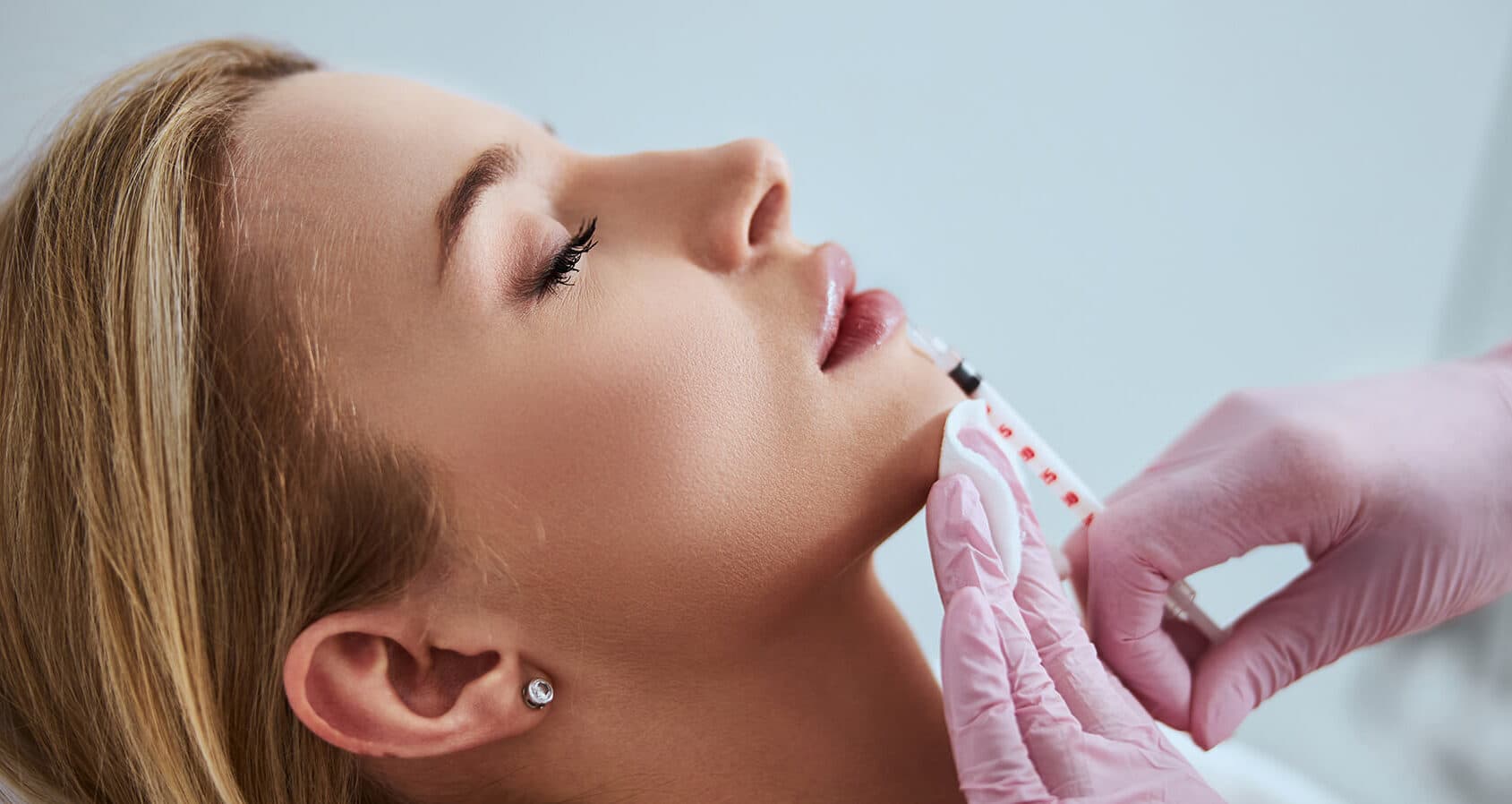
Volite is not usually a course. Most patients have a single treatment and then repeat it roughly every six to nine months to maintain the effect, rather than working through a block of sessions spaced weeks apart. Your doctor confirms the interval based on how your own skin responds, which is a different arrangement from a package agreed before anyone has looked at you.
That answer is deliberately plain, because the question is usually asked by someone who has been quoted for a set of six somewhere and wants to know whether that is normal. For this treatment, a maintenance rhythm is the documented pattern — and the difference between a rhythm and a package is worth understanding before you pay for either.
Why is one treatment enough when other things need six?
Because of what is being done, rather than how strong it is.
Volite places hyaluronic acid inside the skin as many small micro-injections spread across an area. The hyaluronic acid holds water where a topical moisturiser cannot reach, and that is why the effect lasts months rather than hours. The material is put where it needs to be in one appointment.
That is a different kind of intervention from treatments that work by repeated small provocations, where each session adds to the last and the block is the point. Here the placement happens once, the effect builds over the following fortnight, and then the question is simply when it will need renewing. One session is not a reduced version of a course. It is what the treatment is.
So what does the schedule actually look like?
Four points, and they are the whole timeline:
- The treatment. Anaesthetic cream is applied for 30 to 45 minutes, the area is marked, and the micro-injections are placed as a grid so the hyaluronic acid is distributed evenly rather than concentrated at a point.
- The first fortnight. Very little visible progress at first. The effect peaks at around 10 to 14 days and continues improving over the first month.
- The review. Written aftercare is given on the day, and the result is reviewed at around the two-week mark — at the peak, in other words, which is the only sensible moment to judge it.
- The repeat. Routine repeat treatments are planned roughly every six to nine months, because the effect commonly lasts in that region and then fades.
Nothing in that sequence involves booking a second session for three weeks' time. If a plan you are offered does, ask what it is for — there may be a perfectly good answer specific to your skin, and you are entitled to hear it.
Why does it need repeating at all, if it is not a course?
Because hyaluronic acid is a material the body processes over time.
The effect commonly lasts six to nine months and then fades. That is the normal behaviour of the material rather than a shortcoming in the treatment or a sign that it was done badly. Repeating it every six to nine months keeps the skin in the condition the first treatment achieved, in the same way you would service something rather than rebuild it.
It also means the decision to continue is genuinely yours to make each time, with the previous result to judge it by. That is a better position than being partway through a block you have already paid for.
Is the second treatment better than the first?
That is not something this schedule promises, and the honest answer is that it depends on your skin.
What is documented is that the effect peaks at 10 to 14 days, improves over the first month, and commonly lasts six to nine months — for the treatment. Claims about cumulative improvement across repeats are exactly the kind of thing that gets attached to maintenance treatments in marketing copy without anything underneath. Your doctor confirms the interval based on how your skin has actually responded, and that judgement at review is worth more than any general projection.
When is a package a red flag?
When it is sold to you before your skin has been assessed.
The clinic's own first step is a skin consultation in which the doctor establishes whether your concern is hydration and texture, which this addresses, or volume loss, which it does not. That question has to be settled before anyone can say what treatment you need — let alone how many of them.
So be cautious when:
- a fixed number of sessions is quoted over the phone, or from a price list, before anyone has looked at your skin;
- the package has to be paid for upfront and the discount only applies if you commit today;
- you are told a set number is standard for this treatment, when the documented pattern is a single treatment repeated at a maintenance interval;
- the plan does not include a review at the two-week mark, which is the point at which the result can actually be judged;
- there is no mechanism to stop, change or step away if your skin responds differently from expected.
None of that means every package is a problem. Some treatments genuinely are courses and are honestly sold as such. It means the order should be assessment first, plan second, payment third — and a plan that arrives in the wrong order deserves a question rather than a card.
What if I am offered something other than Volite?
That is a normal outcome of an assessment, not a bait and switch.
There are other injectables aimed at skin quality rather than shape — Profhilo is one — and skin botox works on a different mechanism again. Each has its own schedule. If a different treatment is recommended for you, the same principle applies: ask what the documented interval is, ask what the review point is, and be wary of a number of sessions quoted before an examination rather than after one.
How should I plan around the timing?
Count backwards from anything that matters, and use fourteen days rather than optimism.
The effect peaks at around 10 to 14 days and keeps improving over the first month, so an appointment three days before a wedding is not a plan. Equally, the maintenance interval means that if you want to look a particular way at a particular time of year, it is worth talking about at the review — the rhythm can be set to suit the calendar you actually live in rather than an abstract one.
What should make me contact the clinic between treatments?
The expected picture after each treatment is modest: redness, small bumps and mild swelling at the injection points, typically settling within 24 to 48 hours, and possible bruising and tenderness — particularly around the eyes — generally resolving over a few days to a couple of weeks. Strenuous activity is avoided for 72 hours.
Contact the clinic rather than waiting for your scheduled review if:
- an area becomes hot, or the pain is increasing across a day rather than settling;
- redness or swelling is spreading outwards, or is clearly worse on day three than on day one;
- an injection point discharges anything at all, which can be a sign of infection;
- a rash, itching or swelling appears somewhere away from the treated area;
- you feel unwell in yourself in the days afterwards;
- anything is bothering you enough that you have started searching for it.
Please do not try to work out from a page which of those is serious. You cannot examine your own skin the way the person who treated you can, and the same appearance can have more than one cause. Ring the clinic, say what you are seeing and when it began, and let the doctor decide whether you need to be seen before your review date. Bringing a review appointment forward is straightforward; unpicking a fortnight of worry is not.
What does it cost, then, if not a package price?
No figure is published here for the treatment. What you pay depends on the area being treated and how many injection points it takes to cover it, and both are settled once your skin has been assessed. A price quoted before that is a guess about a plan that does not exist yet.
The consultation is ₹500, waived against treatment — and it produces a plan you can see, including how many treatments are actually being suggested and when.
Where to go next
If you have been quoted for a block of sessions and this page has made you pause, that pause is doing its job. The Volite treatment page sets out the protocol, the timings and the maintenance interval in full. To have your own skin assessed before any number of sessions is discussed, book an appointment at our Indiranagar or Bellandur clinic.