
What Actually Happens During Volite: A Step-by-Step Walkthrough
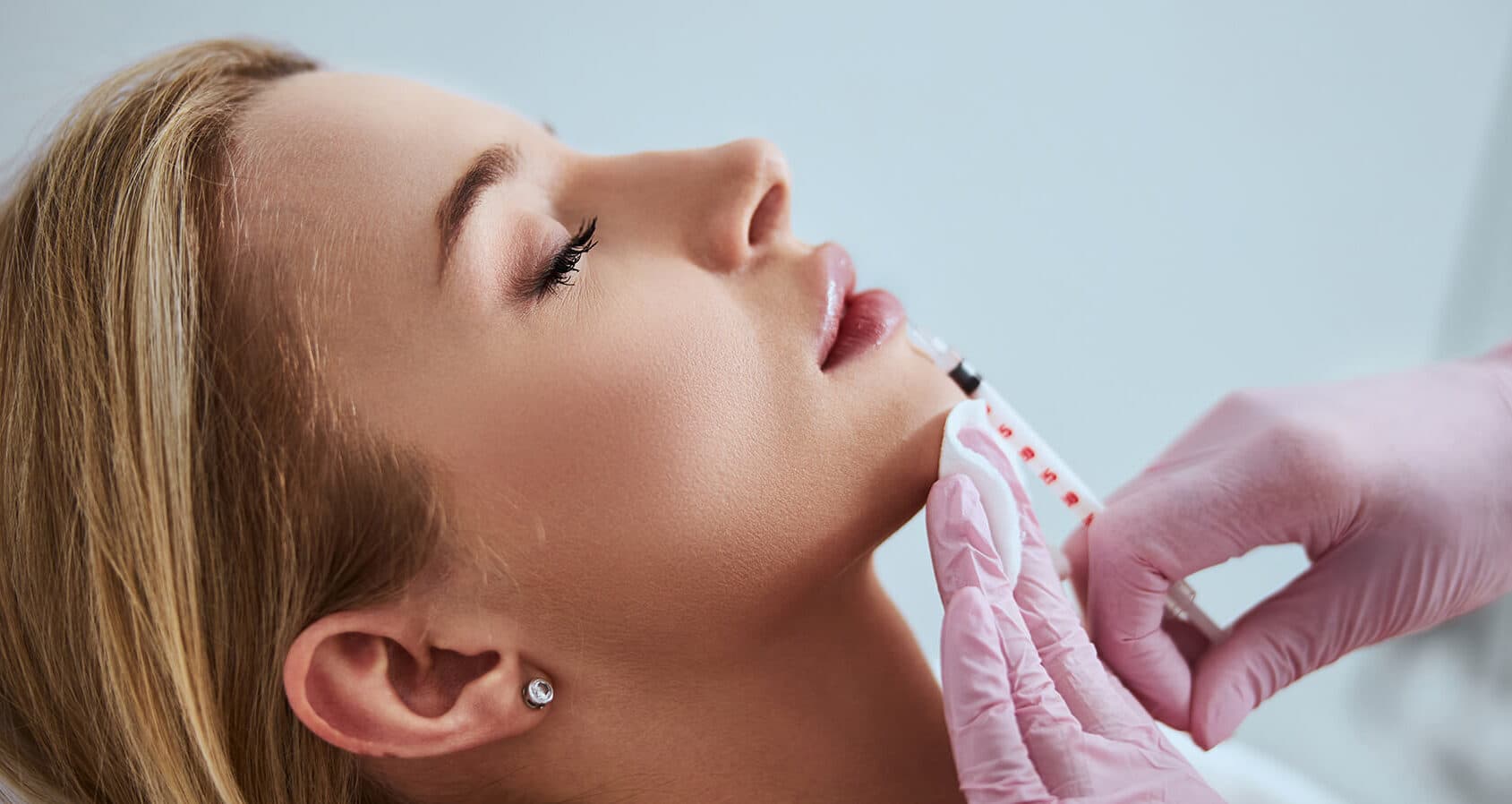
A Volite appointment runs in four stages: a consultation where the doctor confirms your concern is hydration and texture rather than volume loss, anaesthetic cream left on for 30 to 45 minutes, a grid of small injections across the marked area, and written aftercare. Most patients find the injections tolerable rather than painful. The result peaks at around 10 to 14 days.
If you have booked and are now quietly wondering what exactly you have agreed to, this is the appointment in order, with nothing skipped over.
What do I need to do before the appointment?
Four things, and they are specific rather than general advice.
There must be no infection, injury or bruising at the treatment site. If you have knocked your face, if a spot has become inflamed, or if you have a cold sore coming, telephone rather than turning up and hoping — it is a very ordinary reason to move an appointment, and moving it is easier than deciding on the day.
Tell your doctor about allergies, any history of cold sores, and any blood-thinning medication. That last one matters because it affects how likely you are to bruise, and it is the sort of thing people leave out because they have been taking it for years and no longer think of it as medication.
Avoid alcohol for at least 24 hours beforehand.
And come with a description of what is bothering you, in your own words. "Everything I put on soaks in and my skin still feels tight" is more useful to a doctor than a product name.
What happens when I arrive?
The consultation comes first, and it is a real gate rather than a formality.
The doctor's job at this stage is to establish whether your concern is hydration and texture, which Volite addresses, or volume loss, which it does not. Those two get confused constantly, because both can make a face look tired. If the honest answer is that your concern is shape or volume, this is the point at which you are told so — and being told a treatment is not the right one for you is a good outcome from a consultation, not a wasted trip.
This is also where the pre-treatment history is taken, and where the areas to be treated are agreed. The face is common; so are the neck, the décolletage and the backs of the hands, which show dehydration and fine crepiness early.
What does the numbing stage involve?
Anaesthetic cream is applied to the treatment areas and left on for 30 to 45 minutes.
This is the longest single part of the appointment and the least eventful. You sit with cream on. It is worth knowing in advance simply so you plan the time properly — people frequently budget for a quick in-and-out and are surprised by this stage, not because it is unpleasant but because it is slow.
What does the injecting part actually feel like?
The doctor marks the area, then delivers the hyaluronic acid across it as a grid of small micro-injections.
Most patients describe it as tolerable rather than painful. That phrasing is deliberate and it is the honest one: it is not nothing, and comfort cannot be promised in advance for any individual, because sensitivity varies and so does the area being treated. What the anaesthetic cream is doing is taking the edge off each entry point.
The rhythm surprises people more than the sensation does. Because it is a grid rather than a handful of injections, it is a sequence of many quick, small touches across an area rather than a few deeper ones. Several patients find it easier than they expected for exactly that reason, and some find the repetition the tiring part. Both are ordinary reactions.
You can ask for a pause. Say so.
Why a grid rather than a few injections?
Because of what the treatment is trying to do. The hyaluronic acid needs to be distributed evenly across the whole area rather than concentrated at a point.
This is the mechanical difference between a skin-quality treatment and a filler. A filler is placed at specific points to add volume or contour, so it stays where it is put. Volite is spread across an area to improve hydration and texture. Concentrating it at a few points would defeat the purpose — and would be doing something the treatment is not intended to do, which is changing your facial shape.
How long will I be in the clinic altogether?
The numbing accounts for 30 to 45 minutes on its own, and the injecting stage is added to that.
The total appointment length is not something we publish as a fixed number, because it depends on how many areas are being treated and how large they are. Ask at your consultation and you will be given a realistic figure for your own plan rather than an average. Practically, allow more time than you think, and do not book something immediately afterwards that you cannot move.
What happens the moment I get up from the chair?
You look treated, briefly. Redness or small bumps at the injection points are normal for 24 to 48 hours, and mild swelling on the day and the day after is expected too.
This is not a complication and it is not a sign that something has gone wrong — it is the predictable consequence of many small entry points across an area. It is, however, the single reason to think about your diary. If you have something that afternoon where you would rather not look freshly treated, put the appointment on a different day.
You are given written aftercare before you leave. Read it in the room, while there is still someone to ask.
What are the rules for the rest of the week?
They are short, specific, and worth following exactly rather than approximately:
- Avoid alcohol for 12 hours.
- Do not wash the treated area, apply moisturiser, or wear makeup on it for 24 hours.
- Avoid massaging the area for 24 to 48 hours.
- No facials or steam for around 15 days.
- No gym for 72 hours.
- Drink plenty of water.
The 15-day rule on facials and steam is the one people trip over, because it outlasts the point at which everything looks normal again. If you have a standing monthly facial, work out the timing before you book the injections rather than afterwards.
If anything is not settling as described, or is worsening rather than easing, telephone the clinic rather than waiting for your review.
When will I see anything, and when do I come back?
The effect typically peaks at around 10 to 14 days, with improvement continuing over the first month, and the result is reviewed at that point.
So the first fortnight is a waiting period by design. Looking for a change on day three tells you nothing, and no result appears faster on request. Beyond that, results commonly last in the region of six to nine months, and routine repeat treatments are planned roughly every six to nine months — with your doctor confirming your own interval based on how your skin responds.
Most patients have a single treatment and then repeat it, rather than starting with a course.
What if I change my mind partway through?
Then you say so, and it stops. This is worth stating plainly because nervous first-timers often assume that arriving commits them.
It does not. You can decide after the consultation that you would rather not go ahead. You can decide while the cream is on. If you want to think about it, the consultation still gives you a plan you can act on later. That is a perfectly normal way for an appointment to end.
What does it cost?
The consultation is ₹500, and it is waived off against treatment if you go ahead.
We do not publish a treatment price on this page, because what is priced is the plan — which areas, and how many. You will have that figure before anything is injected, at the point where you can still say no.
Where to go next
If you are weighing this against something similar, Profhilo is the closest relative — same ingredient, a small number of set injection points rather than a grid, and aimed at firmness and laxity rather than hydration and fine lines. Skin Botox is a different product altogether, aimed at texture, pore appearance and oiliness.
If you have read this far and the appointment sounds manageable, that is roughly the right conclusion to reach. When you are ready, book an appointment and bring your questions with you — the consultation is the part of this that exists for them.