
How Volite Actually Works
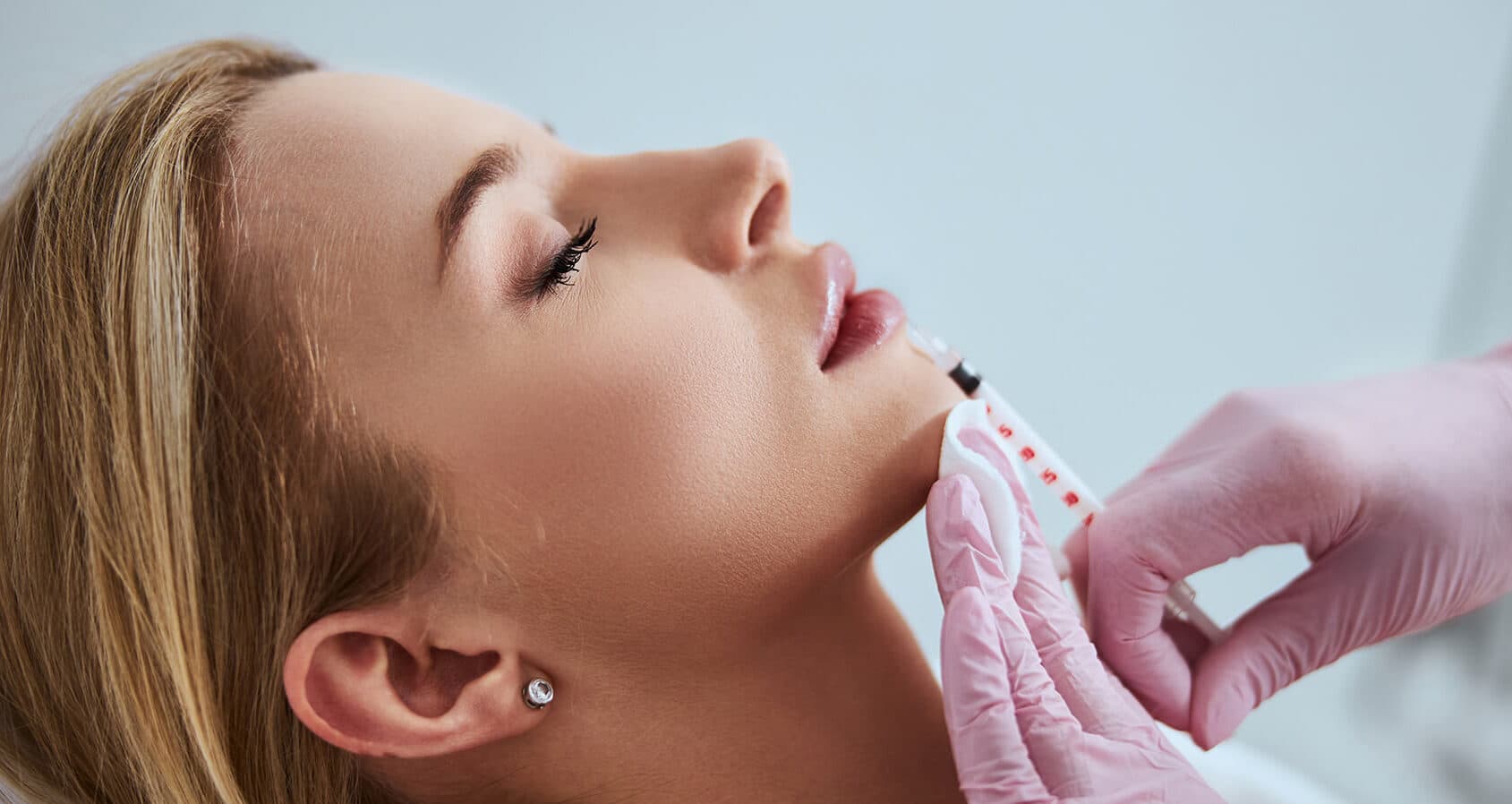
Volite works by placing hyaluronic acid inside the skin rather than on it, as a grid of micro-injections spread evenly across an area. The hyaluronic acid holds water where a moisturiser cannot reach, so hydration, smoothness and fine surface lines improve. The effect peaks at around 10 to 14 days and commonly lasts six to nine months.
That is the whole mechanism in five lines. Everything below is the reasoning underneath it, written for the reader who would rather understand a treatment than be reassured about it.
Why does hyaluronic acid work here when the serum on my shelf does not?
Because of where it ends up, not what it is. A topical hyaluronic acid sits on the surface and works on the outermost layer of dead cells. That is a real effect, and it is a short one — it washes off, rubs off and evaporates, which is why a serum is a daily habit rather than a treatment.
Volite puts the same class of molecule into the skin itself. Our treatment core puts it plainly: hyaluronic acid placed within the skin holds water where a topical moisturiser cannot reach, which is why the effect lasts months rather than hours. Nothing about the molecule has been upgraded. The delivery route has.
This is also why the treatment is described as skin conditioning rather than skin filling. It changes the water content of tissue you already have.
Why is it delivered as a grid rather than a few injections?
Because the goal is an area, not a point. The core describes the step precisely: the area is marked and treated as a grid of small injections so the hyaluronic acid is distributed evenly across the whole area rather than concentrated at a point.
Think about what the alternative would produce. Put the same total quantity into three or four deposits and you would have three or four hydrated islands with untreated skin between them — visible unevenness, and quite possibly a small change in contour where the deposits sat. Spreading the same material across dozens of entry points means no single site holds enough to alter shape, while the whole treated zone shares the benefit.
So the grid is not a technique flourish. It is the thing that makes this a quality treatment rather than a volume one.
Why does it take ten to fourteen days rather than showing straight away?
Because you are waiting on tissue, not on a product settling. The result typically peaks at around 10 to 14 days after treatment and continues improving over the first month.
Two things are happening in that window. The immediate injection response — redness, small bumps, mild swelling at the entry points — has to settle, and the core expects that within 24 to 48 hours. Underneath it, the hyaluronic acid is drawing and holding water through the treated tissue, and skin that is better hydrated creases less. Fine lines soften as a consequence of the hydration, not as a separate action, and that consequence takes time to become visible.
A useful discipline follows from this: do not judge the result in the first week. Your review appointment is set at the point the effect is expected to have arrived, which is why it lands where it does.
Why can it not change the shape of my face?
Because of quantity and distribution, and because that is the design intent. Contour requires enough material in one place to lift the tissue above it. Spread the same material thinly across a whole cheek and it improves how that cheek holds water without ever lifting it.
Our core is unambiguous about the difference from a filler. A filler is placed at specific points to add volume or contour; this is spread across an area as many micro-injections to improve hydration and texture. It is a skin-quality treatment, not a shaping one. Patients typically describe skin that looks brighter and smoother rather than fuller.
If your actual concern is flattened cheeks or a set fold, this mechanism cannot address it, and a doctor should tell you so at the consultation rather than after. Establishing which of the two problems you have is the first documented step of the treatment for exactly that reason.
Why does the effect fade, and why at six to nine months?
Because hyaluronic acid is broken down by the body. It is not an implant and it is not permanent. The material is gradually metabolised, the extra water-holding capacity goes with it, and the skin returns towards the state it was in before.
The core gives the observed span: results commonly last in the region of six to nine months, with routine repeat treatments planned across roughly the same interval. Where you fall inside that range is individual and is not predictable in advance. Your doctor confirms your interval based on how your skin actually responds, not on a fixed calendar.
The fade is gradual rather than a cliff edge, which is worth knowing because people expect a sudden reversal and then worry when they cannot identify the day it stopped working.
Does the mechanism behave differently on oily skin?
No, and the reason is a distinction people rarely make. Oiliness and dehydration are different things, and oily skin can be dehydrated too. Oil is what sits on the surface; hydration is water content within the tissue. One does not rule out the other.
The core states that the treatment is not restricted by skin type, and suits dry, oily and combination skin. If you have been told your skin does not need hydration because it looks shiny by lunchtime, that reasoning conflates two separate properties.
Does the same mechanism work off the face?
Yes, and for the same reason. The neck, décolletage and the backs of the hands all show dehydration early, and all respond to the same approach. These areas tend to crease and look crepey before the face does, partly because they are thinner and partly because they are the areas people moisturise least consistently.
Nothing about the method changes for them. The grid is adapted to the area and the aftercare is the same.
What the mechanism cannot tell you
It cannot tell you whether this is the right treatment for you. Understanding how something works and being a candidate for it are separate questions, and the second one needs an examination.
Our core is specific about who should not have it: it is not advised during pregnancy or breastfeeding, with an active infection at or near the site, or where there is known hypersensitivity to hyaluronic acid. Beyond those, whether your concern is genuinely hydration and texture — the thing this addresses — rather than volume loss is a judgement made at the consultation.
There are related options in the same family. Profhilo treatment is also hyaluronic acid but diffuses outward from a small number of set points and works on firmness. Skin botox works on a different mechanism again. Which one suits you is a clinical decision rather than a shopping one.
What about cost?
There is no fixed figure to quote, because the price depends on how large an area is treated and how many areas are included in your plan. That is settled at the consultation once the doctor knows what is actually being treated, and you will have the number before anything is booked.
The consultation itself is ₹500, waived against treatment.
Where to go next
If the mechanism above matches your concern — skin that feels tight and dehydrated regardless of what you put on it, or fine lines that show up in every photograph — the next step is an assessment rather than a booking.
Read the full Volite treatment page for the protocol and aftercare, then book an appointment at Indiranagar or Bellandur. The doctor will tell you honestly if hydration is not the problem you actually have.