
What Changes the Cost of Volite
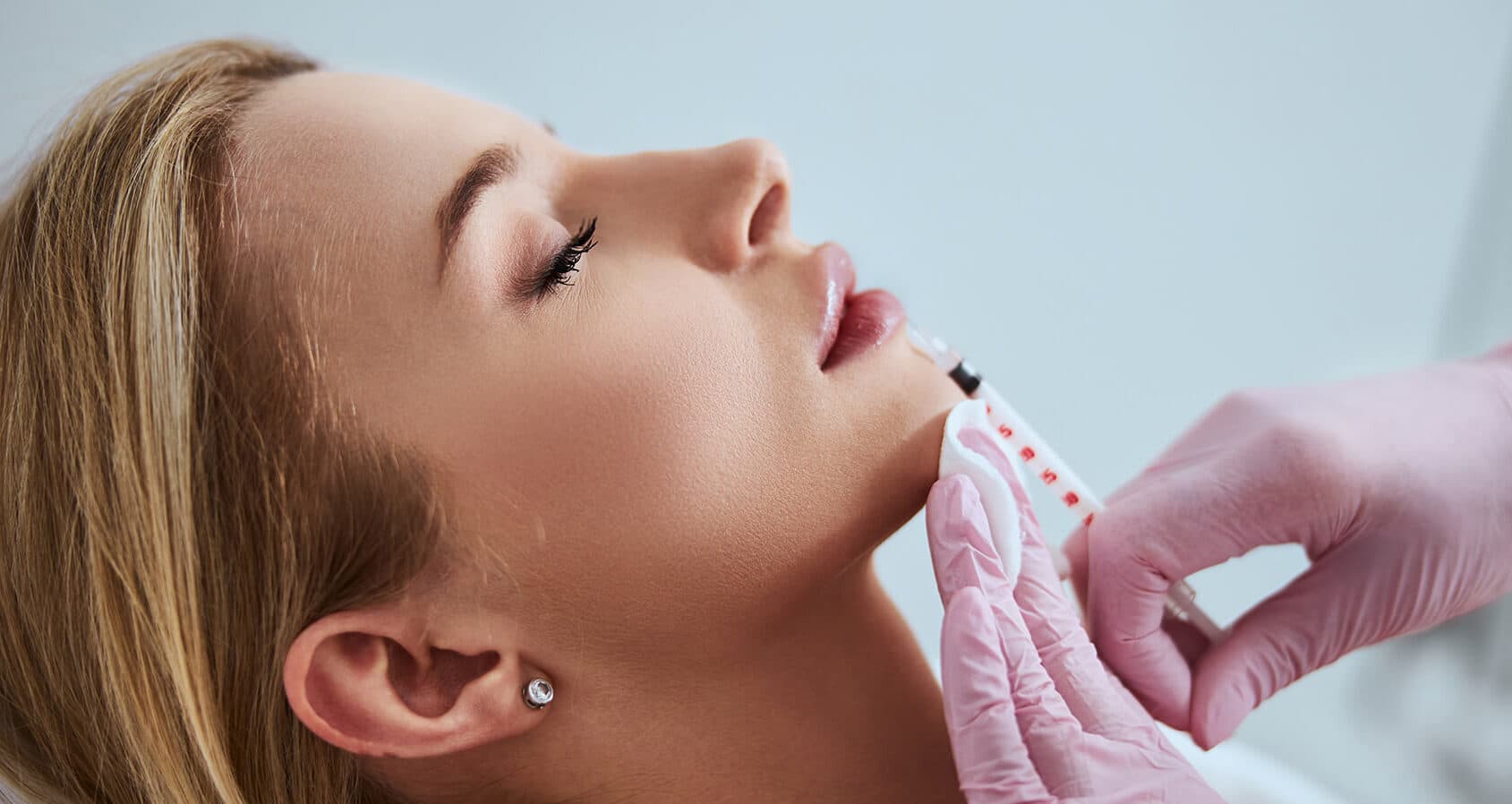
The cost of Volite is set by how much skin is being treated and how many micro-injections it takes to cover it, which is why no figure appears on this page and why a quote given before an assessment is a guess. The more useful question, and the one almost nobody asks, is not what a session costs but what a year costs — because this is a treatment with a repeat interval built into it.
Volite is a hyaluronic acid skin-conditioning injectable delivered as many small micro-injections across an area. It is not a filler in the usual sense: it does not add contour or volume, and it works on hydration, smoothness and fine surface lines instead. That distinction turns out to drive the money as much as it drives the result.
Why can nobody quote this before seeing your skin?
Because the quantity is not known until the area is decided, and the area is a clinical judgement rather than a menu choice.
A treatment delivered as micro-injections across a region scales with the region. The fine lines around the eyes are the most commonly treated area, but the neck, the décolletage and the backs of the hands all show dehydration early and all respond to the same approach. Those are not interchangeable in size, and the number of injection points needed to cover each differs accordingly.
A clinic that quotes you a flat number over the phone has decided your area before examining it. That is the thing to be sceptical about, rather than the figure itself.
Is the honest unit a session, or a year?
A year, and this is the single most useful reframing available on this topic.
Most patients have a single treatment and then repeat it roughly every six to nine months to maintain the effect — the result commonly lasts in that same six- to nine-month range, which is why the interval sits where it does. So the spending pattern is not one appointment; it is an appointment somewhere between once and twice a year, continuing for as long as you want the effect.
That changes how any quote should be read. A single-session figure compared against a treatment with a different rhythm is not a comparison at all. If you are weighing Volite against something you would have monthly, or against something whose effect fades in weeks, the only fair arithmetic is annual.
It also changes which question to ask in the room. Not "how much is this session" but "how often would you expect to repeat this for my skin" — because the doctor confirms that interval based on how your skin responds, and a skin that holds the result for nine months costs meaningfully less per year than one that needs it at six.
What makes one person's treatment larger than another's?
Three things, in roughly this order of weight.
The area chosen. Under-eyes alone, the full face, the neck, the décolletage or the hands — and sometimes a combination, because dehydration rarely confines itself politely to one region.
How many injection points that area takes to cover. This is the quantity that actually gets delivered, and it follows from the size and the character of the skin rather than from a tier you select.
What your skin needs rather than what your skin type is. Oiliness and dehydration are different things, and oily skin can be dehydrated too — the treatment is not restricted by skin type. That means an oily-skinned patient may turn out to need the same treatment as a dry-skinned one, and neither should be quoted on the assumption that their skin type settles it.
Why doesn't filler pricing apply?
Because the two do different jobs, and the per-syringe logic people arrive with does not map.
A dermal filler is placed at specific points to add volume or contour. Volite is spread across an area as many micro-injections to improve hydration and texture — a skin-quality treatment, not a shaping one. Patients typically describe skin that looks brighter and smoother rather than fuller.
So if you have had filler before, or priced it recently, carry none of that arithmetic across. A quote built around volume in one place and a quote built around coverage over an area are two different structures, and comparing the numbers tells you nothing about either.
What is inside the appointment, and what sits outside it?
Worth establishing before you agree to anything, because this is where quotes quietly differ from each other.
Anaesthetic cream is applied for thirty to forty-five minutes beforehand, so the appointment is longer than the injecting itself — ask whether that time and that product are inside the figure. Ask what the follow-up arrangement is, given that the effect peaks at around ten to fourteen days and continues improving over the first month: the result cannot be judged on the day, so there should be a point at which it is reviewed.
The consultation fee here is waived against treatment if you go ahead, which is the fairest form this can take — the assessment that produces a real number costs you nothing if you proceed with it.
We have deliberately not published an all-India range on this page, and that is not caution for its own sake. A national figure for a treatment whose quantity depends on your own area and injection count would be an invented number dressed up as information, and you would be entitled to hold us to it.
What should a quote spell out before you agree to it?
Four things: which area is being treated, roughly how many injection points that area is expected to take, what the expected repeat interval is for your skin, and who is doing the injecting. The treatment pages here set out no practitioner tiers, so that last one is a question to ask rather than something to read off a price list — and it is a reasonable question anywhere.
A practical Bangalore note on the second and third of those. If your skin is dull and tight through the dry months and then behaves differently in the monsoon, say so at the assessment: the area worth treating and the interval worth planning are both judgements about how your skin actually behaves across a year in this city, not about how it looks on the morning of the appointment.
Could a different treatment be the cheaper answer?
Possibly, and that is worth establishing before you spend anything.
If the complaint is texture, pore appearance and mid-day shine rather than dehydration, Skin Botox addresses a different mechanism. If the concern is broader skin quality across a region, Profhilo is the other conversation in this family. Which of the three suits you is an assessment finding, and the cheapest outcome is often being told that the thing you came in asking for is not the thing you need.
That is also why a number matters less than the conversation that produces it. Book an appointment at Bellandur or Indiranagar, bring what your skin does across a year rather than what it is doing today, and ask for the annual figure rather than the session one.