
What Is Thread Lift? A Plain-English Explanation
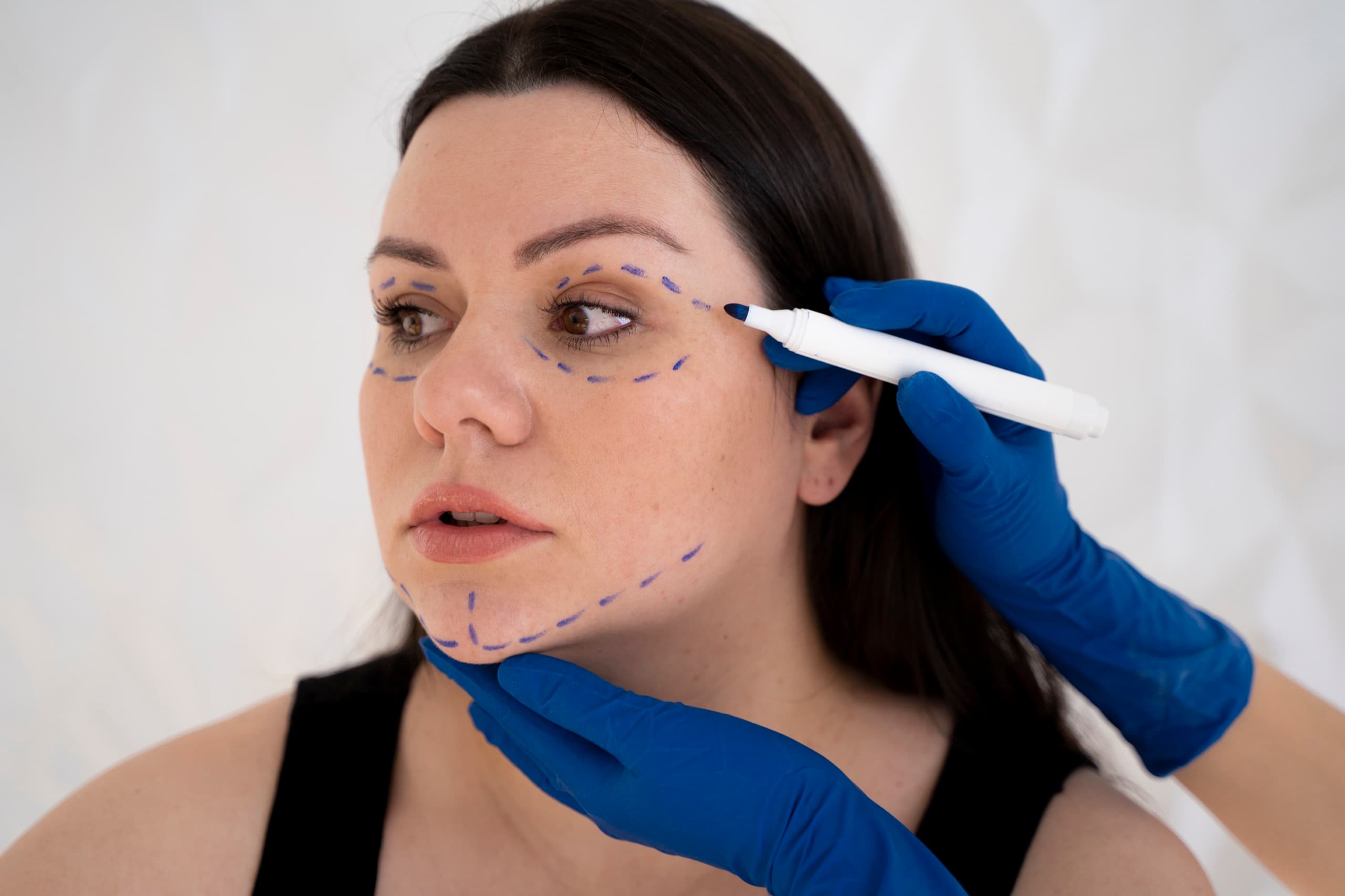
A thread lift places fine dissolvable threads under the skin and uses them to draw tissue that has begun to sag back into position and hold it there. The threads are absorbable, so nothing stays in permanently, and they stimulate collagen along their path as they break down. It is done in clinic under local anaesthetic, and the lift itself is visible the same day.
That is the whole idea in one paragraph. The rest of this explains each part of it in ordinary language, because "threads" is one of those treatment names that tells you nothing until somebody unpacks it.
What actually is a "thread"?
A surgical suture, essentially — the same family of material used to close wounds, made to dissolve on its own.
The material used most often is PDO, short for polydioxanone. It has been used for surgical stitches for decades and dissolves over roughly six months. Two other absorbable materials, PLLA and PCL, last longer and are also used in thread lifting.
The threads are not all the same shape, and the shape is what determines what each one does:
- Mono threads are smooth, with no barbs. They firm the skin and stimulate collagen but do not reposition tissue, so they are used for skin quality rather than lift.
- Cog threads, also called barbed threads, carry small anchors along their length. Those anchors grip tissue and hold it in a new position. This is the type that produces an actual lift.
- Screw threads are intertwined and add support in hollow areas.
A single plan often combines more than one type, because most faces need both firming and repositioning in different places.
How does a thread lift the skin?
Two things happen, on two different timescales.
The first is mechanical and immediate. A thread lift anchors the threads under the skin and uses them to reposition tissue that has descended, which is why the lift is visible at the end of the appointment rather than weeks later.
The second is biological and gradual. Because the threads are absorbable, they break down — and as they do, they provoke a collagen response along the path each one followed. Firmness can therefore keep improving for some weeks after the lift itself, and the collagen laid down along the way can outlast the thread that caused it.
What happens during the appointment?
Four stages, and the first of them is not a procedure at all.
Assessment. The doctor establishes whether your laxity is in the range threads can actually treat. This is the part that matters most, because beyond that range a thread lift disappoints — and you should be told so before you book rather than discover it afterwards.
Planning. Entry points and the direction each thread will follow are marked on your skin. The doctor decides which threads the plan needs: smooth mono threads where the aim is firmness, barbed cog threads where tissue has to be lifted and held. This marking is effectively a map of where the tissue is going to end up.
Placement. Under local anaesthetic, the threads are introduced with a fine needle or cannula and drawn to lift the tissue into position.
Recovery and review. Aftercare is explained, and you are seen again once the swelling has settled, so the final position can be assessed properly rather than through a swollen face.
The appointment itself is typically under an hour. There is no general anaesthetic and no hospital stay, and most patients go home the same day.
Does it hurt?
It is performed under local anaesthetic, so most patients describe pressure and pulling rather than pain. Some soreness and tightness in the days afterwards is normal.
Expect mild swelling or bruising for a few days, generally settling within about a week. A tight or pulling sensation early on is the tissue settling into its new position, and it eases as the swelling reduces. You are asked to avoid facial massage and face-down sleeping for the first week — worth knowing before you book the appointment for the week of a wedding.
How long does a thread lift last?
Generally several months to around a year, depending on the thread type, the area treated, your skin and your age.
That range is honest rather than cautious. A thread lift is a modest, temporary lift, and anyone describing it otherwise is describing a different procedure.
Is a thread lift the same as a facelift?
No, and the difference is worth being clear about before you spend anything.
A surgical facelift removes and repositions tissue, and gives a far larger, longer-lasting change. A thread lift is a minimally invasive alternative to that operation, not a replacement for it: the degree of lift a thread can achieve is modest by design. For mild to moderate laxity that is exactly the point — the result should read as rested rather than altered.
If what your face actually needs is surgery, a good doctor will tell you so.
Which parts of the face can be treated?
The mid-face and cheeks are among the areas threads suit most readily. As the cheek pad descends it flattens the cheekbone and deepens the fold beside the mouth, and cog threads can carry that tissue back up along a planned vector.
The jawline and the area under the chin are among the more commonly requested. Threads placed along the jawline lift softened tissue back toward the angle of the jaw, which sharpens the line between face and neck. Where the real problem is fullness rather than lax skin, threads alone are the wrong tool, and your doctor should say so.
Threads can also be used on the nose to refine the profile, and above the brow to lift the brow tail. Both changes are deliberately restrained.
Who is it for, and who is it not for?
Threads suit mild to moderate laxity in patients whose skin still has reasonable quality. The description that brings most people in is some version of: my jawline has softened and my cheeks have started to slide downward, creams and facials are not touching it, and I am not ready for surgery.
They are not for everyone. Threads are not advised during pregnancy or breastfeeding, with an active skin infection, or where there is skin cancer or significant laxity better served by a different approach.
They are also not the right tool for every complaint that looks similar. If the problem is lost volume rather than descended tissue, dermal filler is the treatment that addresses it. If the concern is skin quality, a resurfacing or biostimulator treatment is the right lever. Where a non-surgical tightening approach is being weighed up, options such as HIFU may form part of the same conversation. Combined plans are common, and your doctor sequences them.
Do the threads have to be removed?
No. They are absorbable and dissolve over time, and nothing needs to be taken out.
How is it priced?
Per thread, rather than as a single flat fee — because the number of threads depends on the area being treated and how much lift is planned. A single-area lift uses far fewer threads than a full-face plan, so a headline figure would mean very little.
You are given the exact number of threads and the total at the consultation, before anything is done. The consultation is ₹500, waived against treatment.
What is normal afterwards, and what is not?
Normal: swelling, bruising, tightness and a pulling sensation in the first days, easing over about a week.
Worth telling your doctor: small irregularities or puckering along a thread's path. These can appear early on and usually settle, but say something if they persist rather than waiting it out.
Worth contacting the clinic about: increasing pain, redness or discharge at an entry point. Infection or thread extrusion is uncommon but possible, and it should not be managed at home.
Worth reporting straight away: severe pain, blanching or a dusky colour change after a nose thread lift. Threads on the nasal bridge sit close to the vessels that supply the overlying skin, and a compromised blood supply can damage tissue. It is rare, and it is the reason a nose thread lift is a doctor's procedure rather than a technician's.
How do I find out if it applies to me?
By being assessed. Whether your laxity is within what threads can achieve is not something a photograph or an article can settle, and the consultation exists to give you a straight answer rather than a booking — including the answer that a different treatment, or none, suits you better.
Book a consultation and bring the concern rather than the treatment name.