
Thread Lifts: The Korea Trend, Assessed for Indian Skin
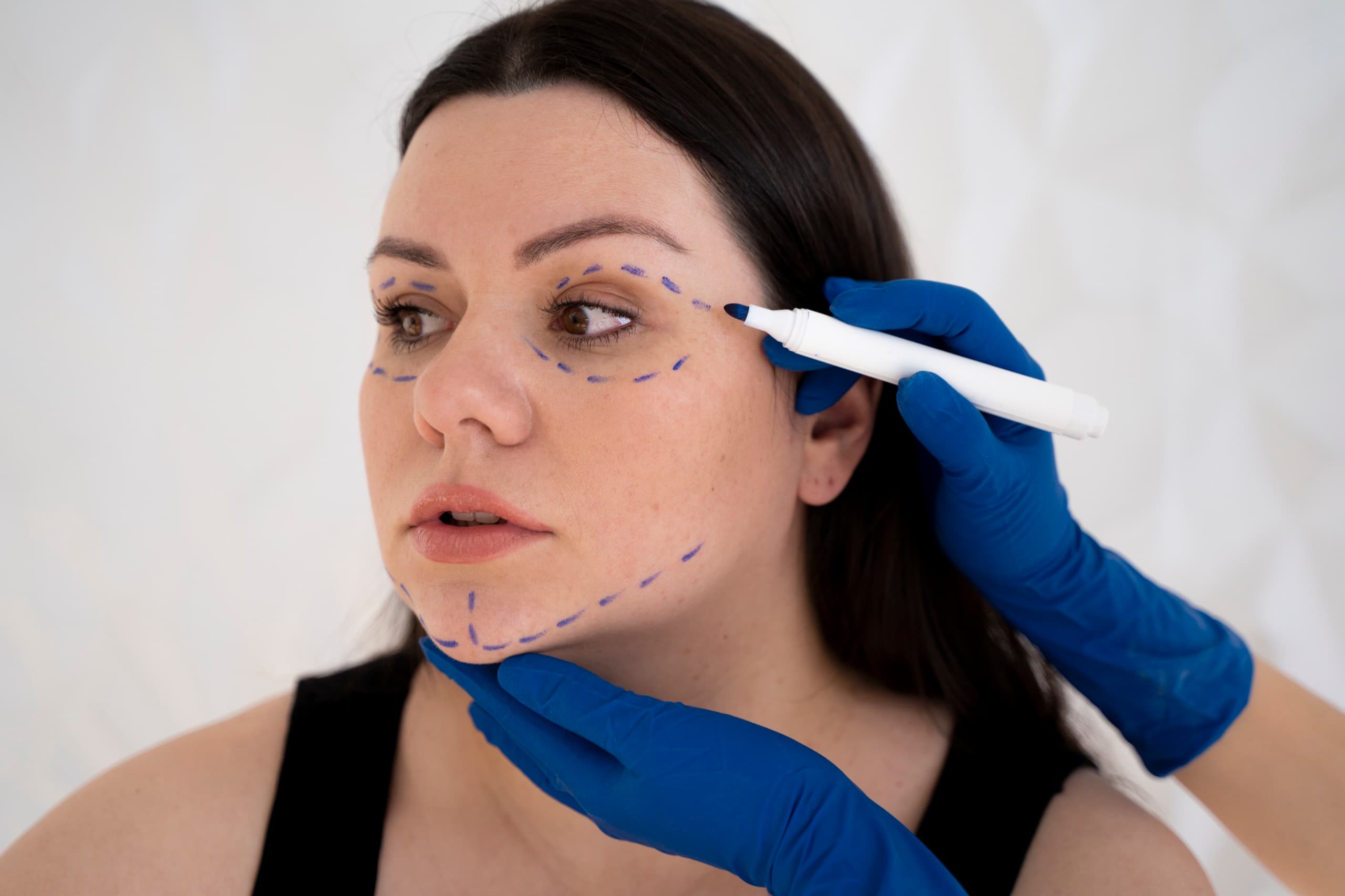
Thread lifting is strongly associated with South Korea, and some of the techniques carry Korean names — the hiko nose lift among them. The procedure travels well. The marketing around it does not. What a thread lift can offer an Indian patient is a modest, temporary lift of mild to moderate sagging, planned by a doctor around your own anatomy rather than around a country's house style.
That gap between what the trend promises and what threads actually do is the whole subject of this piece.
Why is thread lifting so closely tied to Korea?
Because a lot of the technique vocabulary came from there. The clearest example is the nose. A thread lift of the nose is commonly called a hiko nose lift, and that name is a direct inheritance from the Korean technique it describes: absorbable threads placed along the bridge, and sometimes the columella, to sharpen definition and add a little tip projection.
A name travelling is not the same as evidence travelling. When you see a Korean clinic's before-and-after and then read a claim about what threads do under it, the claim is worth separating from the photograph. The photograph is of one person's anatomy on one day. The claim is what has to hold for yours.
Is a "Korean thread lift" a different procedure from the one offered here?
Not in any way that should decide your booking. The materials are the same family of absorbable threads used worldwide. PDO — polydioxanone — is the material most commonly used, and it has been used for surgical stitches for decades. It dissolves over roughly six months, and the collagen laid down along its path is what carries the result once the thread itself has gone. PLLA and PCL are longer-lasting absorbable materials also used in thread lifting.
What differs between clinics is not a national protocol. It is the plan: where each thread enters, the vector it follows, how many are used, and which type is chosen. Smooth mono threads firm the skin and stimulate collagen but do not reposition tissue. Barbed cog threads carry small anchors along their length that grip tissue and hold it in a new position, and they are what produces an actual lift. Screw threads are intertwined and add support in hollow areas. Most plans combine more than one type.
Those are anatomical decisions, made here by a doctor. That is the thing a technique name cannot substitute for.
What does the trend promise, and what do threads actually do?
The reels promise a facelift without the facelift. The honest description is narrower.
A thread lift is a minimally invasive alternative to a surgical facelift, not a replacement for one. Threads are anchored under the skin and used to reposition tissue that has descended, which is why the lift is visible at the end of the appointment. As the threads break down they provoke a collagen response along their path, so firmness can keep improving for some weeks afterwards.
The degree of lift a thread can achieve is modest by design. For mild to moderate laxity that is the point — the result should read as rested rather than altered. A surgical facelift removes and repositions tissue and gives a far larger, longer-lasting change. If that is what your face actually needs, a good doctor will tell you so at the consultation rather than sell you threads.
How long it holds: generally several months to about a year, depending on the thread type, the area, your skin and your age.
Does the trend suit Indian skin?
The more useful question is whether it suits your degree of laxity, because that is what the procedure is actually gated on. Threads suit mild to moderate laxity in skin that still has reasonable quality. Beyond that range a thread lift disappoints, and you should be told so before you book rather than after.
Two other things decide it, and neither has anything to do with a trend:
- What kind of change you are after. If the problem is lost volume rather than descended tissue, filler is the better tool, and a dermal filler plan is what your doctor should be proposing. If it is skin quality, a resurfacing or biostimulator treatment is the right lever. Combined plans are common; your doctor sequences them.
- Whether threads are advisable for you at all. They are not advised during pregnancy or breastfeeding, with an active skin infection, or where there is skin cancer or significant laxity better served by another approach. Where a non-surgical tightening approach is being weighed up, other options such as HIFU may be part of that conversation.
Which viral versions are realistic — nose, fox eye, jawline?
All three are real procedures. All three are more restrained than the internet suggests.
The nose. A hiko nose lift refines a profile rather than reshaping a nose. It is a non-surgical alternative to rhinoplasty, and the change is modest and temporary. It is also the area where the doctor's knowledge of the anatomy matters most, for reasons covered in the warning signs below.
The fox eye. Threads anchored above the brow lift the brow tail and open out the corner of the eye, giving the elongated, slightly upturned shape the name describes. It suits people whose brow tail has begun to drop. The lift is deliberately restrained — an over-lifted brow reads as operated on, which is the opposite of the point.
The jawline and mid-face. These are among the areas threads suit most readily and the most commonly requested. As the cheek pad descends it flattens the cheekbone and deepens the fold beside the mouth, and cog threads can carry that tissue back up along a planned vector. Along the jawline, threads lift softened tissue back toward the angle of the jaw. Where the real problem is fullness rather than lax skin, threads alone are the wrong tool and your doctor should say so.
What about MINT, Silhouette InstaLift and the other brand names?
They are brand names for the thread systems described above. MINT is a barbed PDO thread; Silhouette InstaLift uses PLLA threads that hold tissue with small absorbable cones instead of barbs. Naming them here is not a statement about what any clinic stocks — the material, shape and count in your plan, and the specific system used, are confirmed at your consultation.
Brand recognition travels faster than clinical reasoning. The match between thread type and your anatomy matters more than the label on the packet.
What does recovery look like around a working week?
It is an in-clinic appointment, typically under an hour, under local anaesthetic — no general anaesthetic and no hospital stay. Most patients go home the same day.
Expect mild swelling or bruising for a few days, usually settling within about a week. Tightness or a pulling sensation in the first days is normal as the tissue settles. You are asked to avoid facial massage and face-down sleeping for the first week, which is worth planning around before you book a date with a wedding or a presentation at the end of it.
Cost is worked out per thread rather than as one flat fee, because the number of threads depends on the area and how much lift is planned. You are given the exact number and the total at the consultation, before anything is done. The consultation itself is ₹500, waived against treatment.
What should make me contact the clinic afterwards?
Small irregularities or puckering along a thread's path can appear early on. They usually settle — but if they persist, tell your doctor rather than waiting it out.
Infection or thread extrusion is uncommon but possible. Increasing pain, redness or discharge at an entry point is a reason to contact the clinic rather than manage it at home.
The nose deserves its own line. Threads on the nasal bridge sit close to the vessels that supply the overlying skin, and a compromised blood supply can damage tissue. It is rare, and it is why a nose thread lift is a doctor's procedure. Severe pain, blanching or a dusky colour change after treatment should be reported to the clinic straight away rather than left to see whether it settles.
How do I find out whether I am actually a candidate?
By being assessed, not by matching yourself to a video. The consultation exists to establish whether your laxity is in the range threads can treat, to mark the entry points and vectors your face would need, and to give you a straight answer — including the answer that threads are not the right tool for you.
If the trend brought you here, that is a perfectly reasonable way to arrive. Book a consultation and have the plan built around your face rather than around a technique's country of origin.