
What Are Dental Implants? A Plain-English Explanation
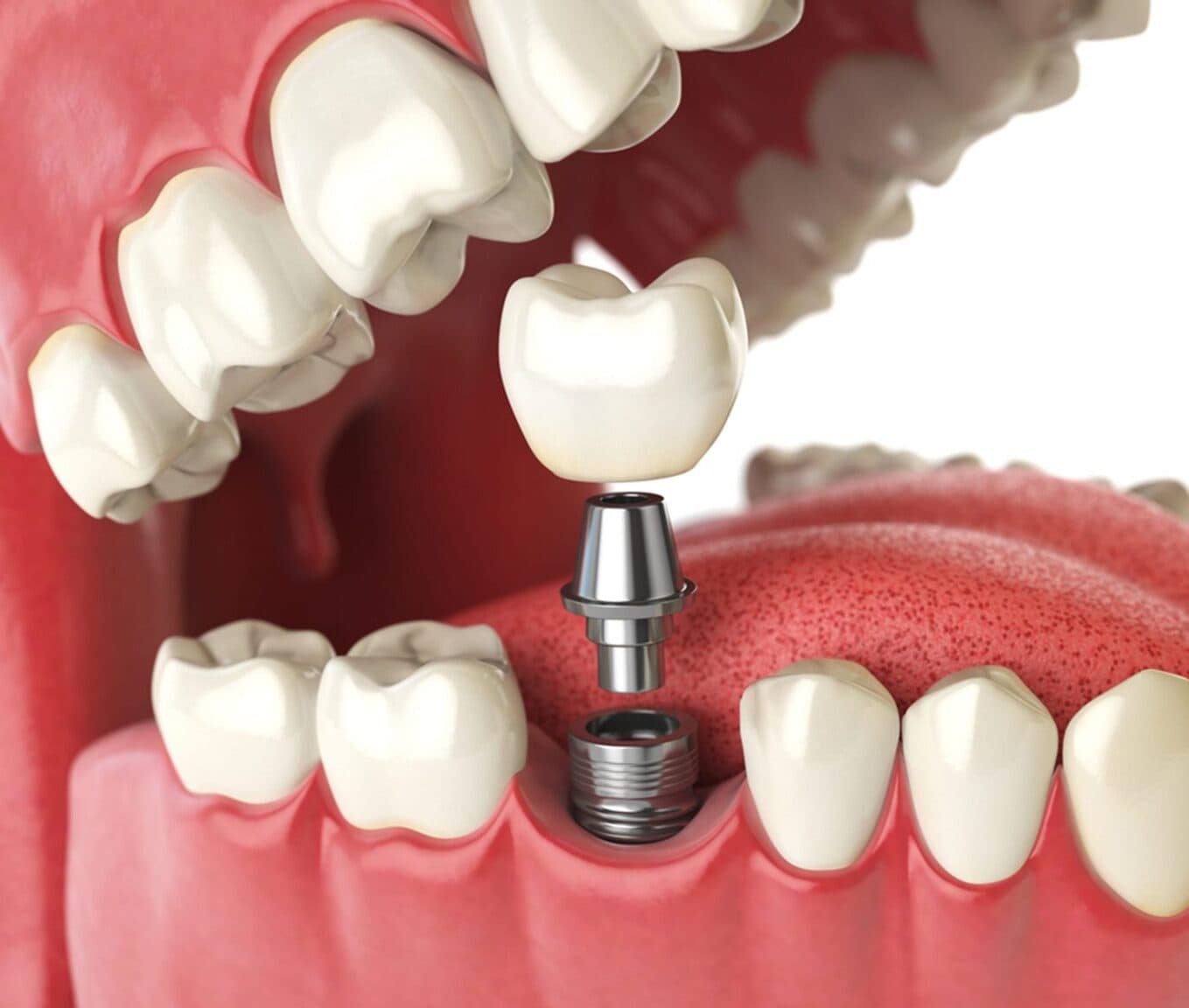
A dental implant is an artificial tooth root, usually titanium, placed into the jawbone to support a replacement tooth. It comes in three parts — the post in the bone, an abutment on top of it, and the crown you chew with. It restores biting and chewing without altering the healthy teeth on either side, and it keeps the jawbone stimulated where a tooth has been lost.
Most people meet the word for the first time in a dentist's chair, after losing a tooth, and nod along without quite knowing what is being described. This page takes the term apart slowly. It does not try to sell you one — it tries to make sure that when someone offers you an implant, you know what they are offering.
What exactly is a dental implant?
It is a replacement for the root of a tooth, not for the tooth you can see.
That is the part most explanations skip, and it is the part that makes everything else make sense. When you lose a tooth, you lose two things: the white crown above the gum that does the chewing, and the root below it that anchors that crown into your jaw. A denture or a bridge replaces the first. An implant replaces the second, and then a crown is built onto it to replace the first as well.
The post itself is small and shaped rather like a screw. It goes into the jawbone, under local anaesthesia, and is then left alone to fuse with the bone around it — a process called osseointegration. That fusing is what turns a piece of metal into a working root, and it is why the whole treatment is measured in months rather than appointments.
What are the three parts, and what does each do?
A titanium post, an abutment and a crown, stacked from the bone upwards.
- The post. Titanium, placed into the jawbone and left to fuse with it. Titanium is used because bone bonds to it readily.
- The abutment. The connector. It sits on the post and passes through the gum, giving the visible part something to attach to.
- The crown. The tooth you actually see and chew with, shaped and shaded to sit with your own teeth.
You will sometimes hear all three called "the implant" in casual conversation. Strictly, the implant is the post. The distinction matters when you are comparing quotes, because a quote may be describing one part, two, or all three.
What does an implant replace, and what does it not?
It replaces one missing tooth's root, or acts as an anchor for several missing teeth — and it does nothing for teeth that are still in your mouth.
Implants can support a single crown, a bridge spanning several missing teeth, or a full arch. The number of implants needed to carry a given number of teeth is decided at the planning stage, and it is not one implant per tooth. What an implant cannot do is treat decay, gum disease or a cracked tooth that is still present. Those are separate problems with separate treatments, and where they exist they generally have to be dealt with before implant planning is sensible.
How is an implant different from a bridge?
A bridge is anchored to the teeth on either side of the gap; an implant is anchored in the jawbone instead.
That single difference drives most of the comparison. To carry a conventional bridge, the two teeth beside the gap have to be reshaped — healthy enamel is removed so that crowns can be fitted over them. An implant stands on its own, so those neighbouring teeth are left as they are. If you want the fuller side-by-side, our page on bridges and crowns sets out what that option involves in its own right.
How is it different from a denture?
A denture is removable and rests on the gum; an implant is fixed in the jaw.
Practically, that shows up at mealtimes and in conversation. A removable appliance can move when you eat and can click when you speak; an implant does not, because it is held in bone rather than sitting on tissue. There is also no nightly soaking and no fixative — an implant is cleaned like a natural tooth. None of that makes dentures the wrong answer for everyone; they remain a sound choice in plenty of mouths, and the two can be combined.
Who tends to consider one?
People who have lost a tooth and have started working around the gap.
The patterns we hear most often are these. Someone has lost a tooth and now chews on one side without thinking about it. Someone has been offered a bridge and does not like that it means grinding down two healthy teeth, with nobody having mentioned another option. Someone's denture moves when they eat and they are tired of adhesive. If one of those sounds familiar, an implant is at least worth asking about — which is different from it being the right answer for you.
What is the process, in outline?
Four stages, typically three to four visits, across several months.
- Assessment and imaging. An examination plus X-rays or a CT scan, to confirm there is enough bone and to map a safe position for the implant.
- Treatment plan. How many implants, what type of restoration goes on top, whether any grafting is needed, and the expected timeline.
- Placement. The implant is placed into the jawbone under local anaesthesia. Sutures may be used, and the site is left to heal.
- Restoration and review. Once the implant has fused with the bone, the abutment and final crown are fitted, the bite is adjusted, and the implant is checked at routine check-ups thereafter.
The long gap between stages three and four is not padding. It is the fusing, and it cannot be hurried.
What are the side effects, and what should prompt a call?
Soreness, swelling and minor bruising around the site for a few days, plus a short period of soft foods.
Placement is done under local anaesthesia, so the procedure itself should not hurt. Afterwards, some tenderness and swelling are expected and are usually managed with prescribed medication. You will be asked to keep to soft foods and to avoid chewing on the surgical side for a short while as the site closes.
Please do not try to work out for yourself whether something is normal. As a general rule, contact the clinic rather than waiting if pain or swelling is getting worse after the first few days instead of settling, if bleeding does not settle, if you develop a fever, or if anything simply feels wrong to you. Call the clinic or use the booking page to be seen — being checked and told all is well costs you very little, and it is the sort of thing your dentist would far rather look at early.
What might mean an implant is not right for you?
Uncontrolled diabetes, active gum disease, heavy smoking or insufficient jawbone can all affect healing.
None of these is automatically a closed door. Where there is not enough bone to hold an implant securely — common where a tooth has been missing for a long time — grafting may be discussed. Where gum disease is active, treating it comes first. Where a medical condition is in play, your dentist will talk through what that changes. All of this is established by examination and imaging, by a dentist, in person. Nothing you read here can tell you which group you are in.
How long does an implant last?
With good oral hygiene and regular check-ups, implants are intended as a long-term replacement rather than something swapped out every few years.
The crown on top may need replacing sooner than the post underneath it — it is the part doing the visible work and taking the wear. That is worth knowing when you are comparing an implant against options that are replaced or relined on a predictable cycle.
What does it cost?
We do not publish an implant figure, and we would be inventing one if we did.
The price is set by a plan rather than by a part: how many teeth are being replaced, how many implants carry them, whether grafting is needed, and what restoration goes on top. What we can tell you is that the consultation is ₹500, waived off against treatment, and that you should leave it holding a written plan you understand.
Where to go next
If this has answered the "what is it" question and left you with a "should I" question, that is the right place to be. The full treatment page for dental implants covers the procedure in more detail, and a consultation is where your own bone, gums and bite get looked at properly. You can book an appointment at either of our Bangalore clinics.