
One Missing Tooth, Three Options: What Rules Each One Out
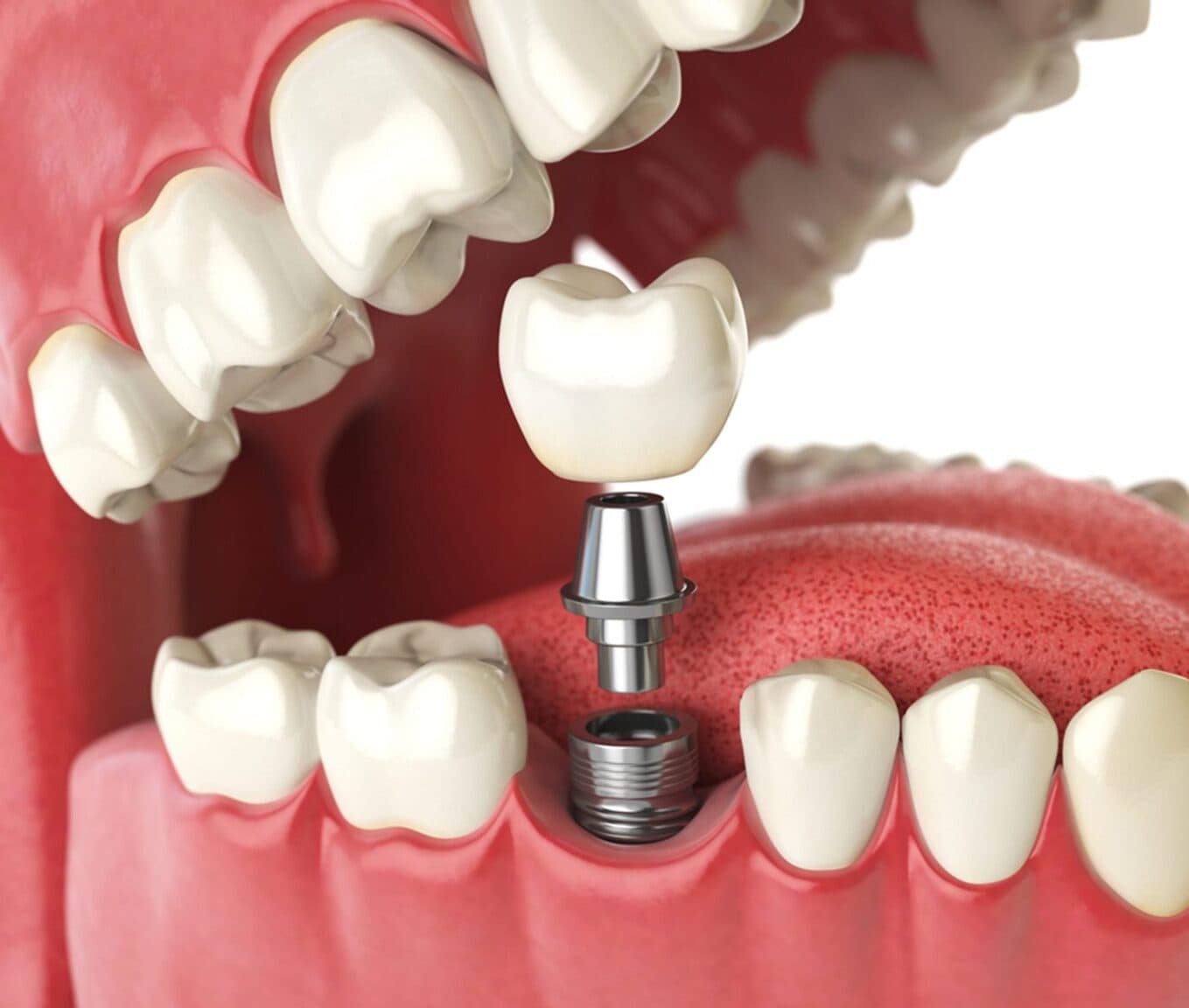
For a single missing tooth there are three real options — an implant, a bridge, or a partial denture — and the choice is usually made by ruling options out rather than by picking a favourite. Three things do most of the ruling: the condition of the teeth either side of the gap, the bone underneath it, and how soon you actually need a tooth there. None of those is visible to you in a mirror, which is why the decision belongs in an examination rather than in a comparison table.
What follows is what each option asks of your mouth, and what takes it off the table.
What does each one do to the healthy teeth beside the gap?
This is the factor that most often decides it, and it is the one people are least told about.
A dental implant is an artificial tooth root, usually titanium, placed into the jawbone to support a replacement tooth. It stands on its own, so the teeth either side stay untouched — nothing is reshaped, nothing healthy is cut into.
A conventional bridge works differently: the replacement tooth is carried by crowns on the teeth either side, and those two teeth have to be reshaped to take them. That is the trade. If the neighbouring teeth are sound, you are altering healthy tooth structure permanently to fill a gap next door. If they already need crowns — heavily filled, cracked, root-treated — then the reshaping is work you were going to have done anyway, and a bridge starts looking sensible rather than wasteful.
A partial denture fills in around the teeth you still have, without surgery and without reshaping anything.
So the first question at the examination is not "which is most modern" but "what condition are the two teeth beside the gap in". The answer moves the bridge from poor idea to obvious one.
How quickly does each one give me a tooth?
Very differently, and if you have a deadline this may decide it outright.
An implant takes several months, because the implant needs time to fuse with the jawbone before the final tooth is attached — typically three to four visits across the whole treatment. A bridge is usually two visits, preparation then fitting, with a temporary crown or bridge protecting the prepared tooth in between. A partial denture takes several visits — impressions, try-in, fitting, then adjustment appointments — and then a few weeks to get used to eating and speaking with it.
Worth reading that carefully, because "fast" splits two ways. A bridge gets you to a finished tooth in the fewest appointments. A denture gets something in place without surgery, but asks for an adaptation period afterwards. An implant is the longest road and the appointments are spread over months rather than weeks.
If you are planning around a wedding, a shoot or a move, say the date at the first appointment rather than at the third. It changes which options are realistic more than almost anything else you could mention.
Does the bone underneath matter?
It matters in both directions, and it is the part that most often surprises people.
Going in: the timeline for an implant depends on bone quality and whether any grafting is needed. That is a clinical assessment, not a preference, and it is why nobody can quote you an implant timeline without looking.
Looking ahead: the jaw loses bone where a tooth root is missing. An implant transmits chewing forces into the bone and helps slow that loss — the other two options replace the tooth above the gum without doing that. A bridge does stop the neighbouring teeth drifting into the gap, which is a related but separate problem.
This is the honest argument for an implant, and it is a long-term one rather than an immediate one. It is also why "leave it for now" is not a neutral choice.
Is a partial denture a serious option for one tooth?
Yes — and it is routinely dismissed too early, usually by the patient rather than the dentist.
A partial denture is removable, made to your own mouth and adjusted over a few visits until it sits comfortably. It suits someone who wants teeth replaced without surgery, and it involves no reshaping of healthy teeth at all. The trade is daily care — it is cleaned daily and kept moist overnight — and the adaptation weeks.
Set against that, an implant is cleaned like a natural tooth: no nightly soaking, no fixative, nothing to remove. And because it is fixed in the jaw it does not slip or click while you speak, which is the specific complaint people raise about removable appliances.
So the question is not whether a denture is good enough. It is whether you would rather accept a nightly routine or a surgical procedure and several months.
What about cost?
It is a legitimate factor and you should raise it directly. What this page will not do is publish a comparison, because the figures depend on the specific plan — whether grafting is needed, how many units a bridge spans, what materials are chosen — and a number written here would be wrong for most readers.
Ask at the consultation what the quote covers and what sits outside it. A plan you understand is worth more than a headline figure, and "cheapest now" and "cheapest over ten years" are frequently different options.
What actually decides it in the chair?
The examination, and it works by elimination rather than by scoring.
If the bone will not take an implant without grafting and you are unwilling to wait, the implant is out. If the teeth beside the gap are pristine and you would rather not have them cut into, the bridge is out. If a nightly routine is something you know you will not keep up, the denture is out. Often two options are ruled out quickly and the conversation is really about one.
What you can do beforehand is arrive with the three inputs: how long the tooth has been missing, whether the neighbouring teeth have had work done, and your deadline if you have one. In this city that last one is usually a wedding in the family, and it is better said early.
One more thing worth knowing: an implant can support a single crown, a bridge across several missing teeth, or a full arch, and the number of implants needed is decided at the planning stage. So if the gap is one tooth today but you know another is loose, say that too — it changes the plan rather than complicating it.
Implants are, with good hygiene and regular check-ups, intended as a long-term replacement rather than something redone every few years, though the crown on top may need replacing sooner than the implant itself. Placement is done under local anaesthesia, with soreness and swelling for a few days afterwards, managed with medication and post-operative care.
If you have a single gap and would rather be told which options are genuinely open to you than read another comparison, book a consultation at our Bellandur or Indiranagar clinic. Bring the history of the teeth either side — that is the detail that decides most of it.