
What Actually Happens During Root Canal Treatment (RCT): A Step-by-Step Walkthrough
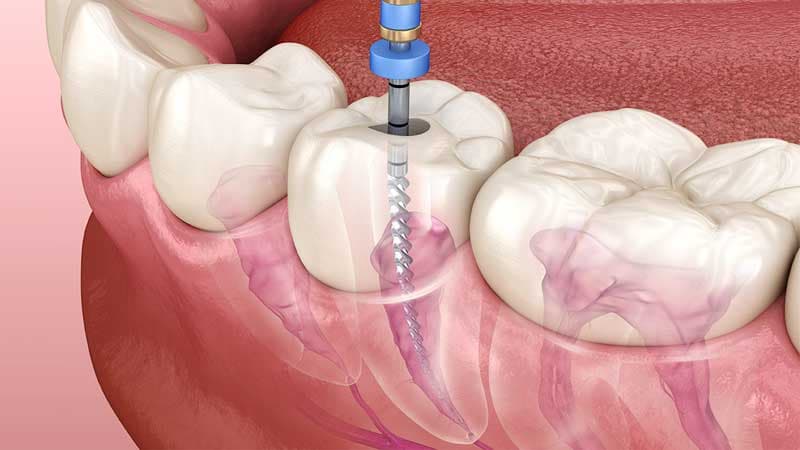
A root canal appointment runs in four stages: the dentist examines the tooth and takes an X-ray to confirm the diagnosis, the area is numbed with local anaesthesia, a small opening is made in the top of the tooth so the infected pulp can be removed and the canals cleaned and sealed, and the tooth is then restored. A straightforward single-visit case takes roughly 60 to 90 minutes.
If you are nervous about this, you are in ordinary company, and vague reassurance tends not to help. Knowing the order of events usually does — mostly because it turns an open-ended ordeal into a sequence with a visible end.
What happens before anything is done to the tooth?
An examination, and an X-ray where one is needed. Nothing is started until the dentist has established two things: that the pulp inside the tooth is genuinely inflamed or infected, and that a root canal is the right treatment for it.
This stage is not a formality and it is worth taking part in. Say which tooth it is as precisely as you can, describe what sets it off, and mention whether the pain lingers after hot or cold or passes straight away — that difference is informative. It is also the moment to ask what the X-ray shows. Most people are too polite to ask, and then spend the rest of the appointment imagining something worse than the answer.
Occasionally this stage concludes that you do not need a root canal at all, and that a filling will address it.
How does the numbing work, and will I feel it?
The area around the tooth is numbed with local anaesthesia before any work begins. That injection is the part most people are actually anxious about rather than the treatment itself, and it is over in seconds.
Two things are worth doing here. First, tell the dentist you are nervous, before you sit down — plainly, in those words. It changes how the appointment is run. Second, agree a signal, usually a raised hand, that means stop for a moment. Knowing you can pause the proceedings is disproportionately calming, and most people who agree one never use it.
Then wait. Numbness takes a little time to become complete, and there is no prize for starting early. If the tooth still feels sharp when the dentist checks, say so rather than deciding to be brave about it.
What is the opening, and what does it feel like?
Once you are numb, a small opening is made in the crown of the tooth to reach the pulp chamber inside. This is the only route in — the canals run down through the roots, and they are reached from the top.
What you notice is pressure and vibration rather than pain, plus the noise, which is close-range and therefore louder than it is significant. Sound is a large part of what makes dental treatment unpleasant for anxious patients, and it is the part you can do something about: bring headphones and something absorbing to listen to. Nobody minds, and it works better than most people expect.
What is happening during the longest part?
This is the stretch that gives the treatment its name, and also the least eventful part of it for you.
The infected pulp is removed, and the narrow canals inside the roots are cleaned and shaped. They are then disinfected, filled and sealed against further infection. Careful, unhurried work — which is exactly why the appointment is measured in an hour or more rather than minutes, and why a dentist taking their time here is a good sign rather than a worrying one.
For you it is a long period of holding your mouth open while somebody works with fine instruments a few centimetres away. Your jaw will get tired; that is the most common complaint people report afterwards, ahead of anything to do with the tooth. Use the signal you agreed if you need to rest it.
How long will I be in the chair?
Roughly 60 to 90 minutes for a single-visit case. Ask at the assessment how long yours is expected to take, because it varies with the tooth and how many canals it has, and a specific number is easier to sit through than an unknown one.
Allow more time than the appointment itself. Between arriving, the assessment and the numbing taking effect, the visit is longer than the treatment.
Why might it be split across two appointments?
Two reasons, and neither means something has gone wrong.
Where a tooth has several canals or awkwardly curved ones, the work simply takes longer than one comfortable sitting. And where there is an active infection, a dentist may prefer to let it settle before sealing the canals rather than closing up over it. Being told in advance that yours may need two visits is a sign of a plan, not a complication.
What happens before I leave?
The tooth is restored — a filling or a crown to rebuild its strength and protect it from fracturing under chewing load. Which of those applies depends on the tooth and how much sound structure remains, and for back teeth a crown is usually the answer, fitted over a further two appointments with a temporary in the meantime.
You will also leave numb. Keep anything solid off that side until the feeling has completely returned, and expect the tooth and gum to be tender to bite on for a few days, which ordinary pain relief generally handles.
What can I do to make the appointment easier?
Practical things, none of them clinical.
Eat properly beforehand — an hour of dental treatment on an empty stomach is harder than it needs to be, and you will want to keep off that side afterwards. Book a time of day you can manage rather than squeezing it between commitments. Bring headphones. Wear something you are comfortable lying still in. And keep the afternoon light if you can, not because you will be incapacitated, but because a quiet evening is a nicer landing than a meeting.
What if I am genuinely frightened rather than mildly nervous?
Say so, and say it early — at the assessment, not on the day.
Dental anxiety is common and dentists deal with it constantly; it is not something you need to apologise for or manage privately. Being told about it in advance lets the appointment be planned around it, and it is far more useful than arriving determined to cope and finding you cannot.
The one thing worth avoiding is the response anxiety pushes people toward, which is to wait. Pulp infection does not improve while you build up to it, and the appointment you eventually attend is a longer one than the appointment you could have had.
The procedure is set out in full on the root canal treatment page. When you are ready, book an appointment and tell them at the desk that you would like the nervous-patient version of the conversation.