
What Changes the Cost of Kids Dentistry in India
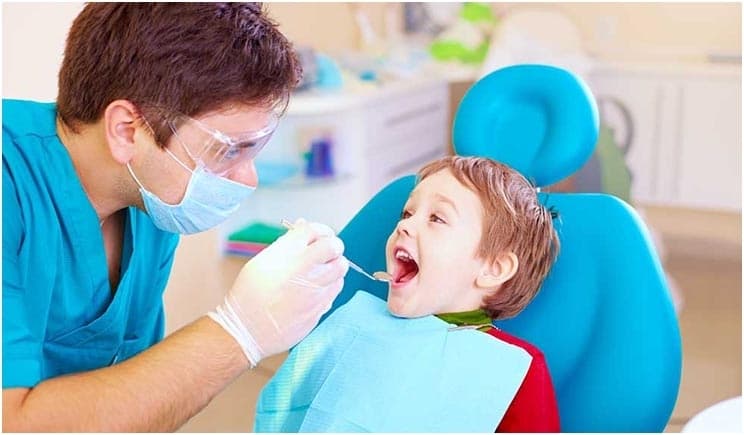
What a child's dental visit costs in India depends first on the child — how old they are and how they cope with the chair — and then on what the visit turns out to need. A settled six-year-old having a check-up and a frightened four-year-old who needs a first visit with no treatment at all are not the same appointment. The consultation itself is ₹500, waived against treatment.
Parents usually arrive expecting the answer to be a list of procedures with prices next to them. In children's dentistry that list is the smaller half of the story, because the same procedure can take one visit or three depending on who is sitting in the chair.
How much does my child's age actually change?
More than most parents expect, and in ways that are clinical rather than administrative.
Children are not small adults. Baby teeth have thinner enamel and larger nerves, decay moves through them faster, and appointments have to fit a shorter attention span. A toddler's mouth is a different clinical problem from a twelve-year-old's, and the work in front of the dentist changes accordingly.
Age also sets what the visit is for. The first visit is recommended around the first birthday, or whenever the first tooth appears, and it is largely about familiarising the child with the setting and giving parents guidance rather than doing treatment. By the mixed-dentition years the same six-monthly visit is also tracking how the adult teeth are coming through and flagging crowding or bite issues at the age when they are easiest to guide. Those are different appointments wearing the same name.
Does a nervous child cost more?
Sometimes, and it is worth understanding why before you try to avoid it.
A frightened child is not managed by pushing through the appointment. They are shown each instrument, told what will happen before it happens, and allowed to pause. Where a child has had a difficult experience elsewhere, a short and positive first visit with no treatment at all is often the right starting point.
Spread over more visits, that pacing can mean more chair time for the same clinical work. It is a real cost and we would rather name it than pretend it is free. What it buys is the part that does not show up on any invoice: rushing a first visit costs years of cooperation afterwards, and a child who is not frightened of the dentist becomes an adult who keeps going. Set against a lifetime of avoided appointments and the problems that grow in the gap, an extra half hour at age four is not the expensive option.
Parents are welcome to stay with the child throughout the appointment, which often does more for a nervous child than anything else available.
What is included in a routine children's visit?
Four things, in order.
There is time to settle in — for the child to get comfortable in the chair and look at the instruments before anything is done. Then the examination: teeth, gums, bite, and the way the adult teeth are developing. Then preventive or restorative care where it is needed, explained to the child step by step. Then guidance for the parent on brushing and diet, and a review interval set to your child's own risk of decay.
X-rays sit slightly outside that list on purpose. They use a low dose and are taken with appropriate protection, but they are taken where there is a clinical reason — such as checking between back teeth that touch each other — rather than routinely at every visit. If nobody has explained why an X-ray is being taken, that is a fair question to ask.
Which treatments are charged on their own?
The common ones in children are examinations, cleaning, fluoride application, sealants and fillings, and they are not one bundle.
Fissure sealants are a thin protective coating applied to the deep grooves of the back teeth, where the large majority of childhood cavities start. They are quick and need no drilling and no anaesthesia. Fluoride application does a related job by a different route. Both are preventive, both are quick, and neither is the same undertaking as a filling.
Where a filling is needed, our dental fillings start from ₹999 per tooth — priced per tooth, so how many teeth need treating is decided by the dentist and confirmed at your consultation. That per-tooth qualifier matters: a child with one small cavity and a child with four are not looking at the same figure, and a headline price answers only the first of those.
We do not publish a separate figure for a children's check-up, sealants or fluoride, because those are set after your child has been examined rather than in advance.
Why do some children come back more often than others?
Because the recall interval is a clinical decision, not a calendar habit.
Check-ups are usually every six months, adjusted to your child's own risk. A child with deep grooves in the back teeth, a diet heavy in sugary snacks between meals, or a history of decay may be seen more often than one who is at low risk. Over a year that changes the number of visits, which changes the total more reliably than any single procedure does.
The lever you control at home is the same one that moves the risk: brushing twice daily with an age-appropriate fluoride toothpaste, supervised until your child can do it properly themselves, flossing where the teeth touch, and limiting sugary snacks and drinks — especially between meals and at bedtime. Professionally applied fluoride is used at doses appropriate for children; at home, use an age-appropriate amount of toothpaste and supervise young children so it is not swallowed.
Is it really cheaper to come before there is a problem?
On the evidence of what walks through the door, yes.
Early decay, crowding and bite problems are far simpler to deal with when they are found early, and a routine check-up costs a child far less than an emergency one. The other half of that is what the child goes through: preventive dentistry at six-monthly intervals is a short, uneventful visit, while an untreated cavity becomes pain, and pain becomes an urgent appointment on a bad day.
The related myth is worth answering directly, because it is expensive. Baby teeth do need treating even though they fall out. They hold space for the adult teeth; decay in them causes real pain and infection, can damage the developing tooth underneath, and losing one early can crowd the adult teeth that follow.
Why can nobody quote me before seeing my child?
Because the three things that move the figure — your child's age, how they cope with treatment, and what the examination finds — are all things somebody has to see.
A dark spot on a back tooth may be nothing or may be early decay, and the difference is not visible from a description over the phone. Every appointment here is performed by a dentist, and the plan you are quoted is the one that follows an examination rather than a guess.
If you would rather bring your child in before there is a problem than after, that is the visit that tends to cost the least in every sense. Book an appointment at either clinic — the consultation is ₹500 and it is waived against treatment.