
How Often Should You Actually Get Scaling and Polishing?
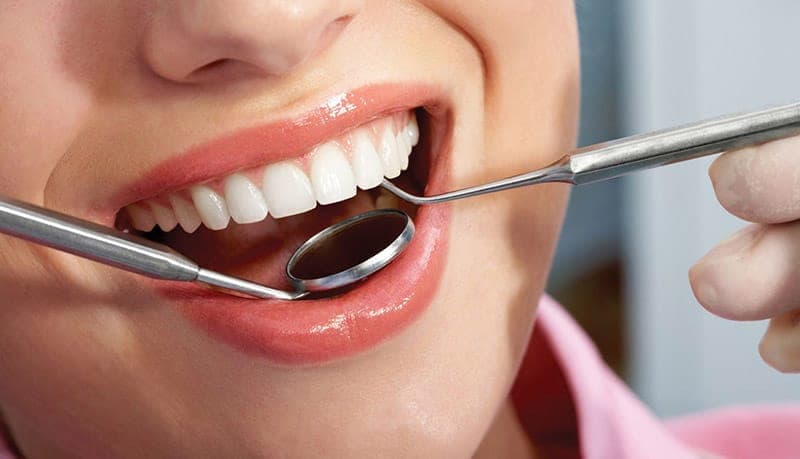
Every 6 to 12 months suits most people. If you form tartar quickly, smoke, or have a history of gum disease, your dentist may recommend a shorter interval — and that recommendation is based on what your own mouth is doing, not on a standard schedule. The appointment itself is usually a single visit with no downtime: you eat normally and go back to work the same day.
The reason the interval matters is what happens in between. Scaling & Polishing removes the plaque and hardened tartar that a toothbrush cannot shift, particularly along and just under the gumline — and once plaque has hardened into tartar, it is bonded to the tooth. No brush, no mouthwash, no home remedy takes it off. It has to be scaled off. Everything else in this post follows from that single mechanical fact.
Does scaling damage or thin my teeth?
No — and this is the objection we hear more than any other, so it is worth answering plainly. Scaling removes deposits from the tooth surface; it does not remove enamel. What confuses people is the sensation afterwards: teeth genuinely feel different once the tartar that was coating them is gone. Surfaces feel smoother, gaps feel more open, the tongue notices edges it had not felt in a while. That is the coating leaving, not the tooth being worn down.
The worry is understandable, and it has a real cost: patients who believe it postpone cleanings for years, which is precisely how a manageable situation turns into an unmanageable one. If someone has told you scaling loosens teeth or wears enamel, bring that up at your appointment rather than quietly acting on it — it takes about a minute to walk you through what the instrument is actually doing.
What happens if I just skip it?
Tartar sitting along the gumline keeps bacteria in constant contact with the gum. Removing it is the single most effective way to stop gingivitis progressing into something that threatens the supporting bone — and that progression is the whole risk. Gum disease, not decay, is the leading reason adults lose teeth.
That is a slow-motion problem, which is exactly why it gets deferred. It does not hurt early, it does not stop you eating, and there is always a more urgent appointment. But the disease that starts as inflamed gums around a rim of tartar is the same disease that later needs Advanced Gum Treatment — deep cleaning below the gumline, under anaesthesia, across several visits — once pockets have formed and bone has begun to go. A routine cleaning every six to twelve months is what keeps you on the cheap side of that line.
There is a second, quieter benefit worth naming: a cleaning appointment is also an examination. Small cavities, a cracked filling or early gum recession are far easier to deal with when found early, and they are found because someone is looking at your teeth twice a year rather than once a decade. That combination — routine cleaning plus routine looking — is the core of what Preventive Dentistry means in practice.
What does the appointment actually do for me today?
Three things you notice immediately, beyond the invisible prevention.
Staining lifts. Polishing removes discolouration left by tea, coffee, tobacco and pigmented foods, so teeth look cleaner and closer to their natural shade. In a city that runs on filter coffee and cutting chai, this is often the change patients comment on first — and it is worth being precise about what it is: surface stain removal, not whitening. Scaling and polishing does not change the natural underlying shade of your enamel. That is a different treatment with a different goal, and any clinic implying otherwise is overselling a cleaning.
Breath improves. A large share of persistent bad breath comes from bacteria in plaque and around the gumline. Clearing that addresses the cause rather than covering it, which is why mints and mouthwash tend to be a temporary fix for a mechanical problem.
Teeth feel like teeth again. The smoothness after polishing is not cosmetic theatre — a smooth surface gives plaque less to cling to in the weeks that follow.
Does it hurt, and what should I expect on the day?
For most people it is uncomfortable rather than painful, mainly where the gums are already inflamed — which is itself information, since healthy gums tend to tolerate scaling easily. Anaesthesia is not usually needed, but numbing is available if you are sensitive. The instruction that matters: tell the clinician during the appointment rather than enduring it. There is no prize for sitting through discomfort silently, and the settings and approach can be adjusted on the spot.
The visit is usually one appointment, performed by a dentist or dental hygienist, with no downtime afterwards. For anyone slotting it into a Bangalore working week, that makes it one of the genuinely easy appointments to keep — an hour, no recovery, no rescheduling of anything else. Both our Indiranagar and Bellandur clinics run these, so you can pick whichever is on the right side of the traffic for you that week.
Book the interval that fits your mouth
If it has been more than a year — or you have honestly lost count — the useful step is to have someone look and tell you what your interval should be. Book an appointment at The Aesthetic Edge, Indiranagar or Bellandur. You will get the cleaning, the examination that comes with it, and a straight answer on whether six months or twelve is right for you, based on how your mouth actually behaves rather than a rule of thumb.