
What Changes the Cost of Dentures in India
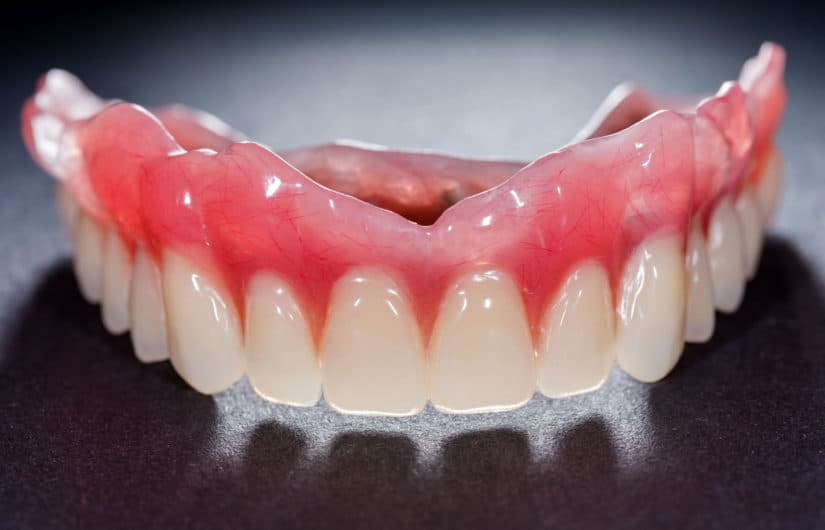
There is no single denture price, because a denture is made to one mouth. The largest factor is how much you are replacing — a full arch, or a partial around the teeth you still have. After that it is the fitting work: impressions, a try-in, the fitting itself and the adjustment visits that follow. The figure comes after an examination.
If you have been searching for a number and finding a very wide spread, that is why. Below is what actually sits behind the spread, in the order a dentist works through it.
Full arch or partial — the question that moves the figure most
A denture is a removable replacement for missing teeth and the gum tissue around them, and it comes in two broad shapes. A full denture replaces a whole arch. A partial fills in around the teeth you still have.
These are not the same job with a different number of teeth on it. A partial has to fit between and against your remaining teeth without loosening them or letting food pack around them, so it is designed around a set of anchors that is unique to you. A full denture has no teeth to hold on to at all: everything about how it stays put comes from how precisely it matches the ridge underneath.
An upper and a lower are also two separate pieces of work. A lower full denture is generally the harder of the two to settle, which is worth knowing before you are quoted for both.
So the first thing that changes your cost is not a grade of product. It is how much of your mouth the denture has to account for.
Why are there so many appointments, and am I paying for each one?
Dentures are quoted around a sequence, not a single visit. Ours runs:
- Evaluation and planning — assessment of the remaining teeth, gums and jawbone, and a decision on the type of denture and any preparatory treatment.
- Impressions — impressions and bite records, so the denture is built to the shape of your mouth.
- Try-in and fitting — a trial denture you approve for appearance and bite before the finished one is made and fitted.
- Adjustment and review — sore spots eased at follow-ups, and the fit reviewed periodically as the mouth changes.
The try-in is the step people are most tempted to see as an optional extra, and it is the one that most protects what you are spending. Tooth shade, shape and arrangement are chosen with you, so the result suits your face rather than looking uniform. The try-in is where you say so before the denture is finished, rather than after.
Ask specifically how many adjustment visits are included. Almost everyone gets a few pressure points in the first weeks. They are eased quickly at a follow-up — and you should never leave a rubbing denture in place or file it down yourself. A quote that covers the denture but not the settling-in has quoted you for half the treatment.
Does anything need doing before the denture can be made?
Sometimes, and this is the most common reason a final figure differs from the first one discussed.
The planning appointment assesses the remaining teeth, gums and jawbone, and covers any preparatory treatment needed before a denture can be built onto them. Where that applies it is separate clinical work with its own cost, and it is worth asking at the outset whether anything of the kind is expected in your case, so the whole plan is visible from the start rather than arriving in instalments.
Can dentures be made more stable, and what does that do to the cost?
Yes, and it is the point at which two different treatments meet.
Implant-retained dentures clip onto a small number of implants, which greatly improves stability — for a lower denture in particular. That involves placing dental implants in the jaw, so it requires adequate bone, it is surgical, and it costs meaningfully more than a conventional denture.
It is not the automatic upgrade, though. One of the genuine advantages of a conventional denture is that nothing is placed into the jawbone at all, which keeps it available where bone volume or general health rules surgery out. And a bridge is a third option again — fixed, and carried by the teeth on either side of a gap. Your dentist compares all of them for your specific situation, including bone condition and general health, at assessment.
The cheapest of these is not automatically the least expensive over ten years, which brings us to the part most cost articles leave out.
What will I still be paying for in five years?
This is the cost driver that is specific to dentures, and it is not a warning about quality.
The jawbone slowly resorbs where teeth are missing. A denture that fitted beautifully will therefore loosen over the years, and need relining or remaking. Our own patients are told plainly that the fit will change before the denture wears out, and that relining or remaking is normal rather than a sign something went wrong.
Budget for it as part of the treatment rather than as a failure of it. The counterpart is that dentures can be relined, adjusted and repaired as your mouth changes, rather than having to be replaced outright each time — which is a real economy, and one of the reasons the option endures.
Daily care is part of this too, and it is free. Clean them daily with a denture brush and a mild soap or denture cleaner rather than ordinary toothpaste, which is too abrasive, and remove them at night, keeping them in water or a cleaning solution so they do not dry out and distort. A denture that distorts is a denture that needs remaking early.
Why will nobody quote me over the phone?
Because the three things that set the price — how much of the arch is being replaced, the state of the teeth and gums that remain, and the condition of the jawbone underneath — are all things somebody has to look at.
A national "average denture cost" is not a quote for your mouth, and no one can promise a figure for a device that has not been designed yet. What you can and should get, early and in writing, is a plan: which type of denture, how many visits, what preparatory treatment is expected, how many adjustments are included, and what a future reline would involve.
Our consultation is ₹500, waived against treatment.
Getting your own figure
If you are weighing this up, the useful next step is an examination and a written plan rather than more searching — the spread you are reading about online is real, and none of it is about your jaw.
Book an appointment and have the options compared for your case, including whether a denture, a bridge or implants is the right fit for your jaw, your remaining teeth and your general health.