
Dentures vs Implants: What Actually Determines the Right Choice
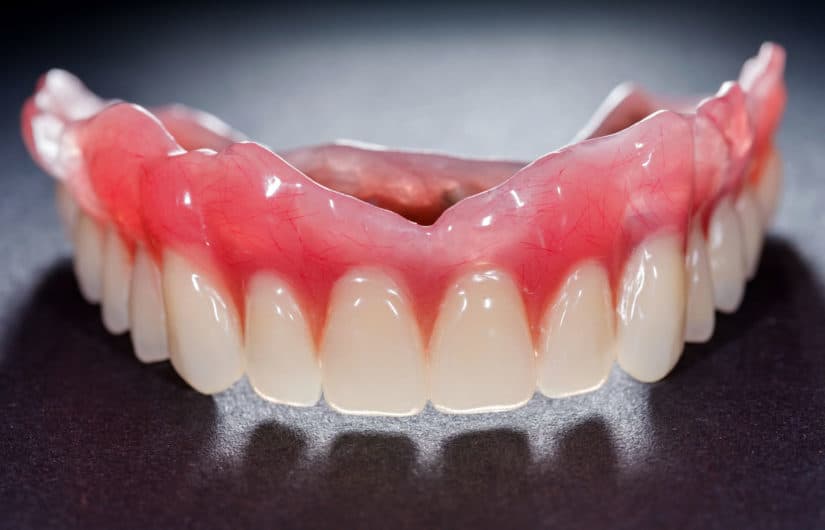
The honest difference between dentures and implants is not that one is modern and one is old-fashioned — it is that they make opposite trades. Dentures are removable replacements for missing teeth and the gum tissue around them, made without any surgery, adjustable and repairable as your mouth changes over the years. Implants are fixed into the jawbone surgically and built as a long-term, non-removable replacement. Which trade suits you depends on your bone, your health, how many teeth are missing, and how you want to live with the result — not on which option sounds more advanced.
This guide walks through Dentures properly — full, partial, and the daily reality of wearing them — sets implants beside them fairly, and covers the middle path that combines the two.
What exactly are dentures, and who do they suit?
A denture replaces missing teeth and the gum tissue around them, which matters more than it sounds: when several teeth go, the gum and bone contour goes with them, and a denture restores both the teeth and that lost support. A full denture replaces a whole arch; a partial fills in around the teeth you still have. Each one is made to your own mouth over several visits — impressions, a try-in, the fitting, then adjustment appointments — and the tooth shade, shape and arrangement are chosen with you, so the result suits your face rather than looking uniform and artificial.
What they give back is broad. Restored chewing surfaces mean you are not limited to soft food — which matters for nutrition as much as enjoyment, and for anyone who has quietly stopped ordering half the menu. Speech recovers too: missing teeth, particularly at the front, change how certain sounds are formed, and replacing them helps restore normal speech. And a well-made denture supports the cheeks and lips, restoring the facial contour that goes sunken when teeth are lost.
The defining advantage, though, is what dentures do not require: surgery. Nothing is placed into the jawbone, which makes them the option where bone volume or general health rules surgery out — and that single fact settles the decision for a meaningful number of patients before any preference enters into it.
When do implants make more sense?
When the bone allows it and the priority is a fixed, permanent-feeling replacement. Dental Implants / Teeth Implants place an artificial root into the jawbone; the replacement tooth is then fixed rather than removable, is cleaned like a natural tooth, and — with good hygiene and check-ups — is intended as a long-term solution rather than something revisited every few years. Loading the bone through the implanted root also helps slow the bone loss that follows a missing tooth, which a denture resting on the gum cannot do.
The costs of that permanence are real, and worth naming plainly: implant treatment is surgical, runs across several months while the implant fuses with bone, and needs enough healthy jawbone to work with — which the assessment and X-rays establish. Where only one or two teeth are missing and the neighbours are sound, the comparison usually is not with dentures at all but with fixed options like Bridges & Crowns, which is its own decision with its own trade-offs.
There is also a middle path worth knowing about: implants can support more than a single crown — up to a full arch — so a small number of implants can anchor a full-arch replacement, combining the coverage of a denture with the stability of a fixed foundation. Whether your bone and health suit that route is exactly the kind of question the planning consultation exists to answer.
What is the maintenance reality of each?
Different rhythms, honestly stated. A denture asks for a daily routine and periodic upkeep: cleaned daily with a denture brush and a mild soap or denture cleaner — not ordinary toothpaste, which is too abrasive — and removed at night to rest in water or a cleaning solution so it does not dry out and distort. In return it offers something implants cannot: adjustability. Dentures can be relined, adjusted and repaired as your mouth changes over the years, rather than replaced outright each time — a genuine long-term advantage, since mouths do change.
An implant asks for the same hygiene as a natural tooth — brushing, regular check-ups, no soaking, no adhesive — with the crown on top potentially needing replacement sooner than the implant itself.
Expect an adaptation period with dentures either way: usually a few weeks, during which eating and speaking feel different and improve with practice. Start with softer food cut into smaller pieces, chew on both sides evenly, and reintroduce harder foods gradually. Certain sounds can be awkward for the first week or two — reading aloud helps you adapt faster — and a lower full denture generally takes more getting used to than an upper one. None of this is a flaw; it is the normal learning curve of a removable appliance, and most people adapt well.
So what actually determines the right choice?
Four things, roughly in order: whether surgery is on the table at all (health and bone volume decide this before preference does); how many teeth are missing and where; how you weigh a fixed replacement against a removable, adjustable one; and what the over-time picture — visits, upkeep, future adjustments — looks like for each in your case. Notice what is not on the list: age by itself. The decision is made on your mouth and your health, not your birth year.
And it is not a decision to make from a comparison article, including this one. Book an appointment at The Aesthetic Edge — Indiranagar or Bellandur — and have the options laid against your actual mouth: an examination, the honest suitability of each route, and a recommendation you can question before anything is decided. Every denture and every implant here is planned and fitted by a dentist, always.