
Volite: The Myths Worth Clearing Up Before You Book
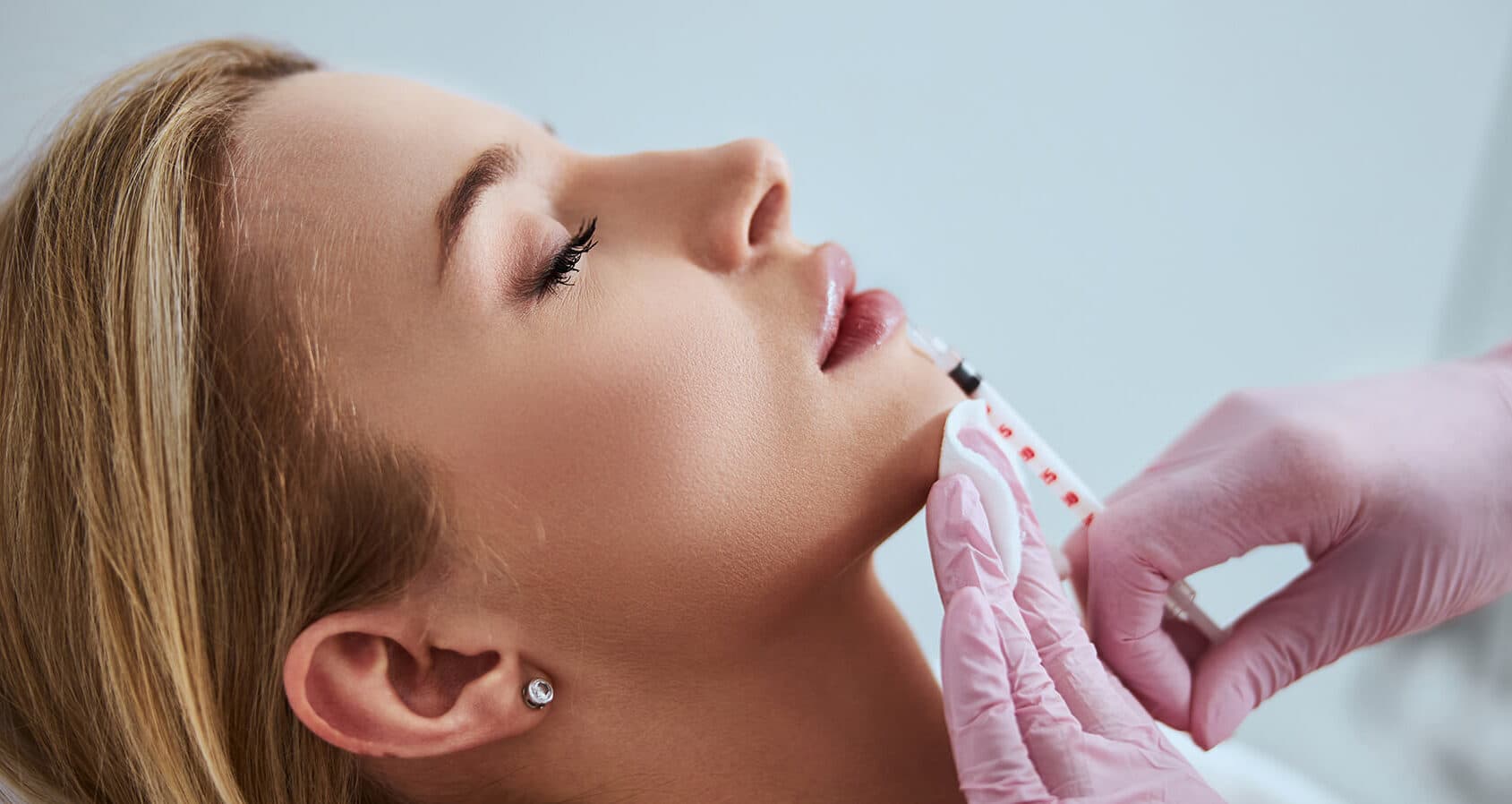
Most misunderstandings about Volite come from confusing it with dermal filler. It is hyaluronic acid delivered as many small micro-injections spread across an area, and it works on hydration, smoothness and fine surface lines rather than on contour or volume. It does not alter your face shape, it does not act on the day, and it is not permanent — the effect commonly lasts six to nine months.
Everything below expands one of those three corrections, or a myth that grows out of them. Each answer is drawn from the treatment protocol itself rather than from general internet lore, which is why some of them are shorter and less dramatic than the myth they replace.
Is Volite just a filler under a different name?
No — it shares an ingredient with filler and shares almost nothing else.
A dermal filler is placed at specific points to add volume or contour. Volite is spread across an area as a grid of micro-injections to improve hydration and texture. Same raw material, completely different intent, completely different placement. Calling it a filler is a bit like calling a primer a paint because both come in a tin.
This is the myth worth spending the most time on, because it is the one that sends people to a consultation asking for the wrong thing. If what bothers you is a hollow under the eye or a flattened cheek, that is volume, and this is not the treatment that addresses it. If what bothers you is skin that feels tight and dehydrated however much moisturiser goes on it, that is the concern this was designed around.
Will it make my face look fuller or different?
It will not change your shape, and that is by design rather than by luck.
Because the product is distributed evenly across an area instead of being concentrated at a point, there is no site where volume can build up into a contour. Patients typically describe skin that looks brighter and smoother rather than fuller. Nobody is looking at a different face; they are looking at the same face with better surface quality.
That is also why it is a poor choice if a change in shape is what you actually want. The honest framing is that this treatment improves the quality of the skin you have. It is not a shaping tool being modest about itself.
Will I see the result on the day?
No — and if a clinic tells you otherwise, that is worth questioning.
What you see on the day is the treatment, not the result: small bumps at the injection points, some redness, mild swelling. The actual effect builds quietly. It peaks at around 10 to 14 days and continues improving over the first month, which is why the review appointment is set at the two-week mark rather than the two-day one.
This trips people up when they book around an event. If a wedding is the reason you are considering this, count backwards from the date properly rather than hoping. Ten to fourteen days is the peak, not the earliest possible moment something might show.
Is it permanent, or does it fix my skin for good?
Neither. The effect commonly lasts in the region of six to nine months, and then it fades.
This is not a flaw being glossed over — hyaluronic acid is a material the body processes over time, so the effect having an end date is the normal behaviour of the material rather than a failure of the treatment. Routine repeat treatments are planned roughly every six to nine months for exactly that reason, and your doctor confirms the interval based on how your own skin responds.
Anyone describing a hydration injectable as a permanent change to your skin is describing something other than this.
Is it only for dry skin?
No. Oily skin can be dehydrated too, and the two are genuinely different things.
Oiliness is about how much your skin produces at the surface. Dehydration is about how much water is held within it. You can have plenty of the first and too little of the second, which is why a shiny complexion that still feels tight is such a common description at consultation. The treatment is not restricted by skin type and suits dry, oily and combination skin alike.
Is it only for the face?
No — the neck, décolletage and the backs of the hands are all commonly treated.
Those three areas tend to show dehydration and fine crepiness early, and they respond to the same approach as the face. If your face has been keeping pace with your skincare and your hands have not, that is not an unusual thing to bring up. It is a routine part of what gets discussed.
Does it hurt as much as a grid of injections sounds?
Most patients find the micro-injections tolerable rather than painful, and the numbing is a real step rather than a token one.
Anaesthetic cream is applied to the treatment areas and left on for 30 to 45 minutes before anything begins. That waiting time is not padding in the appointment — it is what makes the difference. Plan for it when you book, so the appointment does not feel rushed at the end.
Comfort is still individual. Around the eyes, where the skin is thinnest, is where people most often report tenderness, and bruising there is possible and generally resolves over a few days to a couple of weeks.
Can it sort out pigmentation, acne scars and deep folds too?
This is the myth that does the most quiet damage, because it sets up disappointment that was avoidable.
The treatment works on hydration, smoothness and fine surface lines. Deep folds are a volume and structural question. Pigmentation and scarring are different problems again, addressed by different treatments entirely. Expecting one hydration injectable to handle all of it is how people end up feeling that something "did not work" when in fact it did precisely what it does.
A consultation exists partly to separate these out. The doctor's first job is to establish whether your concern is hydration and texture, which this addresses, or something else, which it does not — and to say so plainly either way. Improvement in the right concern still varies between people and cannot be promised in advance.
Which myths are actually about the wrong product?
Some of what gets attributed to Volite belongs to its neighbours.
There are other injectables aimed at skin quality rather than shape — Profhilo among them — and there is skin botox, which works on a different mechanism again. When people compare notes with a friend, the friend has often had one of those. Which one suits you is a clinical judgement made after your skin has been looked at, not a preference chosen from a list beforehand.
What should make me contact the clinic afterwards?
Redness, small bumps and mild swelling at the injection points are expected and typically settle within 24 to 48 hours. Bruising and tenderness are possible and generally resolve over a few days to a couple of weeks. That is the ordinary picture.
Ring the clinic — do not wait it out and do not search for an explanation — if any of the following happens:
- a treated area becomes hot, or the pain increases over a day instead of easing;
- redness or swelling spreads outwards, or is worse on day three than it was on day one;
- there is any discharge from an injection point, which can be a sign of infection;
- you develop a rash, itching or swelling somewhere away from the treated area;
- anything at all is worrying you and you would rather ask than wonder.
Please do not attempt to judge which of these matters from a page. You cannot examine your own skin the way the person who treated it can, and the same appearance can have more than one explanation. Describe what you are seeing and when it started, and let the doctor who treated you decide whether you should be seen.
What does it cost?
No single figure is quoted here, and that is deliberate rather than evasive. What you pay depends on the area being treated and how many injection points it takes to cover it, which is settled once someone has looked at your skin. A number published in advance of that is a guess about your plan.
The consultation is ₹500, waived against treatment.
Where to go next
If a myth on this page is the reason you had ruled the treatment in or out, the useful next step is to have your own skin assessed rather than a general case. The Volite treatment page carries the full protocol, timings, aftercare and side effects. When you are ready, book an appointment at our Indiranagar or Bellandur clinic and bring your actual question with you.