
Making Root Canal Treatment (RCT) Results Last: The Maintenance Nobody Explains
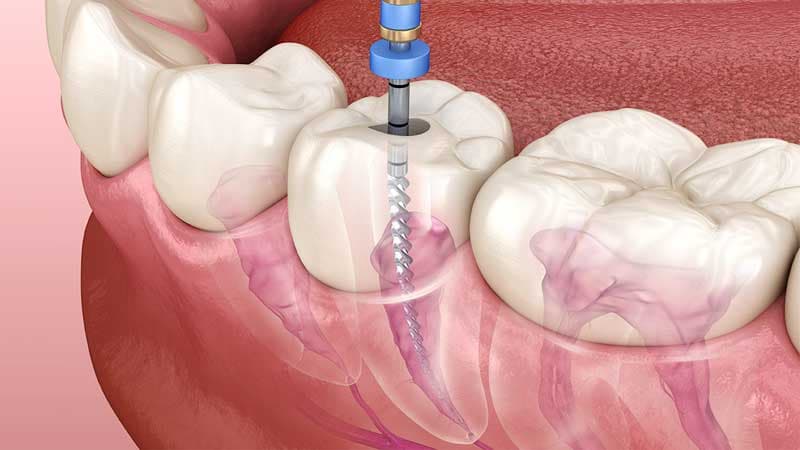
A root canal has no top-up appointment and no refresh interval — the pulp is removed once and the canals are sealed once. What a treated tooth needs instead is the restoration fitted and not deferred, ordinary brushing and flossing around it, sensible restraint about what you bite on it, and regular check-ups so the margins get inspected. Done properly and restored well, a treated tooth can last many years.
Because there is no scheduled maintenance visit, the aftercare quietly falls off people's lists. Here it is as a timeline.
The first few days: what is normal and what is not?
Soreness is normal. The tooth and the surrounding gum often feel tender to bite on for a few days afterwards, and over-the-counter pain relief is usually enough to manage it.
Two practical things for that window. Wait for the numbness to fully wear off before eating anything, because you cannot judge temperature or how hard you are biting while a whole side of your mouth is anaesthetised. And keep chewing off that side entirely until the permanent restoration is in place.
What is not part of a normal recovery is pain that is getting worse rather than settling, swelling that is developing, or a fever. Those are reasons to phone the clinic rather than to wait and see how the week goes.
The gap before the crown: the part that matters most
Between the canal work and the final restoration your tooth is at its most vulnerable, and this is where most preventable problems happen.
A root-treated tooth has lost its blood supply and is more brittle than a healthy one. Until it is rebuilt, it is a tooth that can fracture under load — and a fracture is often not repairable, which means losing the tooth despite the root canal itself having gone perfectly.
So during this window: no chewing on that side, nothing hard on that side by accident, and the restoration appointment kept rather than moved. Get the date in the diary before you leave the first appointment, not later by phone.
For back teeth the restoration is usually a crown, because those teeth take heavy chewing forces and a crown protects against splitting. Where enough sound tooth structure remains, a filling may be what is placed. Once it is fitted, the tooth is used normally.
How do you clean a crowned tooth properly?
Like every other tooth, with one extra thought about the join.
The crown itself does not decay. The natural tooth underneath it does, and the place that happens is the margin — the line where the crown meets the tooth, right at the gum. That join is where plaque sits and where a toothbrush most often skims past.
- Angle the brush at the gumline on that tooth rather than scrubbing across the top of the crown, which is the part that needs it least.
- Floss it daily, taking the floss down to the margin and curving it against the tooth rather than snapping it straight in and out.
- If it is a back tooth and floss is awkward, ask at your next visit about interdental brushes and which size fits your gaps.
- Do not skip it because it feels fine. A treated tooth has had its pulp removed, so it no longer produces the early sensitivity a healthy tooth would use to warn you. Decay under a crown can progress quietly.
That last point is the real reason a treated tooth needs slightly more attention rather than less.
What should you stop doing?
The habits that put unusual force through a restored tooth.
Chewing ice, cracking nuts or seeds with your teeth, biting pens, and using your teeth to open packaging are all worth dropping. So is chewing hard on that side out of curiosity to check whether it still works — it does, and testing it is how people find out otherwise.
If you grind or clench your teeth, particularly at night, mention it. It changes the forces a restored tooth is asked to withstand, and it is worth your dentist knowing about rather than working around silently.
How often should a treated tooth be checked?
Keep up regular check-ups on the same schedule your dentist recommends for the rest of your mouth — the long-term survival of a treated tooth depends on good oral hygiene and routine check-ups exactly as any other tooth does.
What those visits are looking at, specifically, is the crown margin, the gum around it, and whether the seal is holding. That is not something you can inspect yourself, and it is the check that catches a problem while it is still a small one.
The intervals your clinic recommends are its protocol for looking after the tooth well, not a promise about how long it will last. Nobody can put a number on that in advance.
What should send you back sooner?
A small proportion of root canals do not fully resolve. The usual reasons are a canal that was missed, an infection that persists, or a fracture later on, and where that happens retreatment or, rarely, extraction may be needed.
You do not need to watch for this anxiously, but you should know what is worth reporting rather than living with:
- Pain when biting on the treated tooth, or a tooth that feels "high".
- Tenderness or swelling in the gum near it, at any point after recovery.
- A crown that feels loose, or a rough edge you can catch with your tongue.
- Anything that chips or feels different in that area.
None of these means the treatment has failed. All of them mean it is worth a look, and looking early is what keeps the options open.
The one-line version
There is no maintenance schedule for a root canal, so the maintenance is whatever you do anyway — done properly, on a tooth that cannot complain to you when you neglect it. Fit the restoration, clean the margin, keep the check-ups, and stop opening things with your teeth.
Read the full treatment sequence on the root canal treatment page, or book an appointment if a treated tooth needs looking at. Consultation ₹500, waived against treatment.