
Planning Root Canal Treatment (RCT) Before Your Wedding: The Bride's Runway
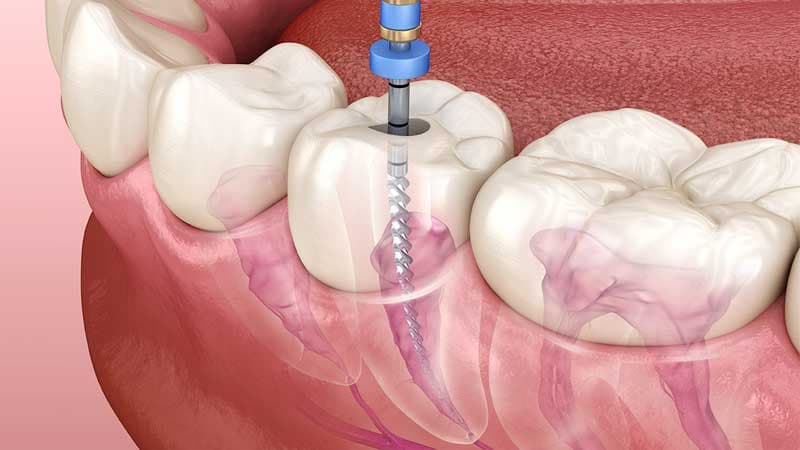
If a tooth is bothering you and there is a wedding in the diary, deal with it as soon as symptoms start rather than as part of the run-up. A root canal needs a diagnosis appointment, canal work of 60 to 90 minutes, sometimes a second visit, then a separate appointment for the crown — plus a few days of tenderness. That sequence wants weeks of room, not a fortnight.
Let us be clear about what this article is and is not.
Is this about how your teeth will look?
No, and it would be dishonest to pretend otherwise. Root canal treatment is not a cosmetic procedure. It removes infected or damaged pulp from inside a tooth, cleans and seals the canals, and saves the tooth rather than losing it. A well-matched crown or filling restores the shape and shade afterwards so the treated tooth does not stand out — but that is restoration, not enhancement.
The reason to schedule it away from your wedding is much more practical: a throbbing toothache is a miserable thing to carry through a week of long days, late nights, photographs and travel, and a dental emergency is a genuinely bad thing to have during a wedding or immediately after it.
That is the whole argument. It does not need dressing up.
How far ahead should you deal with it?
The honest answer is: at the point the symptoms start, whenever that is. There is no such thing as being too early with a tooth.
If you are planning backwards from a date, work with the sequence rather than a number of weeks, because the sequence is what determines the time. You need:
- The consultation, examination and X-ray, which is what confirms the pulp is infected or inflamed and that a root canal is the right treatment.
- The canal work. A straightforward single-visit case is about 60 to 90 minutes. A tooth with an active infection, or with several curved canals, may need a second visit so things settle before the canals are sealed. Which one applies is known after the X-ray, not before.
- A few days of tenderness. The tooth and the surrounding gum often feel sore or tender to bite on for a few days afterwards. Over-the-counter pain relief is usually enough.
- The restoration appointment, when a filling or a crown is fitted to rebuild the tooth and protect it. This is a separate visit.
- Time before the wedding for the finished tooth to just be a normal tooth.
Stack those honestly and you are not talking about a fortnight. Give it real room.
What if a tooth starts hurting a few weeks before?
Then contact a dentist rather than deciding to get through it. What you should not do is either of the two things people commonly do.
Do not push it past the wedding. The pulp infection is sealed inside a hard tooth where the body cannot easily clear it, and left untreated an infection can spread and cause severe pain and an abscess. Neither the wedding week nor the honeymoon is a good time for that to happen, and a tooth is not aware of your calendar.
Do not manage it with painkillers alone. They mask the symptom and change nothing about the cause, and the relief tends to run out at inconvenient hours.
Get it looked at. It is entirely possible the assessment concludes something far less involved than a root canal is needed — that is exactly why the X-ray happens first. If treatment is needed, it is far better to be starting it three weeks out with a plan than discovering it two days before.
If there is swelling near the gum, or the tooth hurts sharply when you bite, that is a call to the clinic today rather than a decision to make at home.
What should not be squeezed in late?
The thing to avoid is arriving at the wedding mid-course — canal work done, crown not yet fitted.
In that gap you are asked to avoid chewing on that side until the permanent restoration is fitted, and a root-treated tooth without its final restoration is more brittle and more vulnerable to fracturing under load. A week of functions, unfamiliar food and eating at odd hours is not the moment to be managing that.
So if the runway is genuinely tight, the conversation to have with your dentist is about sequencing — what has to happen before the date, and what can safely wait until after. That is a clinical judgement about your tooth. Bring the date to the consultation and ask directly; it is a normal thing to plan around and your dentist would rather know.
What about the honeymoon?
Worth thinking about separately, because it is the part people forget. Being somewhere unfamiliar, possibly abroad, with a tooth that has unfinished work in it, is a poor combination — you do not know the local dentists, you may be flying, and pain that would be an inconvenience at home becomes the thing you remember about the trip.
If you have travel booked shortly after the wedding, say so at the consultation. Finishing the restoration before you fly, rather than after you return, is usually the sensible sequence.
The short version
Book the assessment the week the symptoms start. Get the diagnosis and the X-ray, get a plan with dates on it, and get the restoration appointment in the diary at the same time as the canal work — not left open.
And if there is nothing wrong at all, a check-up several months before a wedding is a reasonable thing to have anyway. Finding a problem early is what gives you the room to fix it calmly. Where a small area of decay is caught in time, a filling may be all that is needed, which is a far easier thing to fit around a wedding than a course of treatment started in a panic.
Read the full sequence on the root canal treatment page, or book an appointment and bring your date with you. Consultation ₹500, waived against treatment.