
Root Canal Treatment (RCT) Aftercare: The First Week, Day by Day
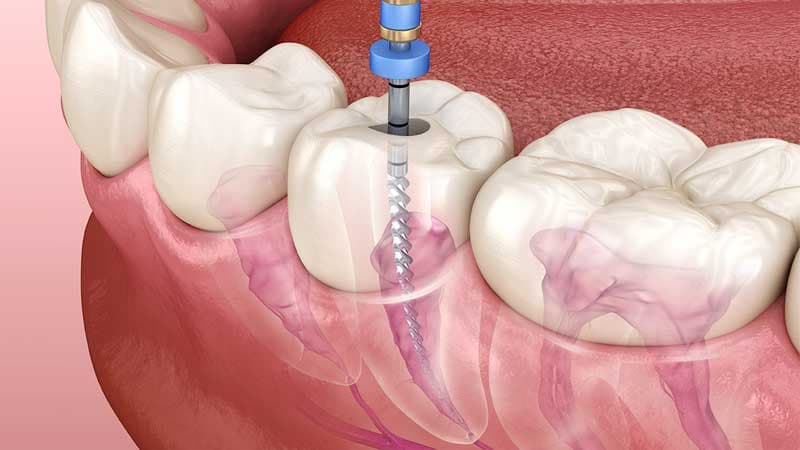
The week after a root canal is mostly quiet. Expect a few hours of numbness first, then soreness in the tooth and the gum around it for a few days, generally manageable with over-the-counter pain relief. Keep chewing off that side until the permanent restoration is fitted and any numbness has gone completely. Most people are back to ordinary meals well before the crown appointment.
What follows is a rough sequence rather than a schedule. People differ, teeth differ, and a molar with several canals does not behave identically to a straightforward single-rooted tooth. Use it to know whether you are somewhere sensible, not to hold yourself to a timetable.
The first few hours: what do I do while I am still numb?
Nothing involving that side of your mouth. Local anaesthesia is what made the appointment comfortable, and it is still working when you walk out — lip, cheek and tongue included.
The risk in this window is not the tooth. It is that you cannot feel your own cheek, and biting it is easy and surprisingly painful once sensation returns. Hot drinks carry the same problem in reverse: you will not register a scald properly. So take liquids lukewarm, keep anything solid on the opposite side, and give it until normal feeling is unmistakably back before you test anything.
If you had a morning appointment, this is a good afternoon for soup and a laptop.
Days one and two: how sore is sore enough to be normal?
Tender to bite on, and a little achy in the gum around the tooth. That is the documented picture, and it is not a sign anything has gone wrong — the tissue around the root has had a busy hour and is registering it.
Over-the-counter pain relief is usually sufficient. Take it before the discomfort peaks rather than waiting until you are miserable; that is simply easier on you and does not change anything clinically.
The useful mental test in these two days is direction of travel. Discomfort that is steady or gradually easing is the expected pattern. Pain that is climbing day on day, or that stops responding to what was working yesterday, is worth a telephone call to the clinic rather than another night of waiting it out.
Days three to five: the stretch where it stops being interesting
For most people this is where the tooth fades into the background. You will still notice it when you bite deliberately on that side, and there is no reason to.
Two habits are worth holding onto through this stretch. Keep cleaning normally — brush the area, gently but genuinely, because leaving a treated tooth unbrushed for a week to be kind to it achieves the opposite. And resist the urge to prod it with your tongue every few minutes to check on it, which is almost universal and does nothing except keep the area irritated and keep you anxious about it.
The rest of the week: what does the temporary restoration need from me?
If your tooth is waiting on a crown, whatever is covering it in the meantime is a placeholder, not the finished article. A temporary crown is deliberately cemented lightly so that it can be lifted off cleanly at the fitting appointment, and that same property means it can come away if you challenge it.
So for the rest of the week, on that side: nothing sticky enough to pull, and nothing hard enough to lever. Chewing gum, toffee, ice, nuts, hard chikki and the enthusiastic end of a chicken bone are all the wrong idea. If the temporary does come off, telephone the clinic rather than reattaching it yourself or deciding it can wait until the next appointment — the prepared tooth underneath is sensitive and is meant to stay covered.
What can I actually eat this week?
More than you would guess, on the other side of your mouth.
The instruction that matters is narrow and specific: keep that particular tooth out of heavy chewing until the permanent restoration is in place. It is not a soft-food week for your whole mouth, and there is no list of forbidden ingredients — dal, curd rice, idli, eggs, fish, well-cooked vegetables and most of an ordinary Indian plate are all fine. What you are avoiding is load on one tooth, not nutrition.
Temperature sensitivity for a few days is common enough that it is worth mentioning; if very cold or very hot things provoke a twinge, take them lukewarm for a while rather than concluding something is wrong.
Why is the tooth being protected at all — it feels fine?
Because it is now more brittle than it was, and it feels fine precisely because the nerve that used to warn you has been removed.
A root-treated tooth has lost its blood supply. It can fracture under chewing load, and a fractured root frequently cannot be saved — at which point you are into extraction and then a replacement, which is a longer and more expensive road than the crown was. This is the entire reason a crown is recommended for back teeth rather than a filling alone, and it is why the first week's real job is protection rather than recovery.
When does the "first week" actually end?
At the restoration appointment, not on day seven.
Recovery from the procedure is a matter of days. Completion of the treatment is a matter of finishing the sequence — the filling or the crown that rebuilds the tooth. Once the permanent restoration is fitted and adjusted, the tooth goes back to ordinary use and you can stop thinking about it, which is the actual goal.
If the tooth was treated with a filling rather than a crown, the same principle applies in a shorter form: the tooth is restored, the bite is checked, and you use it normally.
Full detail is on the root canal treatment page. If your restoration appointment is not yet in the diary, book an appointment now rather than at the end of the week — that gap is the one people lose track of.