
Missing or Broken Teeth: What Actually Works, and What Only Sounds Like It Does
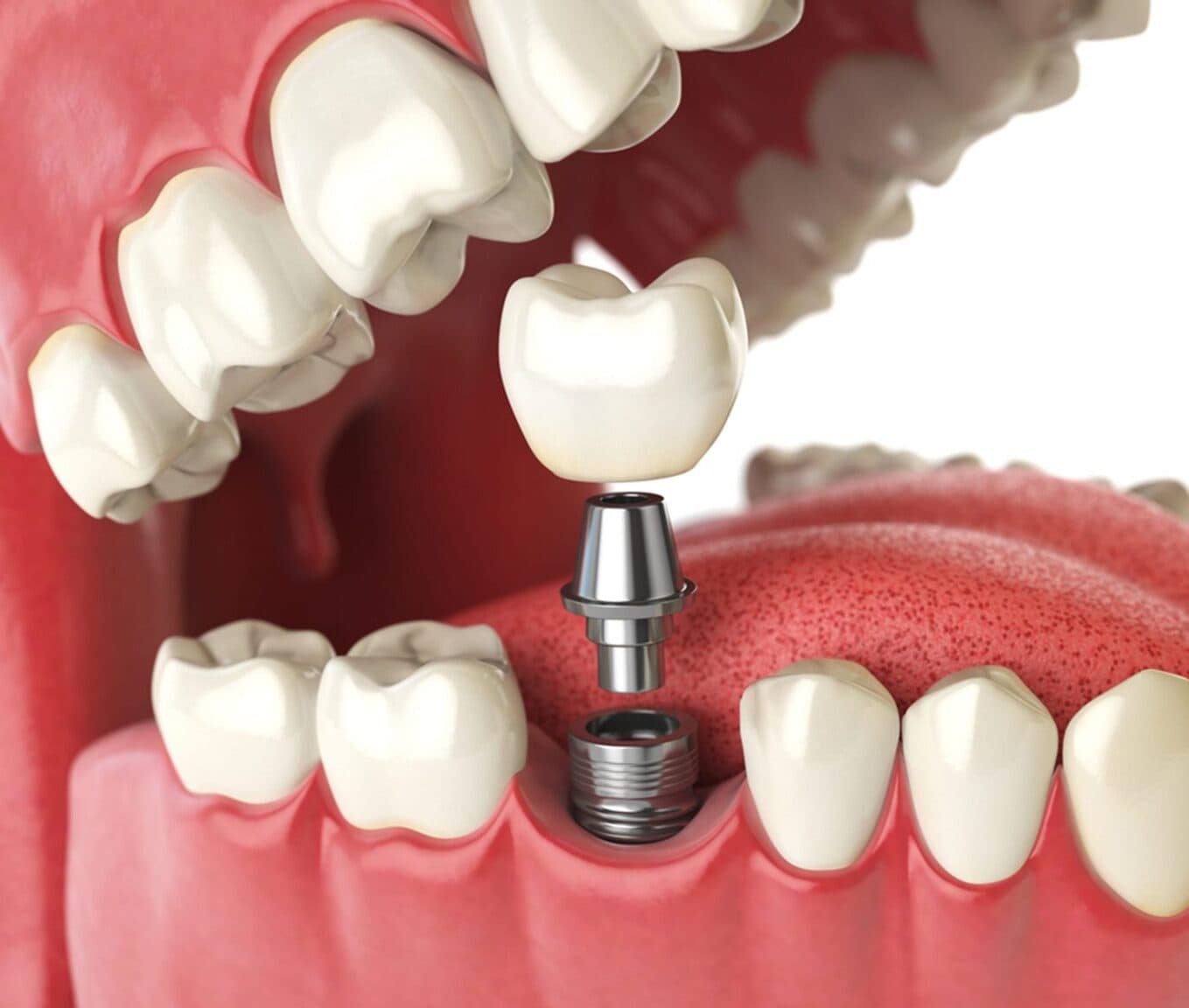
A gap does more than show. Neighbouring teeth drift into it, the opposing tooth moves down towards it, the jawbone thins where the root used to be, and most people quietly start chewing on the other side. Three routes genuinely replace a missing tooth — a fixed implant, a bridge, or a removable denture — and your bone and gums decide which are open to you.
This post is for the reader who does not yet have a treatment name in mind. It sets out what each route is honestly for, what decides between them, and the comfortable assumptions that tend to cost people the most.
Does a missing back tooth matter if nobody can see it?
It matters structurally, even when it is invisible. Teeth are held in position partly by their neighbours, so an unfilled gap lets the teeth beside it drift in, while the tooth above or below it over-erupts into the empty space. Filling the gap is what keeps the arch and the bite stable.
There are two further consequences that appear later rather than immediately. Chewing forces that used to be spread across a full arch get concentrated on the teeth that remain. And the jaw loses bone where a tooth root is missing, because bone stays healthy by being loaded — which is why a gap left for years is a different proposition from a gap left for months.
None of that means anything is wrong in your particular mouth. It means the question is worth asking now rather than when something else has moved.
What are the actual options for replacing it?
Three, and each makes a different trade rather than being a better or worse version of the others.
A dental implant is an artificial tooth root, usually titanium, placed into the jawbone to support a replacement tooth. It stands on its own, so the healthy teeth either side are left untouched, and it transmits chewing forces into the bone in a way that helps slow the bone loss under a gap. The trade is time and surgery: placement is done under local anaesthesia, and the full course usually runs three to four visits across several months while the implant fuses with bone. The detail sits on the dental implants page.
A bridge spans the gap with a replacement tooth carried by crowns on the teeth either side. It is fixed, it is usually two visits, and it involves no surgery. The trade is that those neighbouring teeth are reshaped to carry it, and enamel removed does not grow back — so they will always need a restoration afterwards. Where those teeth are already crowned or heavily filled, that trade costs comparatively little. See bridges and crowns.
A denture is removable, rests on the gums, and replaces missing teeth along with the gum tissue around them — a full denture for a whole arch, a partial to fill in around the teeth you still have. Nothing is placed into the jawbone, which makes it an option where bone volume or general health rules surgery out, and it can be relined, adjusted and repaired as your mouth changes. The trade is that it is removable, takes a few weeks to get used to, and needs daily cleaning and overnight removal. See dentures.
What if the tooth is broken rather than missing?
Then the conversation is usually about saving it rather than replacing it, and a crown is the common answer. A crown is a cap fitted over a weakened, cracked or heavily filled tooth to restore its strength and shape — it holds the tooth together and takes chewing force off what remains of it. A tooth that is cracked, heavily filled or root-treated is at real risk of fracturing, which is why protecting it is often advised rather than waiting for it to break further.
The practical shape is two visits: the tooth is reshaped under local anaesthesia and an impression or digital scan is taken, a temporary protects it in the meantime, and the finished crown is fitted, adjusted against your bite and cemented at the second appointment. Sensitivity to hot and cold while the temporary is in place is common and usually settles.
Whether a given broken tooth can be crowned depends on how much sound tooth structure is left and on the state of the gum around it — which an examination and X-rays establish, and a web page cannot.
What decides which options are open to me?
Bone and gums, mostly, and the condition of the teeth beside the gap.
An implant needs enough healthy jawbone to fuse into. Where the scan shows there is not, grafting may be needed first — common where a tooth has been missing a long time — and your dentist will tell you that at the planning appointment rather than partway through. Active gum disease, uncontrolled diabetes and heavy smoking are all named on our own treatment page as things that can affect healing and therefore the plan.
A bridge needs sound teeth on both sides of the gap to carry it, which is not always the case.
A denture needs a proper evaluation of your remaining teeth, gums and jawbone, and sometimes preparatory treatment first.
So the same missing tooth can point clearly in different directions in different mouths. That is not indecision on the dentist's part — it is the assessment doing its job.
Does waiting make it harder?
Sometimes, and it is worth understanding the mechanism rather than being frightened by it. Bone is lost where a root is missing, so the longer a gap has been there, the more likely it is that grafting will be discussed before an implant. Meanwhile the neighbouring teeth continue drifting and the opposing tooth continues over-erupting, which can narrow the space available for a replacement.
That is an argument for getting it looked at, not for panic. Plenty of long-standing gaps are still very treatable. You simply want the decision made on current evidence rather than on how things stood a few years ago.
What only sounds like it works?
A short and unglamorous list, drawn from what actually goes wrong:
- Leaving a back gap because it does not show. It is the most reasonable sounding decision on this page and the one with the most downstream consequences — drifting, over-eruption, and bone loss under the space.
- Choosing on the first invoice alone. The fairer comparison is what each option asks of your neighbouring teeth and your bone over the years, not which number is smallest today.
- Living with a denture that has started to rub. Sore spots in the early weeks are expected and are eased at a follow-up appointment. They are meant to be adjusted, not endured — and you should not file or adjust a denture yourself.
- Assuming a loosening denture means it has failed. The jawbone slowly resorbs where teeth are missing, so a denture that fitted well will loosen over the years. Relining or remaking is normal rather than a sign something went wrong.
- Leaving a temporary crown that has come off. Temporaries are cemented lightly on purpose. Contact the clinic rather than waiting, and avoid sticky and hard foods on that side in the meantime.
- Skipping the technique for cleaning under a bridge. Plaque collects beneath the false tooth and ordinary flossing does not reach it. A floss threader or interdental brush is not optional — without it the supporting teeth are exposed to decay and gum disease.
When should I contact a dentist promptly rather than at leisure?
Some things are worth a same-day call rather than a diary entry. Do not try to work out what any of them means — that is not a judgement you should be asked to make about your own mouth:
- pain that is disturbing sleep, or that is getting worse rather than settling;
- swelling of the face, jaw or gum, particularly if it is spreading;
- a fever alongside dental pain, or a bad taste or discharge from a tooth or socket;
- bleeding from the mouth that does not stop;
- a tooth broken with a sharp edge cutting your tongue or cheek, or a tooth knocked loose or out;
- a crown, bridge or temporary that has come loose or come off;
- a denture rubbing enough to have made the gum sore or ulcerated;
- difficulty swallowing or opening your mouth.
Ring the clinic and describe what has happened. If you are not sure whether it qualifies, that uncertainty is itself a good enough reason to ring.
Where to go next
You do not need to arrive knowing which treatment you want. Bring the problem — a gap, a broken tooth, a denture that no longer fits — and let an examination and imaging establish what is actually possible. Book an appointment at The Aesthetic Edge, Indiranagar or Bellandur; the consultation is ₹500 and is waived off against treatment if you go ahead, and you will leave with the options for your own mouth set out plainly, including the ones you had not thought to ask about.