
Early Signs of Gum Disease You Shouldn't Ignore
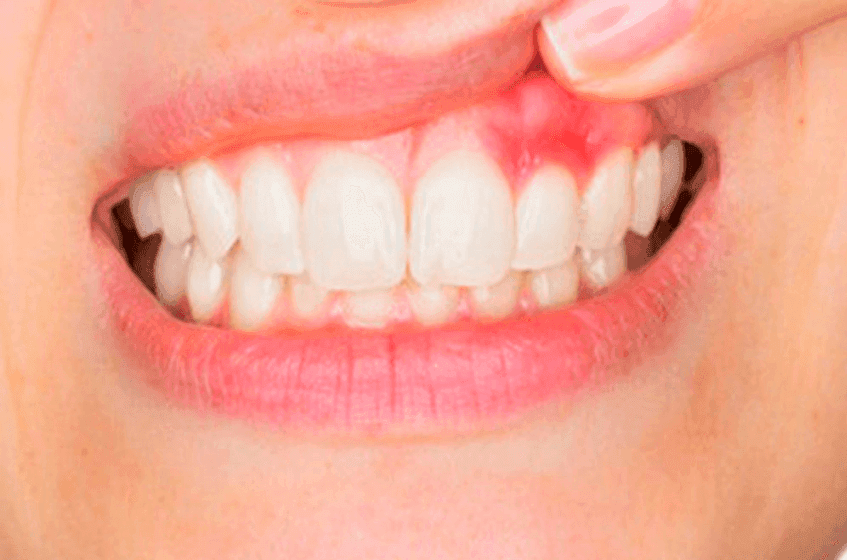
The early signs of gum disease are easy to explain away and easy to act on: gums that bleed when you brush or floss, gums that look like they are pulling back from the teeth, and breath that returns however often you rinse. Why they matter is the important part — early gum disease is often managed with professional cleaning and improved home care alone, while disease that has been left to progress forms pockets around the teeth and starts costing you the bone that holds them in.
That is the whole reason to pay attention to signals this mild. This post covers what each early sign means, what still reverses at that stage, and the point at which the problem crosses into Advanced Gum Treatment territory — where the disease has moved past what a routine cleaning can reach.
Is bleeding when I brush actually normal?
No. Healthy gums do not bleed when you brush or floss them properly, so the pink tinge in the sink is information rather than background noise. Most people file it under "I brushed too hard" and carry on, which is precisely why gum disease is so often found late — it does not hurt in the way a cavity hurts, and the early stage announces itself mainly through signs that are easy to rationalise.
Persistent bad breath belongs in the same category. If it is not the coffee, not last night's dinner, and it comes back within hours of brushing, that is worth having looked at rather than covered up. And recession — gums that seem to be creeping back, teeth that look longer than they used to in photographs — is a sign the facts are explicit about: receding gums expose sensitive root surfaces and make teeth look long, which is why that new twinge with cold water often arrives around the same time.
None of these three tells you your stage. What they tell you is that it is time for someone to measure it.
What decides whether cleaning is enough?
Pockets and bone — and only an examination can see either. The first step in assessing gum disease is full periodontal charting: measuring the pocket depths around every tooth. That measurement is what separates the two treatment worlds. Early disease is often managed with cleaning and improved home care alone. Disease that has already formed pockets around the teeth, with the supporting bone beginning to be lost, needs treatment that goes below the gumline, because that is where the disease actually lives and where routine cleaning cannot reach.
The distinction is worth being clear on, because "I get a cleaning done" is often offered as evidence that gums are fine. Routine Scaling & Polishing cleans the tooth surfaces at and just below the gumline — genuinely valuable, and enough at the early stage. Advanced treatment goes deeper into the pockets that have formed, is done under local anaesthesia, and may involve laser or surgical access. Same mouth, different depth, different problem.
For anyone in Bangalore weighing whether it is worth the appointment: this is a city where dental check-ups slide easily behind everything else, and gum disease is the condition that most rewards not letting them slide. It progresses quietly through exactly the sort of year where you keep meaning to book something.
What does advanced gum treatment actually involve?
Deep cleaning below the gumline — scaling and root planing to remove bacterial deposits from the root surfaces inside the pockets — combined with laser therapy or minimally invasive surgery, depending on how far the disease has progressed. Where possible, laser and minimally invasive surgical techniques target the diseased tissue while sparing healthy tissue, which generally means less post-operative discomfort than traditional flap surgery.
The goal is specific and measurable: reducing pocket depth. Shallower pockets are pockets you can keep clean at home, and that is what makes the result hold rather than relapse within months. It is also why maintenance changes afterwards — cleaning appointments typically move to every three to four months rather than the usual interval.
Practically: several visits, often split by quadrant, plus those maintenance appointments; local anaesthesia for the deep cleaning and any surgical steps; a few days of tenderness after deep cleaning, while surgical or regenerative procedures take longer — often a couple of weeks for the gums to settle and months for the underlying healing, with sensitivity that can persist for several weeks. Every stage is performed by a dentist, always, at both our Indiranagar and Bellandur clinics.
Can gum and bone that has already been lost be rebuilt?
Sometimes, partially — and the honesty of that answer is the point. In selected cases, grafting and regenerative procedures can rebuild some of the bone and tissue lost around a tooth, with suitability depending on the pattern of the defect and assessed case by case. They cannot restore everything that has been lost, and your dentist should be specific about what is realistic for your situation rather than optimistic in general. Where recession is the issue, grafting can cover exposed roots in appropriate cases — a functional gain as much as a cosmetic one, since those exposed surfaces are the sensitive ones.
Which brings the argument back to where it started. Gum disease is the leading cause of adult tooth loss, and treating it while there is still supporting bone is the difference between keeping a tooth and replacing it. Every month of "I'll deal with it later" is spent from a bone budget that only partly refills.
One clarification, since it comes up: not every sore spot in the mouth is gum disease. Recurrent painful sores are a different problem with a different pathway — see Mouth Ulcers — and telling the two apart is a two-minute job for a dentist and an unsolvable one at home.
Get it measured before you decide it is nothing
If your gums bleed when you brush, look like they are receding, or your breath has stopped responding to brushing, the useful next step is a measurement rather than a resolution to floss more. Book an appointment at The Aesthetic Edge — Indiranagar or Bellandur — for periodontal charting and an honest read on your stage. If cleaning and better home care are all you need, that is genuinely good news you will hear that day.