
Questions to Ask Any Clinic Before Teeth Whitening
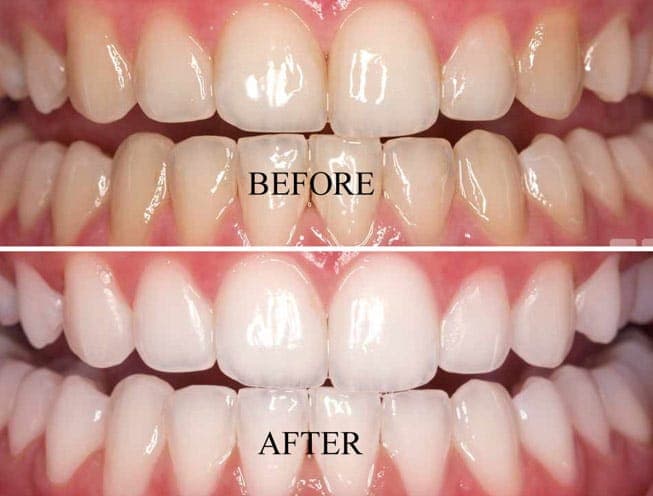
Almost everyone booking whitening asks two questions: how much, and how long will it last. Both are reasonable and neither tells you whether the appointment is being run properly. The questions that do are about what is agreed and recorded before anything is applied, and how you and the clinic will decide afterwards whether you got what you paid for.
Professional whitening uses a peroxide-based gel to lighten the shade of natural enamel and lift stains from age, tea, coffee and tobacco. Under dental supervision the strength is controlled, the exposure is timed and the gums are isolated first — that is the whole difference from a kit bought off a shelf. Everything below assumes you have already asked for the examination findings, which is the one question every patient should be asking anyway.
Will the dentist who examines me be the one who treats me?
Ask it plainly, because it is rarely volunteered. Whitening is performed by a dentist, always, and the examination before it exists to catch decay, cracks or exposed roots — bleaching over any of those causes real pain. The person who found nothing wrong is the person who knows what they were looking at.
If the answer is that someone else will carry out the session, that is not automatically a problem. It becomes one if nobody can tell you who reviewed your examination and agreed the plan. In a two-branch practice — ours runs at Bellandur and Indiranagar — it is also worth asking which branch you are booked into for each appointment, because whitening is preceded by a separate cleaning visit and it is easy to assume both are in the same place.
Is my starting shade recorded, and what shade are we aiming for?
This is the question that separates a measured result from an impression. The target shade should be agreed with you beforehand, so the outcome reads as a healthy version of your own teeth rather than an obviously artificial white. Agreeing a target only means something if the starting point was recorded too.
So ask: what shade are my teeth now, what are we aiming for, and how will that be checked at the end. Without the first of those, the only evidence available afterwards is memory — and memory adapts to the face in the mirror within about a week. People who were pleased on the day routinely wonder a fortnight later whether anything changed at all.
Ask also what the shade is being judged against, and in what light. A verdict reached in a clinic chair and a verdict reached under your bathroom tube light are not the same verdict, and knowing which one you are being shown is useful.
What happens if we do not reach the agreed shade in one session?
Ask before the first appointment, not after it. Whitening is usually one in-clinic session and sometimes two, so a second visit is a normal part of the procedure rather than a sign something went wrong. What you want to know is how that second session is decided, when it would happen, and whether it is inside what you have been quoted or outside it.
A related question, and the one most worth asking in a city full of package-priced dentistry: is this quoted as a plan or sold as a block of sessions in advance. The number of sessions you need is a finding, not a product, and nobody can know it before examining your teeth.
What will this specifically not change?
A good clinic will tell you this without being asked; ask anyway. Whitening affects natural enamel only. Crowns, veneers and tooth-coloured fillings do not bleach, so if yours sit in your smile line, lightening the teeth around them can leave the restorations looking darker than they do today. The fix for that is replacing them to match — a conversation that belongs in your first appointment, not your third, and one that may take you towards a smile makeover rather than whitening alone.
Nothing is drilled or removed in whitening, which is what makes it one of the few fully additive cosmetic dental options. That also means it cannot correct shape, alignment or chips. If what bothers you in photographs is not actually the colour, the honest answer to a whitening enquiry is a different treatment.
How long should I expect it to last, for me?
Not in general — for you. The published answer is several months to a few years, and the spread between those two is almost entirely diet and habits. Heavy tea, coffee or tobacco use shortens it considerably, and in a Bangalore working week that is not a hypothetical: filter coffee at home, two cups of chai in the office, and a late dinner that involves turmeric is an ordinary Tuesday rather than an indulgence.
So the useful version of the question is: given what I have just told you I drink, where in that range do I sit, and what would move me up it. An answer that engages with your actual week is worth more than an answer that quotes the range back at you.
Which appointment comes first, and why?
Whitening is preceded by a scaling and polishing appointment so the gel contacts clean enamel rather than plaque. Ask whether that is booked, when it is booked, and whether it is quoted as a separate treatment — it usually is, because it is a separate treatment.
Two things follow from that order which are worth raising at the same time. The first is timing: if you are working to an event, the sequence is two appointments and not one. The second is that the cleaning sometimes changes the picture enough that the conversation about whitening shifts — which is a reasonable outcome to be told about rather than a bait-and-switch.
What should I volunteer without being asked?
Turn the checklist around for a moment, because a few things materially change the plan and patients routinely leave them out.
Mention any whitening kit, strip or tray you have used, including one you gave up on — that is relevant history, not an embarrassment. Mention sensitivity to cold, any tooth that has twinged recently, any crown or filling you have had done in the last few years, and whether you are pregnant or breastfeeding. Each of those changes either the assessment or the timing, and none of them is something a clinic can see.
Where this leaves you
With six questions and one principle: anything agreed only verbally, on the day, in a chair, is not really agreed. A target shade, a starting shade, a sequence of appointments and a clear statement of what will not change are the four things worth having settled before any gel is mixed.
To have them settled for your own teeth, book an appointment at either branch. The consultation fee is waived against treatment if you go ahead, which means the examination that answers all of the above costs nothing if you proceed with it.