
Does Teeth Whitening Damage Enamel? What the Answer Actually Depends On
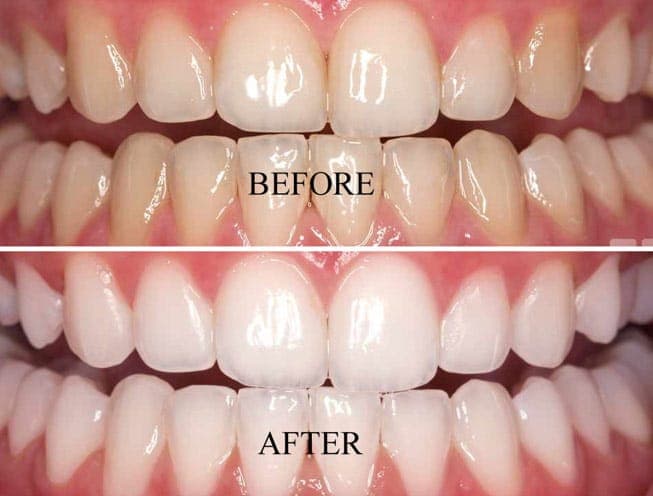
Used as directed under dental supervision, professional whitening is not expected to damage enamel. Nothing is drilled and no enamel is removed — it is one of the few cosmetic dental options that is entirely additive. The risks that do exist come from two specific places: unsupervised overuse, and bleaching teeth that have untreated decay or exposed roots.
That second one is the part worth reading twice, because it reframes the whole question. The danger is rarely the gel itself. It is applying the gel to a mouth nobody examined first.
What is the gel actually doing?
Working into the enamel to break down pigment, rather than scrubbing the surface. Teeth Whitening uses a peroxide-based gel to lighten the shade of natural tooth enamel and lift stains left by age, tea, coffee and tobacco.
That distinction matters for the enamel question. The mechanism is chemical breakdown of pigment inside the enamel, not abrasion of the enamel's surface. The tooth is not being reshaped and nothing is being taken away.
The target shade is also agreed with you beforehand, so the result reads as a healthy version of your own teeth rather than an obviously artificial white. If nobody discusses the shade with you before starting, that is a gap worth noticing.
So why do the horror stories exist?
Because of what happens outside a clinic, and because of what happens when nobody looks first.
Unsupervised overuse. In clinic the gums are isolated before the gel is applied and the exposure is timed. That control is precisely what makes a stronger agent appropriate to use — and it is the main difference between a professional session and an over-the-counter kit you manage yourself with no timing, no gum isolation and no one monitoring the process.
Teeth nobody checked. The pre-treatment examination catches decay, cracks or exposed roots. Bleaching over any of those causes real pain, which is exactly why that check is not a formality. Someone whitening at home has no idea whether they have any of the three.
Put simply: the process is well established when carried out by a dentist after an examination. The stories that circulate are usually about the version with none of those safeguards.
What happens before the whitening itself?
A scaling and polishing appointment, so the gel contacts clean enamel.
That sequencing is not an upsell — gel working on a layer of deposit is not working on your teeth. Scaling & Polishing has its own page and its own indications, and if it has been a long while since your last one, that appointment is doing useful work regardless of whether you go on to whiten.
Whitening itself is usually one in-clinic session, sometimes two, and it is performed by a dentist, always.
Will it work on my crowns and fillings?
No — whitening only affects natural enamel.
This surprises people and it is worth knowing before you commit. If you have crowns, veneers or tooth-coloured fillings in your smile line, they will not change shade while the teeth around them do. Your dentist will discuss sequencing: often the restorations are replaced afterwards to match the new shade.
If your situation is more involved than shade alone, Smile Makeover is a broader conversation with its own page. Ask which you are actually a candidate for rather than assuming whitening is the whole answer.
How long will it last?
Several months to a few years, depending heavily on diet, smoking and oral hygiene.
In Bangalore that range is doing a lot of work, because the things the gel removes are the things most of us consume daily. Filter coffee twice a day, chai at the office, and the strong tea that comes with almost every meeting all put the same pigments back. Heavy tea, coffee or tobacco use will shorten the result considerably, and that is worth being honest with yourself about before treating the number as a promise.
There is no downtime, though staining foods are avoided for a couple of days afterwards. Ask your dentist which ones and for exactly how long, rather than guessing — those first days are when the advice matters most.
Is it a reasonable thing to want?
Yes, and it is worth saying plainly. Most patients come in before a wedding, a shoot or a new job. That is a perfectly ordinary motivation and this is a relatively low-risk way to act on it, particularly given that nothing is removed from the tooth.
Booking around a date is straightforward here — one session, sometimes two, and no recovery to plan around beyond a couple of careful days with food and drink. Both our Indiranagar and Bellandur branches have dentists, so pick whichever you can reach without a rush.
What to ask before you start
Ask for the examination findings before anything is applied: is there decay, are there cracks, are any roots exposed. Ask what shade is being targeted and why. Ask whether any restorations in your smile line will be left behind. And ask which foods to avoid, and for how long.
Those four questions separate a properly run whitening appointment from a purely cosmetic one. To have them answered for your own teeth, book an appointment at our Indiranagar or Bellandur branch — and mention any home kit or strips you have already used, because that is relevant history rather than something to leave out.