
Dental Implants in Bangalore: What Local Conditions Change
Dental implant treatment in Bangalore is a several-month sequence of three to four short visits, not a single procedure — so the local questions that actually matter are which of our two clinics suits your commute, how those visits fall around your working week, and what a quote does and does not include. Both our branches are closed on Wednesdays.
This is the practical companion to the clinical explanation on our dental implants page. Nothing here changes what an implant is or how it works. It is about the parts of the decision that are genuinely about living in this city.
Which of the two clinics should I go to?
Whichever one you can reach reliably on a weekday, because you will be coming back to it more than once.
We have two Bangalore clinics. The Indiranagar clinic is on 10th Cross Road, just off Chinmaya Mission Hospital Road in Binnamangala — which suits you if you live or work anywhere across central and east Bengaluru, or if your day already brings you through Indiranagar. The Bellandur clinic is on Ambalipura–Sarjapur Road, which is the more sensible choice from Sarjapur Road, HSR, Bellandur itself and the office parks along the Outer Ring Road.
The temptation is to choose on which is nearer to home. The better test is which one you can get to on the days you can actually take an hour out — for many people in this city that is somewhere near work, not near home. Both branches are closed on Wednesdays, so build the sequence around the other six days.
Does it matter if I switch branches between visits?
It is worth asking at the planning stage rather than assuming either way.
An implant sequence is one continuous piece of treatment: the dentist who assesses the bone and plans the position is the one with the full picture when it comes to placing the implant and fitting what goes on top. When you book the consultation, say which branch you would prefer for the whole course, and ask whether the plan can run from there. It is a five-second question that saves a lot of rescheduling later.
How do three to four visits over several months fit around a working week?
More easily than most people fear, because the visits are short and the long waits between them are the treatment.
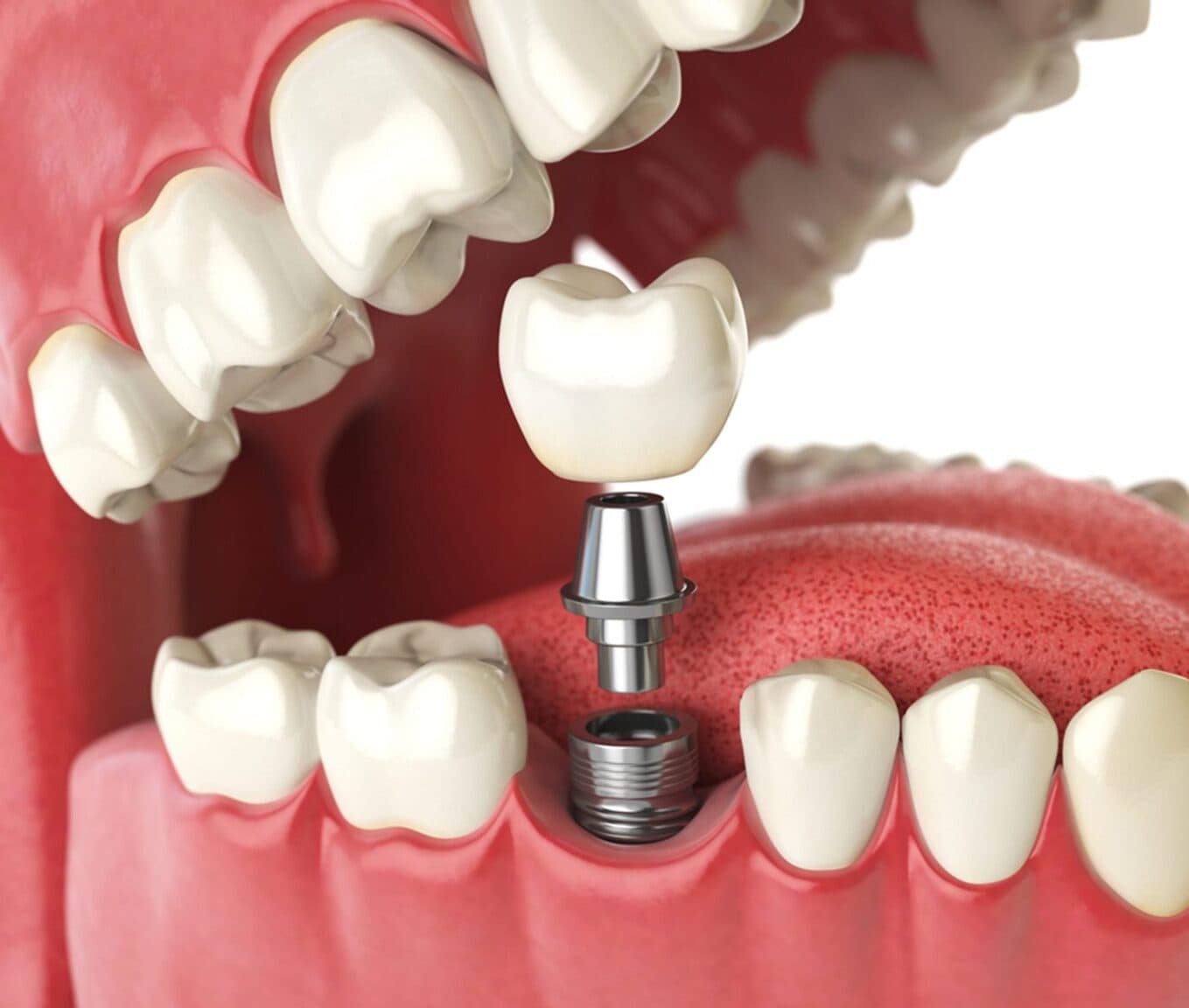
The shape is this. An assessment appointment with imaging. A planning appointment. The placement itself. Then a gap of several months while the implant fuses with the jawbone, during which you are not attending at all. Then the restoration visit, where the abutment and the crown go on and the bite is adjusted — and after that, routine check-ups.
So the diary load is not "months of appointments". It is a handful of appointments spread across months. For anyone weighing this up against a commute across the city, that is the number to hold on to.
Which visits need more time?
Placement is the one to protect properly in your calendar.
The implant is placed under local anaesthesia, and afterwards you can expect soreness and swelling around the site for a few days, plus soft foods and avoiding the surgical side for a short period while it closes. That is manageable — but it is not the day to schedule a long drive across town for a client meeting afterwards. Where you have the flexibility, arrange placement for a day when you can go home reasonably soon and eat something soft.
The assessment, planning and restoration visits do not carry that constraint in the same way, though the restoration visit includes adjusting the bite and is worth arriving unhurried for.
What does a quote include, and what does it not?
Ask that question in exactly those words, because implant pricing is a plan rather than a part.
We do not publish an implant figure and we are not going to give you a national range either, because both would be invented. What is worth knowing is what moves the number, so you can read a quote properly. The variables are: how many teeth are being replaced; how many implants are needed to carry them, which is not one per tooth; whether the scan shows enough bone or whether grafting is needed first; what restoration goes on top; and how many visits the plan runs to.
When you are handed a figure, the questions to ask are whether it covers the imaging, the post, the abutment, the crown, any grafting, and the review visits — or only some of those. A number that covers three of the six is not cheaper than a number that covers all six; it is a different number describing a different thing. Our consultation is ₹500, waived off against treatment, and you should leave it holding a written plan you understand.
What should I ask before agreeing to a plan?
Five questions, and none of them are awkward to ask.
- How many implants, and what goes on top of them?
- What did the scan show about my bone, and does the plan involve grafting?
- What is the realistic timeline from placement to the final crown?
- Which of these stages does the quoted figure cover?
- Which clinic and which dentist will I be seeing at each stage?
A dentist who is planning your treatment properly will have ready answers to all five, because they are the same questions the plan itself has to settle.
Is a cheaper quote elsewhere comparing like with like?
Sometimes, and sometimes it is quoting a different scope.
This is worth saying plainly in a city with as many clinics as this one. A lower figure may reflect genuinely lower overheads, or it may be quoting for the post alone with the crown priced separately, or it may not include the imaging or the grafting your scan calls for. The way to compare two quotes is to put the six items above beside each other, item by item. If one quote will not itemise, that in itself tells you something.
It is also worth checking that the alternatives have been discussed rather than assumed. An implant is one way to replace a missing tooth; bridges and crowns and dentures are others, and which suits you depends on your mouth, not on which treatment a clinic prefers to do.
What happens if something feels wrong between visits?
Contact the clinic — do not try to decide for yourself whether it is normal.
Some soreness, swelling and minor bruising for a few days after placement is expected. What warrants a call rather than a wait is pain or swelling that is worsening after those first few days instead of settling, bleeding that does not settle, a fever, a suture coming away early, or anything that simply does not feel right to you. In a city where a same-day slot can be the difference between a quick check and a wasted week, ring early rather than late: call the clinic or use the booking page and ask to be seen. Remember both branches are closed on Wednesdays when you are planning that.
Does anything about living in Bangalore change the treatment itself?
Honestly, no — and it is worth saying so, because plenty of pages imply otherwise.
You will find articles that tie local water, air or weather to almost any treatment. For an implant, that is not how it works. What decides whether an implant is possible, and how it goes, is the volume and quality of your jawbone, the health of your gums, your general health, and how well the site heals — established by examination and imaging, by a dentist, in person. The city changes your logistics. It does not change your bone.
Where local reality does matter is in the ordinary things: getting to appointments on time, keeping up routine check-ups afterwards, and being somewhere you can get seen quickly if you need to be. Those are worth weighing properly, and they are the reason the branch question deserves more thought than it usually gets.
Where to go next
If you have a gap you have been working around, the useful next step is an examination and a scan, because everything else on this page depends on what those show. Read the dental implants page for the clinical picture, then book an appointment at whichever of the two clinics you can actually get to on a weekday.