
Are You a Good Candidate for Root Canal Treatment (RCT)? An Honest Checklist
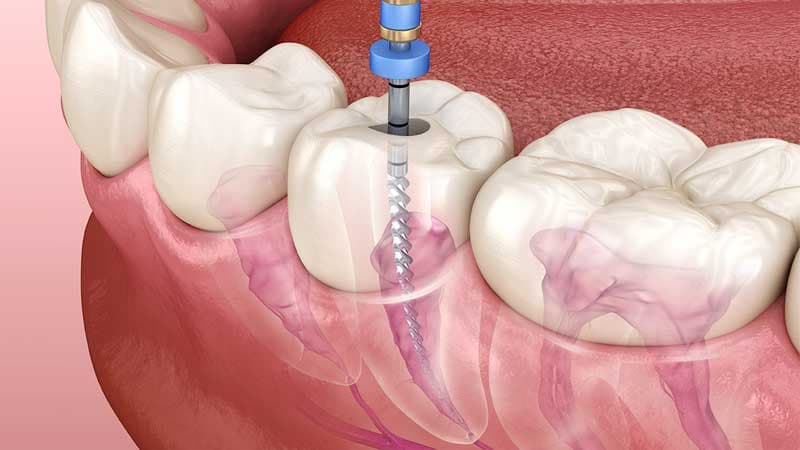
Root canal treatment is considered when the pulp inside a tooth has become infected or inflamed and the tooth is worth keeping. What commonly brings people in is a throbbing toothache at night, lingering pain from hot or cold, swelling near the gum, or being told a tooth must come out. Whether it is right for your tooth is settled by an examination and an X-ray, not by matching a list.
That last sentence is the important one, so this checklist is written to help you decide whether to book — not to tell you what is wrong.
What kinds of problems lead to a root canal?
Situations where the soft core inside the tooth has been reached by bacteria. The pulp becomes inflamed or infected, usually from deep decay, a crack, repeated dental work on the same tooth, or an injury. Because the pulp sits sealed inside a hard tooth, the body cannot easily clear an infection there, and it does not settle on its own.
The experiences people describe when this turns out to be what is happening:
- A deep, throbbing ache that is worse lying down and interrupts sleep.
- Hot or cold sending a sharp pain through one tooth that lingers after the drink is gone, rather than passing in a second.
- Swelling near the gum, with the tooth sore to bite on.
- Having been told the tooth should be extracted, and wanting to know whether it can be kept instead.
None of these is diagnostic on its own. Toothache has more than one cause, and the point of the X-ray is to establish which one you have — including the possibility that the answer is something much simpler.
Can a webpage tell you whether you need one?
No, and any page that implies otherwise is doing you a disservice.
Two teeth producing identical symptoms can need completely different treatment. What separates them is what the examination and X-ray show about the pulp and the surrounding bone. That is the first stage of the treatment for exactly this reason: it exists to confirm whether a root canal is the right answer, and it can just as easily conclude that it is not.
So read this as a guide to whether the situation warrants an appointment. It does not substitute for one, and it cannot tell you what is wrong with your tooth.
When is a root canal not the answer?
Several situations, and they are worth knowing about because most pages skip them entirely.
When the problem is not the pulp. Not every persistent toothache comes from an infected pulp. Where the cause is something else, treating the pulp does not address it, which is why the diagnosis stage comes before any treatment decision.
When decay has not reached that far. A tooth caught earlier may need a filling rather than root canal treatment. This is a genuinely common outcome of a consultation booked in time, and a good argument for going sooner rather than later.
When the tooth is too damaged to restore. A root canal is only worth doing if there is enough sound tooth left to rebuild afterwards. Where there is not, extraction is the honest recommendation, and a dentist should say so plainly rather than treating a tooth that will not survive the restoration.
When a previous root canal has failed and the tooth has fractured. A small proportion of root canals do not fully resolve — a missed canal, a persistent infection or a later fracture — and retreatment or, rarely, extraction may then be needed. Which of those applies depends on how much sound tooth remains.
Does your medical history affect whether you can have one?
It affects how the appointment is planned rather than whether treatment is possible, and the way to handle it is to disclose everything rather than self-assess.
Tell the clinic about all your medication, particularly anything affecting bleeding or clotting; about heart conditions, valve replacements or joint replacements; about diabetes; about pregnancy or the possibility of it, which matters for X-rays and medication; and about any reaction you have had to an anaesthetic, an antibiotic or a painkiller. The treatment is carried out under local anaesthesia, and it is always performed by a dentist.
Do not stop any regular medication ahead of a dental appointment on your own judgement. Say what you take and let the dentist advise.
Are you a good candidate if you will not commit to the crown?
This is the honest question few checklists ask, and it belongs here.
A root-treated tooth has lost its blood supply and becomes more brittle. Back teeth take heavy chewing forces, so a crown is usually recommended for them rather than a filling alone — it protects the tooth from splitting, which is often not repairable. Where enough sound structure remains, a filling may be sufficient.
Either way, the restoration is part of the treatment rather than an optional follow-up. If the plan is to have the canal work and skip what comes after, the tooth is at real risk of being lost anyway, and that is worth discussing openly at the consultation — including what it costs and when the appointment would be — rather than discovering at the end.
What actually decides it at the appointment?
An examination and an X-ray, which together confirm whether the pulp is infected or inflamed and whether root canal treatment is the right course for this particular tooth. From that the dentist can also tell you whether it is likely to be one sitting or two, and what the restoration afterwards needs to be.
A straightforward single-visit case runs roughly 60 to 90 minutes. Teeth with an active infection or several curved canals may need a second appointment.
What if you are in pain right now?
Do not wait to see whether it settles, and do not decide from an article what is happening. Contact a dental clinic and describe what you are experiencing. If the pain is severe, if there is swelling near the gum, or if biting on the tooth hurts sharply, treat that as a reason to be seen promptly rather than at your convenience.
Pain easing on its own is not evidence that the problem has gone. Left untreated, an infection can spread and cause severe pain and an abscess.
The straightforward next step is a look and an X-ray. Read more on the root canal treatment page, or book an appointment. Consultation ₹500, waived against treatment.