
Where Laser Dentistry Actually Helps, and Where It Does Not
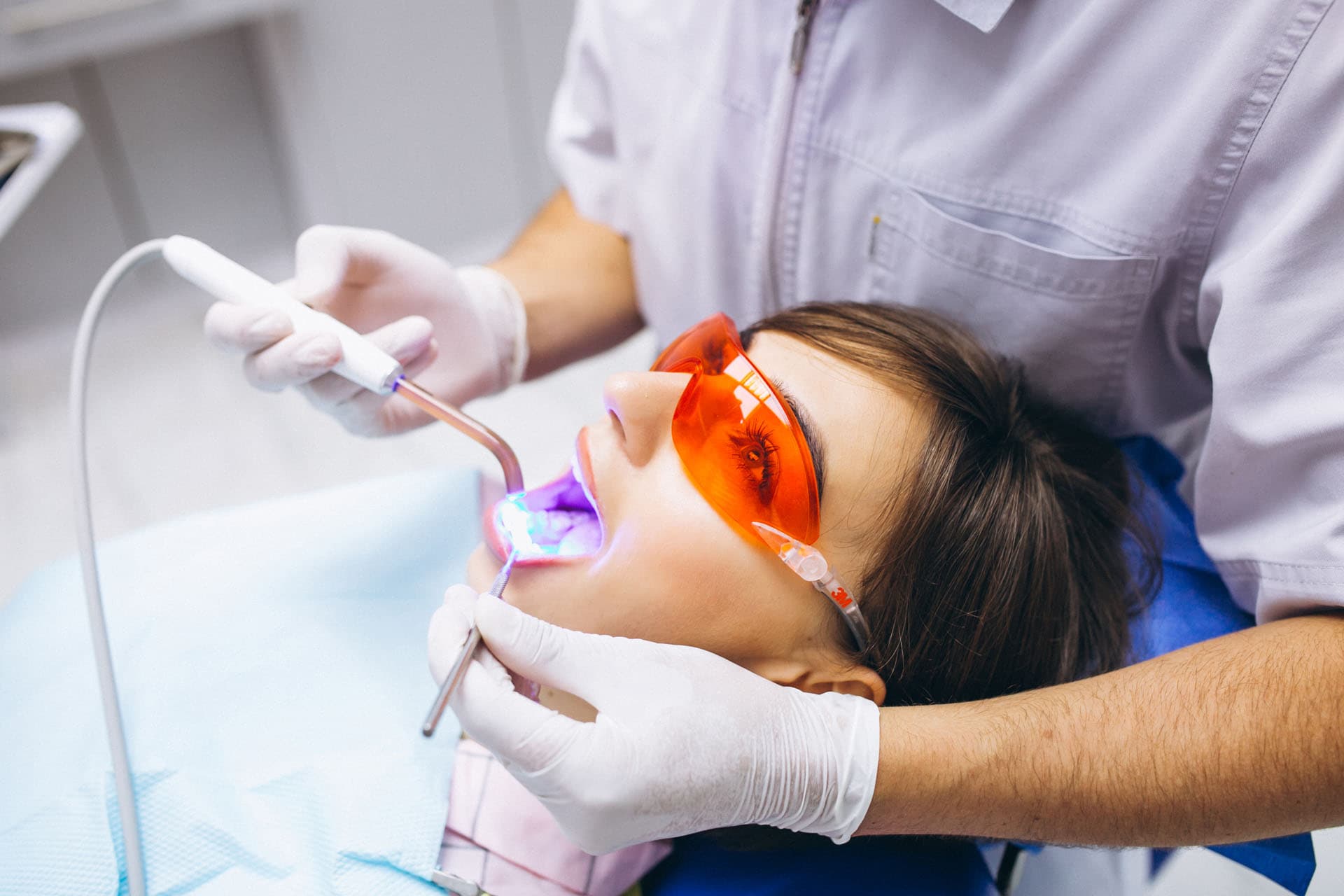
Laser dentistry is not a treatment in itself. It is a technique used within other treatments — gum disease therapy, gum contouring, removal of soft-tissue lesions and certain cavity work — chosen in the situations where focused light energy is more precise or less invasive than the conventional instrument. It is not a universal replacement for one, and not all dental work is suitable for it.
Both halves of that matter. The technique has real advantages in the places it fits, and the honest framing is that those places are specific rather than universal.
Where does it genuinely help?
In soft-tissue work above all, and the reasons are concrete rather than promotional.
Laser Dentistry can direct the beam at diseased or excess tissue while sparing what is healthy alongside it. That precision matters most in gum work, where the margins are fine and the difference between treating and over-treating is small.
It also seals small blood vessels as it works, so there is generally less bleeding than with a scalpel and the field stays clearer during the procedure. Less trauma to surrounding tissue, and less need for sutures in soft-tissue procedures, typically means a more comfortable recovery.
Many soft-tissue laser procedures are more comfortable than their conventional equivalents, and some minor ones can be done without an injection at all.
The printed list of what it supports is worth knowing plainly: gum disease therapy, gum contouring, removal of soft-tissue lesions, exposing a tooth, treating ulcers, and some cavity preparation.
Will I still need an injection?
Sometimes not, for minor soft-tissue procedures. But anaesthesia is still used for much laser work, and this is the single most commonly over-read claim about the whole category.
The right approach is to ask about your specific procedure rather than assuming the technique as a whole avoids injections. "Laser dentistry" covering several different procedures means the answer genuinely differs between them, and the person to ask is the dentist planning yours.
So what still needs conventional instruments?
Some of it does, and a clinic that tells you otherwise is overclaiming. Not all dental work is suitable for a laser.
What this page will not do is hand you a list of which procedures fall on which side, because that is a per-case judgement rather than a fixed table — it depends on what is being treated and what condition it is in. The useful question to put to your dentist is simply: for my procedure, are you using a laser, a conventional instrument, or both, and why that choice?
A dentist who answers that directly is telling you they have made a considered decision. One who presents the laser as the answer to everything has not.
Is it safe?
Performed by a trained dentist with the correct settings and protective eyewear for everyone present, it is a well-established technique. It is carried out by a dentist, always.
The main specific hazard is to the eyes, which is why eye protection is mandatory and worn by everyone in the room, including you. If you are ever in a room where a laser is used and nobody hands you eyewear, that is the moment to ask.
Downtime is usually minimal — most people resume normal activity the same day.
Does it help if I am anxious about the dentist?
It can, and for a fairly specific reason. Avoiding the drill's noise and vibration, and sometimes the injection, removes two of the particular things that make dental anxiety worse for a lot of people.
That is worth saying without overselling it. The technique does not remove anxiety, and it does not apply to every procedure you might need. But if the sound and the sensation of a drill are what has kept you out of a dental chair for years, it is reasonable to raise that at your consultation and ask where a laser could be used in your particular treatment plan.
Say it out loud rather than hoping it will be noticed. Dental anxiety is extremely common, nobody at a clinic finds it remarkable, and it genuinely changes how a plan is built.
Where does it sit alongside other dental work?
It is one technique among the tools available, used inside treatments rather than instead of them.
Scaling & Polishing and Root Canal Treatment (RCT) are separate treatments with their own pages, their own indications and their own assessments. Whether a laser plays any part in either for your case is a question for your dentist rather than something to assume from this page — and worth asking specifically rather than in general terms.
Practically, for a Bangalore week
Minimal downtime and same-day return to normal activity make this straightforward to fit around work, which is not true of every dental appointment. Both our Indiranagar and Bellandur branches are staffed by dentists, so choose whichever you can reach without a rush — arriving stressed from a cross-city drive is a poor start to any appointment, and a worse one if you are already anxious.
The questions to take with you
For my procedure, is a laser being used, and why. Will I still need anaesthesia. What is the recovery. And if you are anxious: where in this plan could the drill be avoided, and where could it not?
To get those answered for your own case, book an appointment at our Indiranagar or Bellandur branch. If dental anxiety is part of why you have delayed, say so when you book rather than when you arrive.