
What Is Scalp Micropigmentation? A Plain-English Explanation
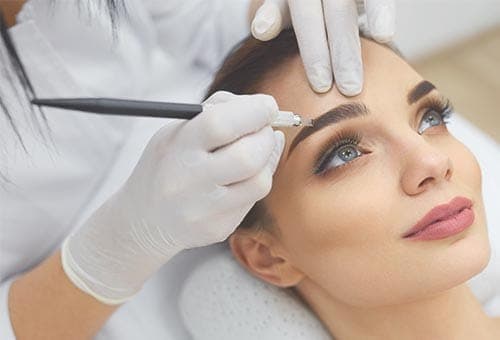
Scalp micropigmentation is a non-surgical cosmetic procedure in which tiny deposits of pigment are placed in the scalp with fine microneedles to simulate the appearance of hair follicles. The effect is of a closely shaved, denser head of hair. It does not grow hair. The hairline and the pigment shade are designed with you before any work begins.
If that answers your question, you can stop there. The rest of this page is for people who want to know what is actually happening, and what it is like, before deciding whether it is something they would consider.
What is actually being put into the scalp?
Pigment. Not hair, not a graft, not a chemical that acts on the follicle — colour, deposited at a controlled depth in the skin of the scalp, in points small enough to read as individual follicles from normal viewing distance.
The word to hold on to is simulate. Each deposit stands in for the look of a follicle emerging from the skin, the way a closely shaved head looks when there is hair under the surface. Put thousands of them across an area and the scalp stops reading as bare skin and starts reading as short hair. Our scalp micropigmentation page describes the same thing in one line: pigment that replicates the look of natural hair follicles.
The shade is not a standard black. It is mixed to sit against your own hair colour and skin tone, and the density is adjusted so the result reads as stubble rather than as a block of colour. That mixing is a large part of what separates a good result from an obvious one.
What happens at the appointment?
Four stages, in order.
Consultation and design. Your hair loss, your skin tone and what you want out of it are assessed, and then the hairline design, the pigment shade and the density are agreed with you. Where the hairline sits, how soft its edge is, how it suits your face — all decided here, before anything is placed.
The first application session. Pigment is deposited across the treatment area with fine microneedles to establish the base density. This is the session after which you can see the change.
Build sessions. Further sessions deepen and even out the result. The work is deliberately layered across visits rather than done all at once, because layering gives a more natural finish.
Healing and touch-ups. Aftercare protects the settling pigment. Later, periodic touch-ups keep the shade consistent as it softens.
Expect more than one session in total, usually spread over several days or weeks, each running to a few hours. How many depends on how much area is being covered, which is why the number is confirmed at your consultation rather than quoted in advance.
Does it hurt?
Most patients report minimal discomfort. A topical anaesthetic is generally applied to numb the area beforehand.
It is a needle procedure, so it is not nothing — but the sensation people describe is closer to a persistent prickle than to pain, and the numbing is there precisely to keep it manageable across a session that lasts hours.
Will it look natural, or will people be able to tell?
This is the question everyone actually wants answered, and the honest version of the answer is that it depends far more on the planning than on the procedure.
Three things do the work. The shade is matched to your natural hair colour and skin tone. The density is adjusted to blend with whatever hair you still have, rather than being applied uniformly. And the design — hairline position, edge softness, how it sits against your face — is agreed with you before the work starts.
That last point is worth restating, because it is where a natural result is actually decided. By the time pigment is going in, the outcome has largely been determined. A consultation that feels rushed is the warning sign, not a technique you can inspect.
How long does it last, and will it fade?
It is designed to be long-lasting, and the shade softens gradually over time rather than disappearing.
Sun exposure accelerates that softening. Protecting the scalp from direct sunlight, and having occasional touch-ups, is what keeps it looking even. There is no daily routine attached — sun protection and the odd touch-up is genuinely the whole of the upkeep.
The other side of "long-lasting" deserves saying plainly. It can be adjusted or modified later, but complete reversal may not be possible. Treat the decision accordingly. This is not a look to try on for a few months.
What it does not do
It does not grow hair, and it does not restore hair you have lost. It puts colour on the scalp; the follicles themselves are unchanged.
That boundary matters because the two things people most often confuse it with sit on the other side of it. If your goal is to keep the hair you still have, or to find out why it is thinning, that is a diagnostic route and it starts with a hair fall treatment consultation. If your goal is length and volume rather than the look of a close shave, a hair patch is the different answer.
Micropigmentation is for a third goal entirely: making thinning less visible, now, on a head of hair kept short.
Who tends to ask about it?
Three descriptions come up repeatedly.
Someone who has accepted the hair loss and simply wants the hairline to look defined again. Someone who already keeps their hair very short and wants the thin patches to stop showing. And someone with a scar on the scalp they would like blended into the surrounding density — how well a scar blends depends on its texture and age, which is assessed rather than promised.
It also covers more than one pattern of loss: pattern baldness, diffuse thinning and scarring can all be addressed.
What does it cost, and what is the first step?
We do not publish a figure, because the area covered varies enormously between patients and any single number would mislead. It is quoted to you at consultation, once the design and the likely number of sessions are settled. The consultation is ₹500, waived against treatment.
Because the skin is being broken during the procedure, aftercare is specific and it will be given to you directly. Follow those instructions rather than anything you read elsewhere, and if the way your scalp is healing worries you at any point — unusual pain, swelling that is not settling, discharge — contact the clinic rather than waiting it out.
If the description above matches what you were hoping for, the design conversation is the place to start. Book an appointment and bring your questions to it.