
Scalp Micropigmentation: The Non-Surgical Option, Explained Honestly
To be clear from the first line: we do not perform transplant surgery at The Aesthetic Edge. If that is what you have decided you want, you need a surgical centre, and we would rather tell you so now than after a consultation fee. What we do offer for a scalp that has become visible is scalp micropigmentation — and it is worth understanding exactly what that is, because it is not a regrowth treatment and it does not pretend to be.
What is scalp micropigmentation, exactly?
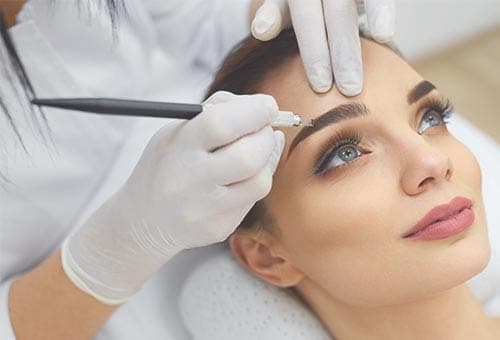
Scalp micropigmentation places tiny deposits of pigment in the scalp to replicate the look of natural hair follicles, giving the appearance of a closely shaved, fuller head of hair. It is a tattooing technique. It creates the impression of density. It does not grow hair.
That sentence is the whole basis on which you should decide whether this is for you. Nothing is being implanted and no follicle is being revived. What changes is what a person sees when they look at your scalp — the contrast between bare skin and remaining hair is closed up, so the eye stops reading a gap.
For some people that is exactly the right answer and a relief to hear stated plainly. For others it is the wrong treatment, and knowing which you are is five minutes of honest conversation rather than a course of anything.
How soon does it show, and how many sessions?
Immediately after the first session — which is the clearest practical difference between this and every regrowth treatment. Micropigmentation changes how the scalp looks as soon as the first session is done, where regrowth therapies are measured in months.
It usually takes more than one session, each running to a few hours, spread over several days or weeks so the density can be layered rather than laid down all at once. Your doctor confirms the likely number at consultation based on the area being covered. Pigment is deposited with fine microneedles at a controlled depth, so there is no surgery and none of the recovery that goes with it, and a topical anaesthetic is generally applied to numb the area beforehand. Most patients report minimal discomfort.
Upkeep is genuinely low. There is no daily routine. Sun protection and occasional touch-ups are what keep the result even — and in this city, the sun protection part is not decorative. A scalp is the one area nobody remembers to cover, and if you are on a two-wheeler through Bellandur traffic with a helmet on and off through the day, your scalp is getting more direct sun than the rest of you.
Will it actually look natural?
It depends almost entirely on decisions made before any pigment is placed, which is why the design stage is the part worth your attention.
The shade is mixed to sit against your natural hair colour and skin tone, and the density is adjusted so the result reads as stubble rather than as a block of colour — a distinction that matters more on deeper skin tones and darker hair, where a shade that is slightly off does not blend, it announces itself. Where the hairline sits, how soft its edge is and how it suits your face are agreed at consultation, before a single dot is placed.
So: bring photographs of yourself from when you were happy with your hair. Ask to see how soft the hairline edge will be. Say out loud how short you actually keep your hair, because the effect is built for a closely shaved look. This is the stage where a natural result is decided, and it is the stage patients most often rush.
It also handles more than one pattern. Pattern baldness, diffuse thinning and scars on the scalp can all be addressed, including blending a scar into the surrounding density — which is sometimes the whole reason someone comes in.
What if I want real regrowth instead?
Then micropigmentation is the wrong starting point, and there is a different conversation to have — one that depends on whether you still have active follicles in the area.
QR678 Hair Growth Treatment is a plant-derived growth factor formulation injected superficially into the scalp to support thinning hair. No blood draw is involved, sessions run about fifteen minutes with no downtime, and a course is around five sessions roughly three weeks apart. It is used for male and female pattern loss and certain forms of alopecia where active follicles remain — and a doctor will tell you honestly at consultation whether there is enough active follicle to work with.
Two honest caveats, both from our own treatment page rather than softened for a blog. Results vary between patients and cannot be promised. And density changes take months, because hair grows slowly — reduced shedding tends to come first, with comparison photographs at three months being how the result is actually judged rather than how it feels.
How does a hair patch compare?
It is the third distinct option, and the one people underestimate. Hair Patch Treatment fits a custom-made hair system over the thinning area, matched to your own hair colour, texture, wave pattern and density so the join is not obvious at the edges. Nothing is implanted, cut or injected. It is fitted in typically one appointment of one to two hours, visible the same day, and it is completely reversible — the system comes off and your scalp is as it was.
That reversibility is worth weighing seriously. Few hair loss options leave that door open, and where thinning is too far along for regrowth treatment to give the coverage you want, a patch is a straightforward way to get it. It does need periodic servicing and refitting.
So the three options answer three different questions. Micropigmentation changes how the scalp reads, permanently and immediately, for someone who keeps their hair short. A patch provides coverage you can remove. QR678 attempts to support follicles that are still alive, over months, with no promised outcome. None of them is surgery, and none of them is a substitute for the others.
Which one is for you?
That depends on how much hair you have left, how short you wear it, whether you want something reversible, and how long you are willing to wait — and it is genuinely not answerable from a blog post.
What we can commit to is the honest version of the answer, including "none of these" if that is the truth of your situation. Micropigmentation is carried out under medical supervision, and the design is agreed with you first.
If your scalp has become visible and you want a straight assessment of which of these three actually suits you, book a consultation at our Bellandur or Indiranagar clinic. Come with photographs, and with a clear sense of whether you want hair back or want the scalp to stop showing — they lead to different rooms.