
Scalp Micropigmentation: What It Actually Looks Like Up Close and at a Distance
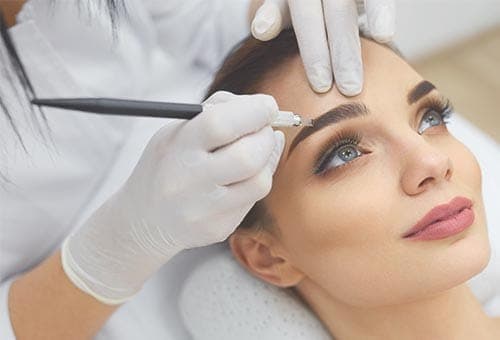
Done well, scalp micropigmentation reads as a closely shaved head of hair rather than as a tattoo, because what is placed are tiny individual deposits of pigment that replicate the look of natural hair follicles — not a solid wash of colour. Whether it holds up at arm's length comes down to three decisions made before any work begins: the pigment shade, the density, and where the hairline sits.
That is the honest answer to the question almost everyone searches for and very few ask at the front desk. It is a fair question, because a poor result is genuinely obvious, and the difference between the two outcomes is not luck.
What is scalp micropigmentation, exactly?
It is a non-surgical cosmetic procedure in which tiny deposits of pigment are placed in the scalp to simulate the appearance of hair follicles, creating the look of a closely shaved, denser head of hair.
Scalp Micropigmentation does not grow hair. That sentence is the most important one on this page, and any clinic that blurs it is doing you a disservice. This treatment changes how your scalp looks. It does not change what is growing out of it. If regrowth is what you are after, that is a different conversation entirely, and one worth having separately.
The pigment is deposited with fine microneedles at a controlled depth. There is no surgery and none of the recovery that goes with it.
So does it look fake up close?
The three variables above decide it, and all three are settled before a single dot is placed.
The shade is mixed to sit against your natural hair colour and skin tone. A pigment that is too dark or too cool against your skin is what produces the flat, painted look people are afraid of. The point of matching is that the deposits disappear into the impression of stubble rather than announcing themselves.
The density is adjusted so the result reads as stubble rather than as a block of colour. Density is also what lets the work blend into hair you still have, rather than sitting next to it as an obviously different texture.
The hairline is the one people underestimate. Where it sits, how soft its edge is, and how it suits your face are agreed at consultation, before any work begins. A hairline drawn too low or too hard is the single most recognisable sign of a poor job, and it is also the most avoidable, because it is a design decision rather than a technical one.
For Indian skin and hair tones specifically, the matching step is not cosmetic fussiness. Most patients here have dark hair against a range of skin tones, and getting the pigment to sit correctly in that relationship is the whole craft. This is why the design stage exists, and why it is not something to rush through on the day.
Who is it suitable for?
Several patterns of hair loss can be addressed: pattern baldness, diffuse thinning, and scars on the scalp — including blending a scar into the surrounding density.
That last application is one people rarely know about. A scar on the scalp is visible precisely because it has no follicles in it and the surrounding area does. Adding pigment deposits into and around it reduces that contrast.
If your situation is ongoing shedding rather than settled loss, it is worth discussing Hair Fall Treatment first, because treating the loss and changing the appearance are different goals with different timelines. And if you want the appearance of longer hair rather than the close-shaved look, Hair Patch Treatment is a different route to a different result. None of these is a substitute for the others, and an honest consultation will say which one matches what you actually want.
How many sessions, and how long does each one take?
Usually more than one, spread over several days or weeks, with each session running to a few hours. The spacing is deliberate — it allows the density to be layered rather than laid down all at once, which is part of how the result stays natural.
Your doctor confirms the likely number at consultation, based on the area being covered. The work is performed under medical supervision.
Set aside the time properly. A few hours in the chair is a real commitment, and trying to squeeze a session in around a work call and a cross-city drive in evening traffic is not the way to approach it.
Does it hurt, and what happens afterwards?
Most patients report minimal discomfort. A topical anaesthetic is generally applied to numb the area beforehand.
Afterwards there is very little upkeep. There is no daily routine to follow — sun protection and occasional touch-ups are what keep the result even. In Bangalore that sun-protection point deserves more weight than it usually gets. The UV load here is significant year-round, not just in the hot months, and a scalp with no hair over it is directly exposed every time you step out. If you ride, a helmet does some of that work for you; if you walk or wait outdoors, it does not.
Periodic touch-ups are what keep the shade even over time. That is normal maintenance, not a sign anything went wrong.
A visible change from day one
Unlike regrowth treatments, which take months, micropigmentation changes how the scalp looks as soon as the first session is done. The result is visible immediately after that first session, and it builds as the density is layered across the remaining ones.
For some people that immediacy is the entire appeal. For others it is exactly why the design conversation matters so much — a change you can see at once is also a change you want to have thought about properly first.
If you want to talk through whether this suits your pattern of loss, you can book an appointment at our Indiranagar or Bellandur branch. Ask to see the hairline design before anything is placed, and take your time over it. That stage is where a natural result is decided.