
What Changes the Cost of Scalp Micropigmentation in India
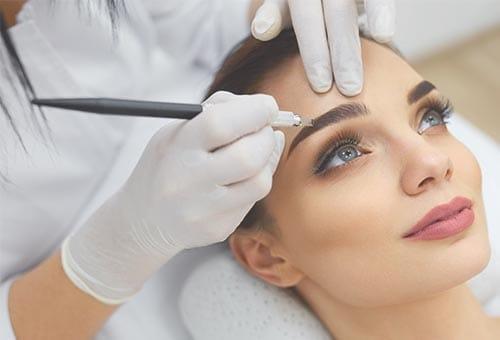
Scalp micropigmentation is not quoted from a price list, and we would rather explain that than publish a figure that misleads. The three variables are the area being covered, the density you want and how many sessions that takes — but there are parts of the cost that no quote itemises, and those are the ones worth understanding before you sit down to discuss numbers.
Why is the area the biggest variable?
Because the work is deposited dot by dot, so the surface decides the hours. A receding hairline and a fully bare crown are not the same job in any sense that matters to a quote, and nothing about the technique scales them together.
This is why a figure a friend quotes you is close to useless. Their pattern of loss was theirs. The treatment addresses pattern baldness, diffuse thinning and scars on the scalp, and those three present completely differently in how much surface needs covering — someone with diffuse thinning across the top may need more area treated than someone with a defined bald patch, even though the second looks more severe in a mirror.
What does density actually change?
How many passes the area needs, and therefore the time. Density is the adjustable part of the result: the shade is mixed to sit against your natural hair colour and skin tone, and the density is adjusted so the result reads as stubble rather than as a block of colour.
That adjustment is a decision, not a setting. A softer, sparser finish and a denser one are different amounts of work on the same surface — so two people with identical hair loss can be quoted differently because they want different results. Say what you want it to look like, not just where.
How many sessions, and why are they spread out?
More than one, usually, and they are spread over several days or weeks rather than done in a single sitting. Each session runs a few hours.
The spacing is not a scheduling convenience. Building density in layers is how the result ends up reading as follicles rather than as a flat tone, and it also means the shade can be judged once the first pass has settled rather than committed to all at once. So when you ask about cost, the useful question is not the per-session rate but the rate and the session count your scalp needs, together — a lower rate attached to more sessions is not cheaper.
What you do get immediately is a visible change: unlike regrowth treatments, which take months, micropigmentation changes how the scalp looks as soon as the first session is done. You are paying for a course, but you are not waiting for the course to end before you see anything.
Am I paying for the design conversation?
Yes, and it is the part of the cost most worth having. Where the hairline sits, how soft its edge is and how it suits your face are all agreed at consultation — before a single dot is placed.
That is judgement rather than execution, and it is where the difference between a good result and an obvious one is decided. A hairline set too low or too hard does not look like hair; it looks like a drawn line, and it is not something that can be undone quickly. If a provider wants to start placing pigment without having spent real time on that conversation, the thing to worry about is not the price.
Does covering a scar cost more?
It can, because it is a different kind of job. Scars on the scalp can be addressed, including blending a scar into the surrounding density — and blending is more exacting than covering open scalp, because the work has to match what is on either side of it rather than fill a uniform area.
Say at the consultation if there is a scar, a previous procedure or older work on the scalp. That changes the plan rather than complicating the conversation, and it is better established before a figure is given than after.
Is the touch-up a recurring cost?
Yes, though a small one. Upkeep is low — there is no daily routine to follow — and what keeps the result even is sun protection plus occasional touch-ups. Periodic touch-ups keep the shade even over time.
So budget for the course plus an occasional return, not for a single transaction. That is genuinely less onerous than most treatments in this category, and it is worth putting next to the alternatives when you are comparing: there is no daily product, no maintenance routine and nothing to reapply.
What should a quote tell me before I agree to it?
Four things: the area being treated, the density being aimed at, how many sessions your scalp is expected to need, and whether the review between sessions is included. If a quote gives you a single number with none of those attached, ask what it is a number for.
Also worth confirming: the work is done under medical supervision, and the skin is being broken, so hygiene standards and aftercare instructions are part of what you are buying rather than extras. Ask who is performing it.
Does the city change what you pay?
City-level pricing varies, and we are not going to publish a national range for a treatment we only have our own data on — that would be an estimate dressed as a fact. What drives the variation is ordinary overhead: premises and staffing cost more in larger metros, and that reaches the invoice.
What should not vary with the city is the substance: a design agreed with you first, a shade mixed to your own hair and skin tone, density adjusted to read as stubble, and a session count based on your actual scalp. If a cheaper quote elsewhere is cheaper because the design stage was skipped, it is not the same procedure at a better price.
Where the money actually goes to waste
In two places. The first is rushing the hairline. It is the one decision in this treatment that is highly visible and slow to change, and the consultation exists precisely so you can look at the proposed line on your own face and say no.
The second is buying density you did not want. The result is meant to read as a closely shaved head of hair; pushed too dark or too dense it reads as a cap of colour, and correcting that costs more than getting it right. If you are uncertain, the conservative version is the one to start with.
In Bangalore there is a practical third: the sessions run a few hours each, spread over days or weeks, so a plan booked at a clinic across the city tends to stall partway. We see patients at both Bellandur and Indiranagar — for a course like this, pick the one on a route you already travel.
Getting a figure that applies to you
Book the consultation, let someone look at your scalp, and agree the design and the likely session count. The figure follows from those, which is why it is not on a page.
You can book an appointment at either clinic — and if you are also weighing a hair patch or medical hair fall treatment, say so, because those are different routes to the same complaint and the comparison is better made in the room than online.