
Volite vs Profhilo Treatment: How to Choose
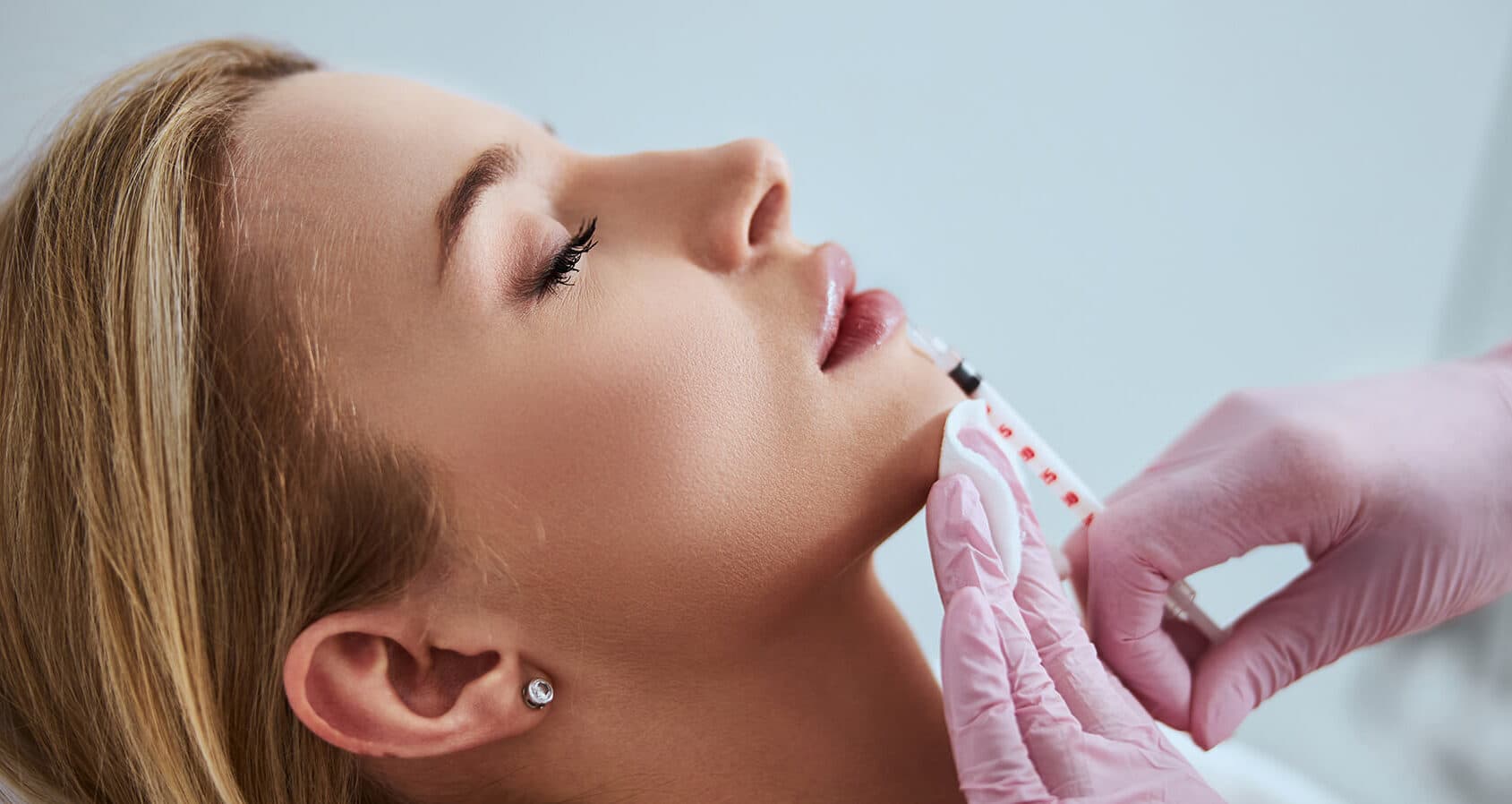
Volite and Profhilo are both injectable hyaluronic acid treatments that improve skin quality rather than change facial shape. Volite is spread as a fine grid of micro-injections and works mainly on hydration and fine surface lines. Profhilo is placed at a small number of set points, diffuses outward, and prompts collagen and elastin, so it addresses firmness. Your doctor confirms which fits.
That is the short answer. The rest of this page is the detail underneath it, because the two are close enough that the choice is worth understanding rather than being told.
Are Volite and Profhilo the same thing?
No — they share an ingredient and a purpose, and they differ in how they are delivered and what that delivery achieves. Both are hyaluronic acid. Both treat skin quality rather than shape, which is what separates either of them from a dermal filler. A filler is placed at specific points to add volume or contour; neither of these is doing that.
Where they part company is what happens after the needle. Volite is distributed as a grid of small injections so that the hyaluronic acid sits evenly across the whole treated area. Profhilo is injected at a small number of set points and is designed to spread outward through the tissue from each one. That single difference in behaviour is what gives each its own strengths.
What is the actual difference in how they are delivered?
Volite is a grid; Profhilo is a set of points that diffuses. In practical terms this changes the number of injections you receive.
With Volite the area is marked and treated as a grid of small injections, so the hyaluronic acid ends up distributed across the whole area rather than concentrated at any one place. With Profhilo the doctor marks and injects the standard points for that area, and the product then travels outward from each one. As the Profhilo notes put it, it is a small number of injection points rather than a grid across the whole face.
If the number of needle entries is something you have been quietly worrying about, that difference is a real one and worth raising at your consultation.
Which one suits my concern?
This is the part that actually decides it, and each treatment has cases it genuinely wins.
Volite tends to suit you if the complaint is hydration and fine surface lines. Its own description is skin that feels tight and dehydrated no matter how much moisturiser is used, and fine lines around the eyes showing up in photographs. The area around the eyes is the most commonly treated one for exactly that reason: better-hydrated skin creases less. Volite is also explicitly not restricted by skin type — oiliness and dehydration are different things, and oily skin can be dehydrated too.
Profhilo tends to suit you if the complaint is firmness and laxity. Its description is skin that has lost its bounce, or that looks dull and a little crepey, particularly on the neck. Because it prompts collagen and elastin production, it addresses laxity at the level of the skin itself rather than by adding anything underneath it. Profhilo also carries a documented effect on texture and the appearance of pores as skin quality improves over the weeks after treatment.
Both are used on the face, neck, décolletage and the backs of the hands. Neither core claims those areas for itself alone.
How do the sessions and the timeline compare?
They differ, and this is often the practical deciding factor.
Volite is commonly a single treatment, repeated roughly every six to nine months. The effect typically peaks at around 10 to 14 days, improves over the first month, and commonly lasts in the region of six to nine months.
Profhilo is commonly two sessions about four weeks apart, then maintenance. Changes generally become noticeable over a few weeks as the collagen and elastin response develops, and typically last around six months before a follow-up is suggested.
So if you want the shortest route to a result, Volite's single session is the simpler commitment. If you are willing to come twice at the start, Profhilo is built that way on purpose. Neither timeline can be shortened on request — the intervals exist because that is how each product behaves.
What does each one feel like, and what is the recovery?
Both begin the same way: anaesthetic cream applied to the treatment areas and left on for 30 to 45 minutes before anything is injected. Most patients describe either as tolerable rather than painful.
Recovery differs slightly. After Volite, slight redness, small bumps and mild swelling are normal on the day and the day after, and strenuous activity is avoided for 72 hours. After Profhilo, most patients resume normal activities immediately; the small raised bumps at the injection points are part of how the treatment works, because the product needs a short time to diffuse, and they usually flatten within a day, with mild swelling or redness possibly lasting a few days.
The instructions on either side of the appointment are close to identical. Both ask you to avoid alcohol for at least 24 hours beforehand and for 12 hours afterwards, to leave the treated area unwashed and free of moisturiser or makeup for around 24 hours, to avoid massaging it for 24 to 48 hours, to skip facials and steam for around 15 days, and to stay out of the gym for 72 hours. Both also require that there is no infection, injury or bruising at the treatment site beforehand, and both ask about allergies, cold sores and blood-thinning medication. Profhilo's history-taking additionally covers keloid scarring, cancer treatment and lidocaine allergy. Follow the set you are given at your own appointment rather than the one you read here.
Are the side effects different?
They overlap heavily. Both list redness, swelling and tenderness at the injection points, and both list bruising as possible.
Two details are worth carrying away. With Volite, bruising and tenderness are noted as particularly possible around the eyes, and generally resolve over a few days to a couple of weeks — worth knowing if that is your treatment area and you have something in the diary. With Profhilo, bruising is noted as more likely if you are on blood-thinning medication, which is one of the things the pre- treatment history specifically asks about, alongside allergies, any history of cold sores, keloid scarring, cancer treatment and lidocaine allergy.
If anything after either treatment does not look or feel as described, telephone the clinic rather than waiting for your review appointment.
Can either one be ruled out for me?
Yes, and on almost identical grounds. Neither is advised during pregnancy or breastfeeding, where there is an active infection, or where there is known sensitivity to hyaluronic acid. Volite adds that the infection matters if it is at or near the site; Profhilo adds that a full history is taken before treating.
This is why neither treatment is something to select from a page. Suitability is established from your history and an examination, and that is the point at which either can be ruled out.
Can I have both?
Neither treatment's own notes set out a combined protocol, so the honest answer is that any plan involving both is settled at consultation rather than assumed here. What is documented is that they sit in the same family — both hyaluronic acid, both treating skin quality rather than shape — with delivery as the practical difference between them, and that your doctor will say which suits your skin.
What do they cost?
We do not publish a treatment price for either one, because the plan is what is priced: which areas, which product, and in Profhilo's case a two-session start. Quoting a figure before any of that is known would tell you very little.
What is fixed is the consultation, which is ₹500 and is waived off against treatment if you go ahead. You leave that appointment with a plan and a price for it.
Where to go next
If you can describe your complaint as dryness, tightness and fine lines, read the Volite page. If you would describe it as lost bounce, dullness or crepiness, read the Profhilo page. If you find yourself agreeing with both, that is a completely reasonable place to be, and it is precisely the question the consultation exists to settle.
Either way, the decision is made after an examination, not before one. When you are ready, book an appointment and bring the complaint in your own words — it is more useful than the product name.