
Thread Lift: What to Expect, Benefits and Complications
A thread lift is often described as a lunch-hour procedure. The timing is roughly right and the framing is misleading: threads are placed under your skin with a needle, by someone who needs to know exactly which anatomical plane they are working in. It is a small procedure, not a facial. Knowing what the day actually involves — and what the fortnight afterwards asks of you — is most of the difference between a good experience and an anxious one.
This piece assumes threads are already the right treatment for you. If you are not sure yet, start with are you actually a candidate for a thread lift, which deals with the question that decides everything else.
The session, start to finish
Budget 30 to 60 minutes in the room, plus time either side.
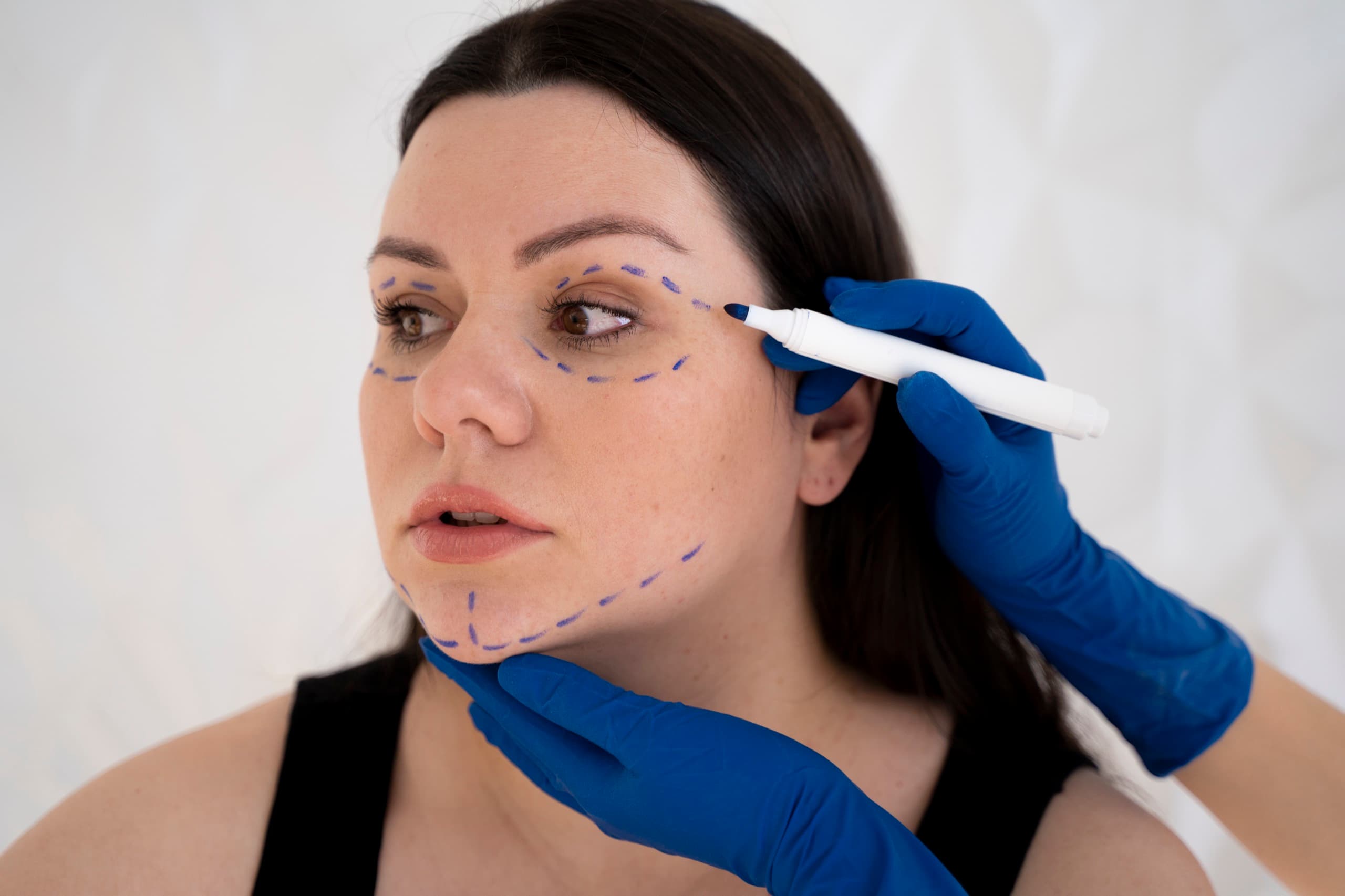
Marking. You are assessed and marked sitting upright, because that is the only position in which gravity is doing what it does in real life. The entry points and the direction each thread will pull are drawn on. This is worth watching in a mirror — it is your last easy chance to say "I want the pull to go that way, not that way".
Anaesthetic. The area is cleaned and local anaesthetic is given at the entry points and along the thread tracks. This is the part most people describe as the least comfortable, and it is over in a couple of minutes. After it, the placement itself should feel like pressure and movement rather than pain.
Placement. Each thread is introduced through a small entry point on a fine needle or blunt cannula and advanced along its planned track. You will hear and feel this more than you feel it hurt — an odd sensation, but not a painful one.
Adjustment. The threads are drawn to lift the tissue along the planned vector and the ends are trimmed. You will be sat up and shown the result before anything is finished, and asymmetry is corrected then rather than at a review.
Afterwards. No dressings in most cases. You can drive yourself home. You will look mildly swollen and possibly a little bruised at the entry points.
The two weeks that follow, and why the rules exist
Aftercare for threads is unusually specific, and the reasons are mechanical rather than cautious. The threads hold by friction against tissue until healing fixes them in place. Anything that drags tissue across them in those first weeks can move them.
- No facial massage, facials or microcurrent for two weeks. This is the rule people break, usually by booking a facial they forgot about.
- No heavy exercise for around two weeks, and nothing that involves being face-down or inverted.
- Sleep on your back, propped up, for the first several nights. It reduces swelling and keeps the treated tissue off the pillow.
- Exaggerated facial movement is worth restraining early on — wide yawns, big laughs, energetic chewing. Soft food for a few days is a reasonable precaution.
- No dental work for two weeks if the treated area includes the jawline or mid-face, since it involves prolonged wide opening.
Swelling and tenderness typically settle within several days. Bruising, when it appears, follows its usual one-to-two-week course.
What can go wrong
Thread lifts are generally well tolerated. They are not risk-free, and any clinic that presents them as risk-free is telling you something about the clinic rather than about the procedure.
Common and self-limiting: swelling, bruising, tenderness, a tight or pulling sensation when you move your face, and small dimples at the entry points. Most of this settles within one to two weeks.
Puckering or dimpling along the thread. Usually visible early, usually settles as swelling resolves and tissue relaxes over the following weeks. If it persists beyond that, it is addressable — sometimes by massage under instruction, sometimes by releasing the thread.
Asymmetry. Some early asymmetry is swelling. Genuine asymmetry that is still there once swelling has gone is correctable, and a review appointment exists partly for this.
Uncommon but real: infection, a thread becoming palpable or visible under thin skin, thread migration, or extrusion of a thread end. These need assessment rather than waiting, and a thread that needs removing can be removed.
Rare: injury to a nerve or salivary duct, which is a function of anatomy and of who is holding the needle.
When to call rather than wait
Ring the clinic, do not wait for your review, if you have:
- spreading redness, heat, or fever — the pattern that suggests infection
- increasing rather than decreasing pain after the first two or three days
- a thread end that has worked its way out through the skin
- new numbness or weakness in part of your face
- pus or discharge at any entry point
None of these are common. All of them are much easier to deal with early.
Where the risk actually sits
Almost every complication on that list is influenced by two things: whether the person placing the threads knows the anatomical plane they are working in, and whether the setting is properly sterile. Technique determines whether threads sit where they should. Sterility determines the infection risk. Neither is visible in a price.
That is the practical reason to have threading done in a clinical setting by someone trained specifically in it, and to ask directly how many of these they place. It is a fair question and it has a real answer.
If you are weighing it up, book a consultation at Indiranagar or Bellandur and ask for the risks in the same detail as the benefits. A consultation that only covers one of the two has not finished.