
Jawline Contouring: The Worldwide Trend, Assessed for Indian Skin
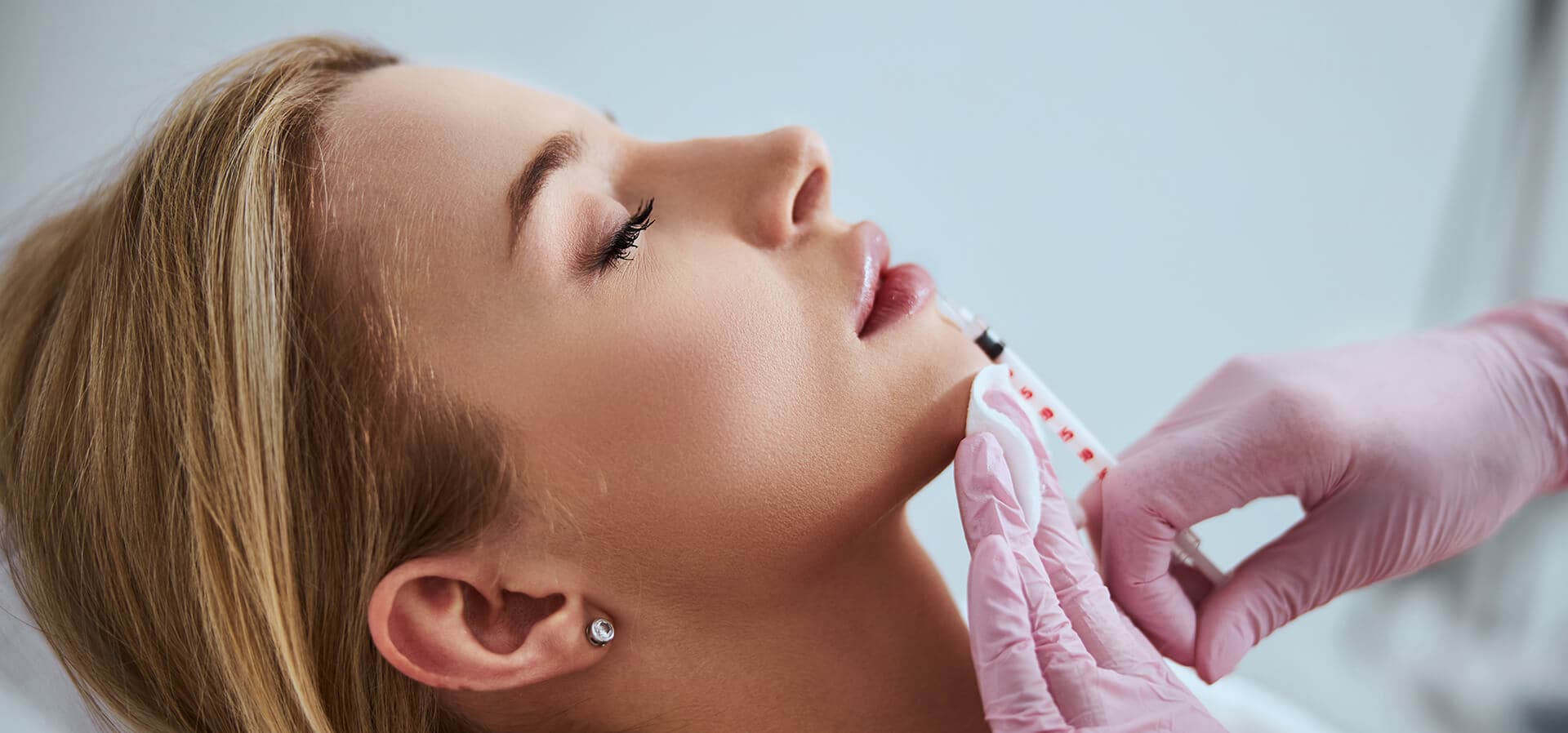
"Jawline contouring" is one phrase doing three jobs. People arriving with it mean one of three quite different things: a jaw that reads too wide, a jaw that has gone soft along its edge, or a jaw that has never had much definition. Filler answers the third — it adds structure where structure is missing.
Which of the three you actually have is the whole decision, and it is made at the assessment rather than from a reference photograph. Treating the wrong one is the usual reason a result looks odd rather than better.
What is the trend actually describing?
A look, not a procedure. The sharp, angular jaw that spread through social media is an aesthetic target, and "contouring" has been attached to every route that might get someone closer to it — injectables, devices, threads, and a good deal of camera angle and lighting.
That vagueness is the problem worth naming. A trend that describes an outcome rather than a method lets three different treatments be sold under one word, and leaves the patient unable to tell which one they are being offered.
Does filler genuinely do this?
For definition, yes, and it is one of the more straightforward things it does. Dermal Fillers are gel-like injectables placed beneath the skin to restore volume and refine contour, and placed along the jawline or chin they can sharpen a contour or add fullness in a controlled, measured way.
Two things make it unusual among aesthetic treatments. The change is visible almost immediately, settling fully over the following day or two — there is no waiting weeks to find out. And unlike a muscle relaxer, filler adds structure rather than reducing movement, so it is a genuinely different kind of intervention from the injectables it gets grouped with.
What the trend oversells is not the mechanism. It is the idea that the jaw in the reference photograph is available to every face.
Why do three different complaints share one name?
Because the complaint is described by how it looks rather than by what is causing it, and the three causes need opposite handling.
A jaw that reads wide is a width question. That is not a volume problem, and adding structure to it is the wrong direction entirely. Botox solves a different problem from filler — it reduces muscle movement where filler adds volume where something is missing — so that conversation belongs on its own page rather than inside this one.
A jaw that has gone soft along its edge is a laxity question — tissue that has descended rather than volume that has gone. Thread Lift exists as its own treatment with its own page and its own candidacy, and it is a different assessment again.
A jaw that has never been defined is the filler lane. Here, adding structure is the point rather than a workaround.
Nobody can sort their own complaint into one of those three from the mirror, and the honest answer to "which do I need" is that it is a clinical judgement.
Does it suit Indian faces?
The treatment does. The template does not, and this is where the trend travels worst.
The printed fact that matters most here is about who decides: product choice, plane and volume are determined by a doctor who knows the facial anatomy at each injection site — and that is explicitly the part of this treatment that most decides whether it goes well. Anatomy differs between faces, and jaw and chin proportions vary considerably. A plan built to reproduce a specific jaw from a specific photograph is a plan built around the wrong reference.
So the useful question to bring is not "can I have that jawline". It is "what would definition look like on my face" — which is a question an assessment can answer and an image search cannot.
Is the jaw even the right target?
Often not, and this is the most useful thing on this page.
Cheeks, temples and the area under the eyes lose fat and bone support with age. When support goes from the upper and mid face, the lower face reads heavier and the jaw looks less defined as a consequence — the jaw edge has not changed so much as what sits above it. Filler replaces that structure directly, which is why a face can look rested rather than simply smoother.
Which means a jaw that reads soft can sometimes be a mid-face question wearing a jawline costume. Treating the jaw alone in that case adds structure in the wrong place, and the result is the odd heaviness people describe when something has been "overdone" — not too much product necessarily, but product in the position that was not the problem.
What does it involve, and how long does it hold?
Short, and less long than people assume. Anaesthetic cream goes on for thirty to forty-five minutes beforehand; the injections themselves take about fifteen to thirty minutes once the consultation is done. Most people recover fully within one to two days.
The duration is the part to price into the decision honestly: roughly six months to two years, depending on the filler used, the area treated and your own metabolism. Your doctor will narrow that for your specific plan. A defined jawline from filler is a recurring commitment, not a one-off purchase — and a trend presented as a transformation is quietly a subscription.
Where this fits around a Bangalore diary
The timing is the practical advantage. Same-day visible structure, settling fully in one to two days, fits a weekend better than most aesthetic treatments manage — which is why it clusters before weddings, shoots and anything with photographs attached.
Plan the settling days rather than the appointment. Book so that the one to two days of settling fall where being slightly swollen does not matter, and at the branch you can actually reach without a fight through traffic — Bellandur or Indiranagar. Judging the final result before the swelling has settled is the single most common way people conclude too early that something has gone wrong.
Before you book anything called contouring
Ask which of the three complaints yours is, and ask why. If the answer arrives as a product name before a diagnosis, that is the wrong order.
Bring a plain description of what bothers you rather than a photograph of someone else's face. You can book an appointment at either branch; the fee is waived against treatment if you go ahead, and the assessment is where width, laxity and definition get separated from each other.