
Tattoo Regret: What Actually Works, and What Only Sounds Like It Does
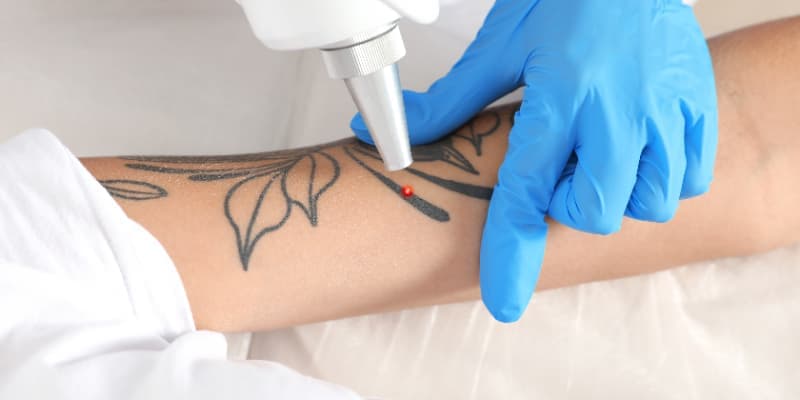
Ink sits in a layer of skin that nothing applied on top can reach, which is why creams, scrubs and home remedies do not remove a tattoo however long they are persisted with. The options that genuinely change what is on your arm are three: fading or clearing it with a medical laser over a course of sessions, covering it with new work, or deciding you can live with it. All three are respectable.
If you have arrived here after a long evening of searching, the first useful thing to say is that the feeling is ordinary. People change. A tattoo is a record of who someone was at a particular moment, and there is no reason a twenty-two-year-old's decision should still fit a decade later. Regret is not a character flaw and it does not need justifying to anybody, including a doctor.
Why does a tattoo stop feeling like yours?
Usually not because of the tattoo. It is because the context around it moved. Patients describe it in a handful of recognisable ways, and the clinic's own tattoo removal page reflects the same three:
- it was got years ago and no longer reflects who they are
- the space is wanted so something better considered can be done properly
- the work has blurred or faded badly, and they would rather it were gone
Notice how different those are in feeling. The first is about identity and often carries some embarrassment. The second is optimistic — it is not really about removal at all. The third is aesthetic and comparatively unemotional. Working out which one you are in matters, because it changes what a good outcome looks like.
Is it worth acting on, or should I wait?
There is no clinical urgency to any of this. A tattoo you dislike is not a health problem, and nobody should be pressured toward a course of appointments by the fact that they had a bad week about it.
What tends to help is separating the feeling from the decision. The feeling can sit for a few months without anything being lost. The decision is easier once you know what is actually achievable on your particular piece — which is information, not commitment, and is what a consultation produces.
Does anything I can buy remove a tattoo?
No, and it is worth understanding why rather than taking that on trust.
Tattoo ink is deposited below the skin's surface, deep enough that it stays put while the outer layers renew themselves continuously for the rest of your life. That is the entire design of a tattoo. A cream, oil or exfoliating product works on the surface layers, so by definition it is operating in the wrong place. The same reasoning applies to abrasive home methods, with the added problem that deliberately injuring skin over ink is how people acquire a scar they like considerably less than the tattoo.
Laser works because it does something different in kind: it breaks the ink into fragments small enough for your body to absorb and carry away on its own. The removal is done by your immune system over the weeks that follow. Nothing sold over a counter starts that process.
What does laser removal actually involve?
A course, not an appointment. Typically six to ten sessions, and where you land in that range depends on the size of the piece, its colours and how deep the ink was placed. Sessions are spaced several weeks apart, because the fragments have to be cleared before the next round is useful — the wait is doing work even though nothing appears to be happening.
A single session runs from a few minutes to about an hour depending on size, with eye protection in place and cooling applied throughout. Downtime is minimal; most people carry on with their day. Larger pieces may be treated in sections across visits.
On discomfort, the usual description is a rubber band snapping against the skin. Cooling runs throughout, and numbing can be discussed for larger or more sensitive areas — worth raising at consultation rather than enduring silently.
The underlying platform is the same Q-Switch laser used for pigmentation here, which delivers pulses short enough to shatter pigment while the surrounding tissue barely heats. That is what makes the approach workable on deeper skin tones.
Will it come off completely?
Sometimes, and often it fades to the point of being unnoticeable — but no one can promise complete clearance on every tattoo, and a clinic that does is not being straight with you. Ink placed deep, or in colours that resist the available wavelengths, can leave a faint shadow at the end of a full course.
Colour is the biggest single predictor. Dark ink clears more readily; greens and blues are the stubborn end and usually take more sessions to shift. You are entitled to hear which parts of your own piece are likely to be difficult before you start, not once you are four sessions in and wondering why one corner has barely moved.
Is a cover-up better than removal?
Frequently, and this is the option people underestimate. A great many patients are not trying to erase anything — they want room for work they actually want.
That changes the arithmetic in your favour, because partial fading is a legitimate goal and takes fewer sessions than full clearance. If a cover-up is the plan, say so at the first appointment: the target is lightening the existing ink enough for a tattooist to work over it cleanly, which is a shorter and less expensive road than clearing the canvas entirely. New work is usually possible once the skin has fully healed.
What could go wrong, honestly?
Redness and swelling in the first days are expected. Blistering can happen and is part of normal healing rather than evidence of a mistake — the rule is do not pop or pick it, because that is what turns an ordinary recovery into a scar.
The treated patch may look paler or darker than the skin around it while it settles. It usually evens out, and keeping the area out of the sun materially improves the odds that it does. Scarring risk with proper technique and aftercare is low but not zero, and it rises if you are prone to keloids — tell your doctor about any keloid history at the consultation, because it genuinely changes the plan rather than being a box-ticking question.
Get in touch with the clinic if the area becomes more sore, hot or inflamed as the days pass instead of quieter, if a blister has broken and you are unsure how to look after it, or if a pigment change is spreading rather than fading. Ring and describe it; do not diagnose yourself from photographs on the internet.
What if I decide to keep it?
That is a real answer and not a failure of nerve. Some tattoos are better left where they are — the removal course is months long, the outcome on a multi-coloured or deeply placed piece may be a shadow rather than blank skin, and if you have mostly stopped noticing it, that is worth weighing against a year of appointments.
The people who tend to be happiest afterwards are the ones with a specific reason: a visible placement that affects work, a name or symbol that has become genuinely painful to see, or a clear plan for what goes there instead.
Where should I start?
With an assessment rather than a decision. Your doctor reviews your medical history, looks at the tattoo's size, colour and depth, and patch tests the laser so your skin's actual response can be seen before any course is agreed. You leave with an honest session estimate and a straight answer about whether full clearance or significant fading is realistic for your piece. The consultation is ₹500, waived off against treatment.
Bring a photograph of the tattoo when it was fresh if you have one — how much it has already blurred tells the doctor something useful. If you are ready for that conversation, book a consultation; if you are not, none of this expires.