
At-Home IPL Devices: The Trend, Assessed for Indian Skin
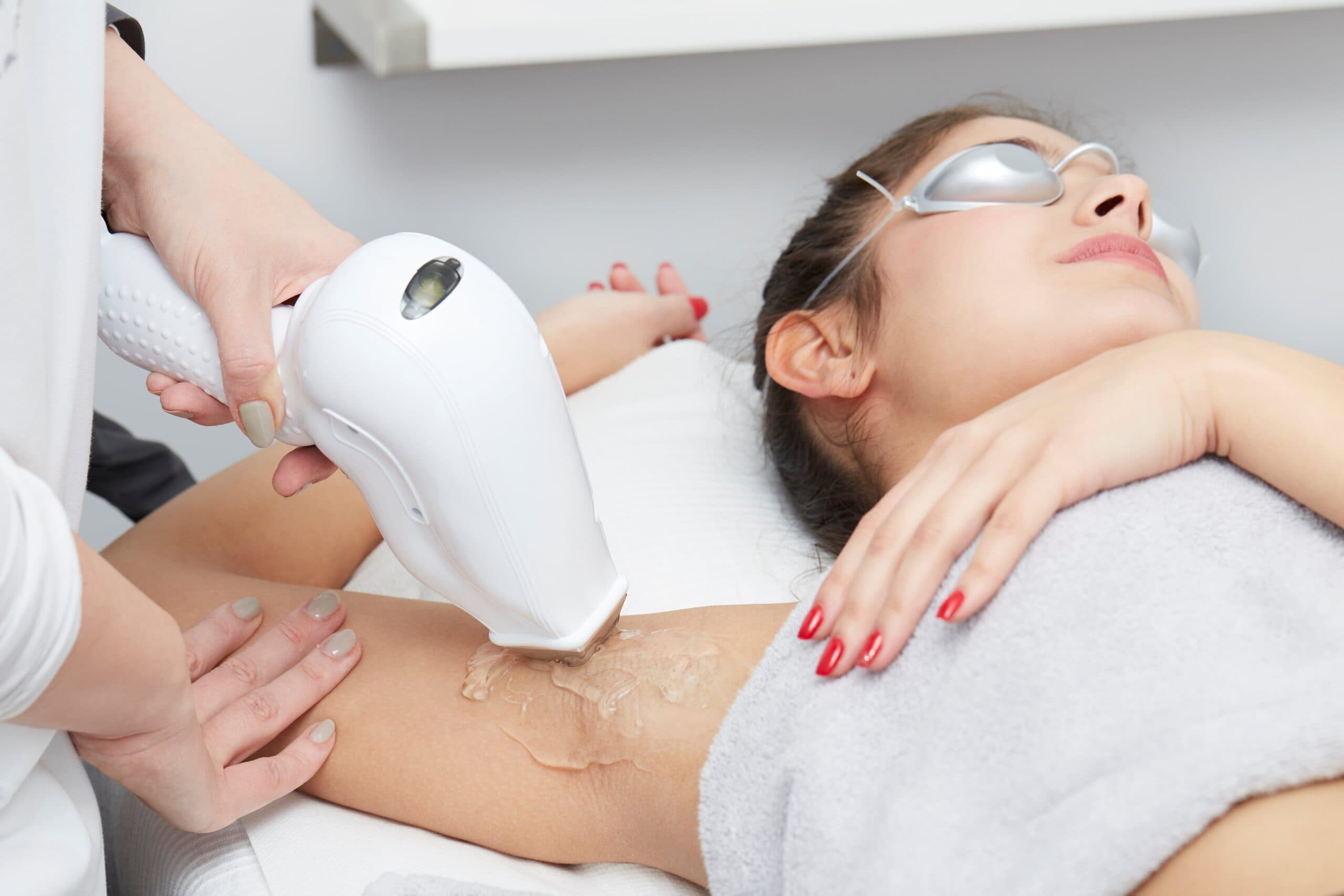
Handheld IPL devices have become one of the most heavily marketed beauty purchases online, and the honest assessment for an Indian reader is narrower than either the advertising or the backlash suggests. The technology is real and the mechanism is the same family as what a clinic uses. What a home device cannot do is the part that decides the outcome: assess your skin tone, your hair colour and thickness, and choose settings from what it finds.
This clinic offers laser hair reduction and does not sell home devices of any kind. Naming a category is not a recommendation to buy one, and what follows is the assessment rather than a pitch for the alternative.
What is actually in the trend?
A handheld unit that flashes broad-spectrum light at the skin, sold on the promise of doing at home what a clinic course does over several appointments.
The first thing worth being precise about is the word IPL. IPL is a broad-spectrum light rather than a laser, and it scatters across more of the skin; a laser targets a single wavelength. That distinction is not marketing small print — it is the difference between energy that goes mostly where you aimed it and energy that spreads. Both work on the same underlying principle: the pigment in a hair absorbs light, which is what allows the follicle to be targeted at all.
The second thing is the claim most of these devices are sold on. Neither IPL nor laser delivers permanent hair removal in the literal sense. Both are long-term reduction, which is why maintenance sessions are planned into a proper course rather than treated as a failure. Any device or package sold to you on permanence is overstating what the technology does, and that is the claim to be sceptical of regardless of what it costs.
Does it suit Indian skin?
The question people are really asking is about skin tone, and it deserves a more careful answer than a yes.
Because the mechanism depends on pigment, skin tone matters: light intended for the pigment in the hair can be absorbed by the surrounding skin instead. That is the historic difficulty with hair lasers on melanin-rich skin, and it is the reason the technology used in this clinic is a diode laser with integrated cooling, chosen specifically because it treats deeper skin more safely than older systems. Correct settings for your skin type are what keep problems uncommon.
Note what is doing the work in that sentence: correct settings. In clinic, a doctor checks skin tone, hair colour and thickness before any setting is chosen, and settings are lowered for thinner facial skin. A handheld device hands that judgement to you, usually in the form of a printed tone chart and an intensity dial. The treatment pages here make no claim about how any particular home device performs on deeper skin tones, and we are not going to invent one. What is documented is the general principle — that outcome and comfort both follow from settings matched to the skin in front of the operator — and on a home device you are the operator.
What can a device not assess about you?
This is the part the reviews never cover, and it is where most disappointment comes from.
Whether your hair has enough pigment to respond. The light finds hair by its pigment. Grey and white hair gives it little to target, and very fine blonde or red hair responds poorly for the same reason. Dark hair responds most reliably, on any skin tone. A device cannot tell you that your particular hair is a poor candidate — it will simply flash, and you will conclude after four months that you were sold a gimmick.
Whether something is driving the growth. Where hair growth has a hormonal cause, treating the hair addresses the symptom and not the cause. With PCOS the follicles keep being stimulated, so regrowth between sessions is more likely and maintenance is part of the plan rather than an afterthought — and people who have the underlying condition managed alongside treatment get the more durable result. A clinic checks for this before starting a facial-hair course. A device on your bathroom shelf cannot.
Which areas need different handling. Facial skin is thinner and more reactive than the body, so settings go lower and sessions are spaced differently from legs or arms. A single dial does not know which part of you it is pointed at.
What would undo your own results at home?
One habit, and it is the most common one in this country: threading, waxing and plucking.
Those methods remove the root that the light needs to target. That is why a clinic course asks you to stop waxing and plucking two weeks before the first session and to use a razor for the duration. A home routine that runs a device on Sunday and a visit to the parlour on Wednesday is working against itself for months without the owner realising. If you do use a device, the shaving rule is not optional advice — it is the condition under which any of this works at all.
Where does Bangalore come into it?
Two ways, one of which is an argument for the appeal of a home device and deserves saying out loud.
The honest draw is the commute. A course is several appointments, and anyone who has crossed this city on a weekday evening understands why a device that lives in your bathroom sounds attractive. That is a real convenience argument and not a foolish one.
The counterweight is sun. Bangalore's daytime UV exposure is a year-round consideration rather than a seasonal one, and light-based hair treatment asks for sun sense around each session. In clinic that advice is given alongside the treatment and the settings are chosen knowing what the skin has been exposed to. At home, nobody is asking you about last weekend.
So is a home device ever reasonable?
For someone with dark hair, no hormonal driver, patience, and a realistic view of reduction rather than removal, it is not an unreasonable purchase — provided the shaving rule is followed and the permanence claims are ignored.
What it is not is a cheaper version of the same thing. The clinic version is not the device plus a nicer room; it is an assessment that decides whether light is the right answer for your hair at all, and settings chosen by someone who has looked at your skin. Where pigment is the concern rather than hair, that same assessment is what distinguishes hair work from treatments such as Q-switch laser or carbon laser, which address entirely different problems.
If you have been weighing a device against a course, the useful first step is finding out which category your hair falls into — because for grey, white or very fine hair, neither option is the answer and an honest assessment saves you the money. Book an appointment at Bellandur or Indiranagar and bring the device you were considering, if you have already bought one. The consultation fee is waived against treatment if you go ahead.