
Laser Hair Removal on Indian Skin Tones: The Myths That Cause Bad Outcomes
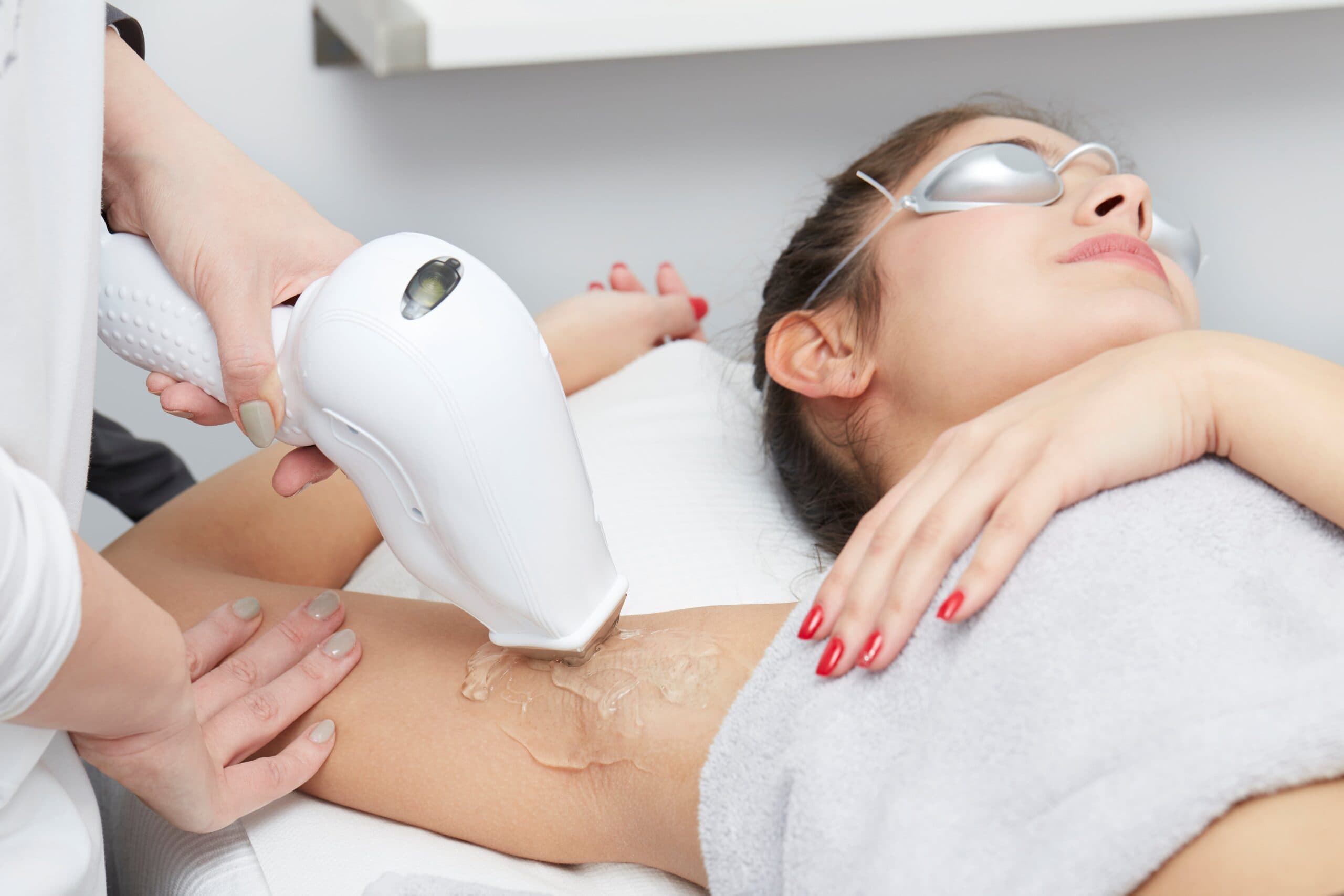
"Laser hair removal isn't safe for Indian skin" is a myth — but it is a myth built on top of a real problem. Hair lasers work by putting light into the pigment in the hair, and skin that carries a lot of its own pigment can absorb that energy too if the wrong system is used at the wrong settings. That is the historic risk with hair lasers, and it is a machine-and-operator problem rather than something inherent to deeper skin.
Which is why the useful question is never "is laser safe for my skin tone" in the abstract. It is: which laser, at what settings, operated by whom. Our Laser Hair Reduction uses FDA-approved diode laser technology (Soprano Ice) with integrated cooling, chosen specifically because it treats deeper skin more safely than older systems. The technology answer matters because it is the part patients cannot assess for themselves — so this post is mostly about what to ask.
Why is skin tone a factor at all?
Because the laser is aiming at pigment, and pigment is exactly what deeper skin has more of.
The mechanism is simple: light is absorbed by the pigment in the hair, which disables the follicle at its root so that hair grows back finer and sparser with each session. When the surrounding skin also holds a lot of pigment, a system that does not distinguish carefully enough — or settings pitched for lighter skin — puts energy where it was not intended. That is the whole of the historic problem, and it is why the choice of system is not a marketing detail.
Newer diode technology with integrated cooling exists precisely to address this, and it is the reason a clinic treating Indian skin should be able to name its machine without hesitating. The US Food and Drug Administration has recognised laser hair reduction as a safe method since 1997 — but that recognition is of the method, not of every device and every setting. Safety depends on it being performed under qualified supervision at settings correct for your skin tone.
What should I ask before booking anywhere?
Four questions, and any clinic should answer all four without defensiveness.
Which laser system do you use, and is it suited to deeper skin tones? A specific answer — a named system — is what you want. "Latest technology" is not an answer.
Who performs the session, and who sets the parameters? Settings correct for your skin tone are the safety mechanism, so this is the question that matters most and the one asked least.
Is cooling used throughout? Integrated cooling is part of how a modern system treats deeper skin more safely, and it is also most of why the session is comfortable.
What should I expect afterwards, and when do I see anything? A clinic that answers this accurately is one that has done it often. The honest answer is below, and it surprises people.
The same line of questioning is worth applying to any laser treatment, not just hair — a Carbon Laser facial or a Q-Switch Laser session are different procedures with different targets, and in each case what makes them appropriate for your skin is the system and the settings rather than the name on the price list.
"Nothing is happening" — the myth that ends courses early
This is the most expensive misunderstanding, and it is purely about timing.
Treated hairs shed over roughly 5 to 30 days after a session. They do not vanish on the table. For the first week or two the hair is still visibly there, and a patient who expected instant clearance concludes the session failed — sometimes cancelling the rest of a course that was working exactly as intended. What you are watching in that window is not regrowth; it is hair being released.
The second half of the same myth is the session count. Six to eight sessions is a full course, and the reason is biological rather than commercial: only hairs in their active growth phase respond to the laser, and at any moment only a share of your follicles are in that phase. Sessions are spaced to catch different follicles at the right point in their cycle. One session cannot catch every follicle, and no machine changes that.
"It's permanent" — and why the honest word is reduction
It is a reduction, not a permanent removal, and any clinic that tells you otherwise is overselling.
After a full course, most people see a marked, long-lasting reduction, with any regrowth typically finer and lighter than before. Some patients then have a top-up every six to twelve months. Hair colour, thickness and the area being treated all move the numbers, which is why the estimate comes after someone has looked at the area rather than from a page.
What that adds up to in practice is the actual benefit: a repeating appointment replaced by occasional maintenance. No stubble phase between sessions, because the follicle is treated rather than the hair cut at the surface. Fewer ingrown hairs, because ingrowns come from hair curling back under the skin after waxing or shaving and reducing hair at the follicle is what breaks that cycle. And skin that is smoother and less irritated than it is on a waxing cycle.
"If it doesn't hurt, it isn't working"
Not true, and worth saying plainly because some people arrive braced for pain and treat comfort as a bad sign.
The diode system uses cooling throughout, and most patients describe warmth or a light flick rather than pain — though anyone who is sensitive may find some areas more intense than others. Say so during the session; there is room to adjust. Sensitivity afterwards typically settles within a day or two, and no time off is needed.
The Bangalore version of this decision
Two things make this treatment fit this city unusually well, and one thing to be careful about.
The fit is scheduling. Sessions are quick, need no recovery time, and settle within a day or two — so a course runs alongside a working week rather than being planned around. Underarms, bikini, legs, back, arms and face are all treatable, and the areas people most want done are the ones a waxing cycle makes most miserable in a humid month.
The care point is sun. Bangalore's sun arrives in small, constant instalments — the walk to the cab, the wait at the signal — rather than in obvious doses, and a clinic treating deeper skin will have aftercare guidance about it. Follow the instructions you are actually given rather than what a forum says.
And because six to eight sessions is a course rather than an appointment, distance decides completion. We see patients at both our Indiranagar and Bellandur clinics; pick whichever sits closer to your ordinary route, because courses that stall usually stall over traffic.
Ask the questions, then decide
If you have been putting this off because you were told laser is not for Indian skin, the honest correction is that it is a question about equipment and expertise, and one you are entitled to ask directly.
Book an appointment at The Aesthetic Edge — Indiranagar or Bellandur — and ask all four questions above. You should leave with the system named, the settings explained, an assessment of your own hair and skin, and a realistic session count.