
Q-Switch Laser: How One Machine Treats Both Pigmentation and Tattoos
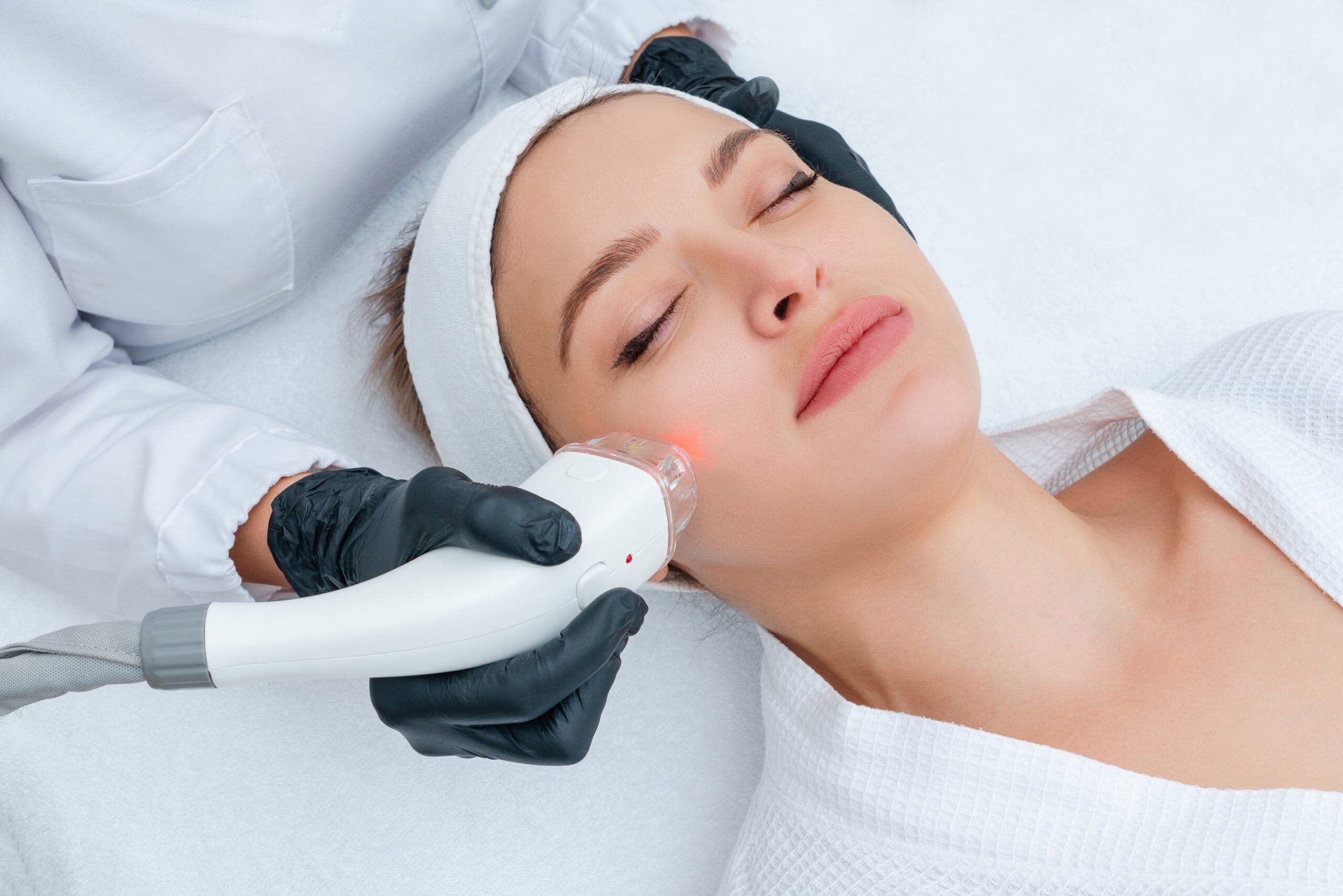
One machine treats freckles and tattoos because, to a laser, they are the same kind of target: unwanted pigment sitting in skin that should be left alone. The Q-Switch laser delivers extremely short, high-energy pulses that shatter that pigment into particles small enough for the body to carry away, while the surrounding tissue barely heats. What differs between a sun spot and a tattoo is not the mechanism — it is the energy settings and how many sessions the ink or pigment takes to clear.
That single idea explains most of what patients find confusing about the Q-Switch Laser. It is not a "pigmentation laser" that happens to also do tattoos, or a tattoo laser repurposed for faces. It is one physical process — selective destruction of pigment by a very brief burst of energy — applied at whatever intensity the target needs.
How can the same laser be safe on a face and strong enough for tattoo ink?
Because the variable that matters is how long the pulse lasts, not only how strong it is. The pulse is short enough — a nanosecond-scale burst — that the pigment absorbs the energy and fractures before meaningful heat can spread into the skin around it. Lengthen that pulse and you would be cooking tissue; keep it this brief and you are shattering a particle while its neighbours stay cool.
This is also the reason the treatment is appropriate for Indian and other deeper skin tones. Melanin-rich skin is exactly what burns most readily with lasers that heat broadly, and it is the short pulse that removes that failure mode — the energy goes into the pigment, not into the surrounding dermis. It is still a medical procedure and should only be performed under medical supervision; the point is that the physics is on the side of darker skin here rather than against it.
Within that one mechanism, the doctor is adjusting energy, spot size and pass count to the target. A flat post-acne mark on a cheek and a decade-old shoulder tattoo need very different settings, and the plan gets revised between visits based on how your skin actually responded to the last one rather than to a protocol written in advance.
What does it treat, apart from tattoos?
Freckles, sun spots, melasma, flat pigmented acne marks, many birthmarks, and general laser toning — plus tattoo ink. The commercially useful distinction is not the name of the mark but how deep the pigment sits.
That depth question is where Q-Switch earns its place in a clinic that also offers resurfacing. Melasma and dermal pigment sit below the level a Chemical Peel can reach; a peel works on the surface, and where the pigment is deeper the peel plateaus no matter how many you have. Q-Switch energy penetrates to that layer, which is why it remains a mainstay for stubborn pigmentation rather than a cosmetic extra. The same logic applies to post-acne marks that have stopped responding to topical depigmenting agents: the agent is working where it can reach, and the pigment is not entirely there.
For tattoos specifically, the mechanism is identical and the practice is its own treatment page — Tattoo Removal covers the ink-specific considerations. The short version: the pulse fragments the ink, the immune system clears the fragments over weeks, and the process repeats across a course.
How many sessions, and why do tattoos take more?
Around six sessions is typical for overall skin rejuvenation and pigmentation. Tattoos usually take more, and how many depends on the ink.
The reason is what the body has to do between appointments. The laser does not remove pigment; it breaks it up. Clearance is then the immune system's job, and that takes time regardless of how well the session went. A thin scatter of sun spots is a small amount of pigment to carry away. A tattoo is a deliberate deposit of dense ink, placed deep enough to be permanent — so it is more material, further down, and it comes out over a longer sequence.
Ink also varies. Some sits deeper than others and colours differ in how they respond, which is why nobody can quote you a session count for a tattoo from a photograph. What a consultation can tell you is the honest expectation: whether to plan for full clearance or for significant fading. Both are legitimate outcomes and it is much better to know which one you are working toward before you start than to discover it at session five.
Is there downtime, and does it hurt?
There is nothing to recover from on the day. Most patients go straight back to work, and the treated skin settles fully over about a week.
On comfort, patients typically describe minimal discomfort — most often compared to a rubber band snapping against the skin. Cooling is used throughout, and the settings can be adjusted if you find it more than that. Say so during the session rather than afterwards; there is room to adapt.
Every session is carried out by a doctor, in a sterile clinical setting, with eye protection and controlled energy settings.
The Bangalore case for treating pigmentation as a plan
Two local realities shape how these courses actually run.
The first is exposure. Bangalore's sun is not remarkable for its heat but it is relentlessly present, and most people here accumulate it in fifteen-minute instalments — the walk to the cab, the wait at the signal, the terrace lunch — rather than in a day at the beach. That pattern is exactly the one that produces sun spots and drives melasma, and it does not stop because you have started a laser course. A pigmentation plan that ignores daily sun exposure is working against itself, and your doctor will say so.
The second is the schedule, and here the treatment is unusually convenient. Six sessions spaced across months sounds like a commitment, but with no downtime the individual appointment fits a weekday: you leave, you go back to your desk, and the skin quietly settles over the following week. We see patients at both our Indiranagar and Bellandur clinics, and for a multi-session course the honest advice is to choose whichever sits closer to your ordinary route. A course that stalls at session three usually stalls for reasons of traffic, not of medicine.
Where to start
If you have pigmentation that topical treatment has stopped improving, or a tattoo you have been thinking about for a while, the first useful step is someone looking at it and telling you what to expect — including a realistic session count and, for a tattoo, whether full clearance is on the table.
Book an appointment at The Aesthetic Edge — Indiranagar or Bellandur — for an assessment, a plan set to your own skin and target, and a straight answer about how many visits it is likely to take.