
Carbon Laser Facial for Oily, Pore-Prone Skin: Does It Actually Help?
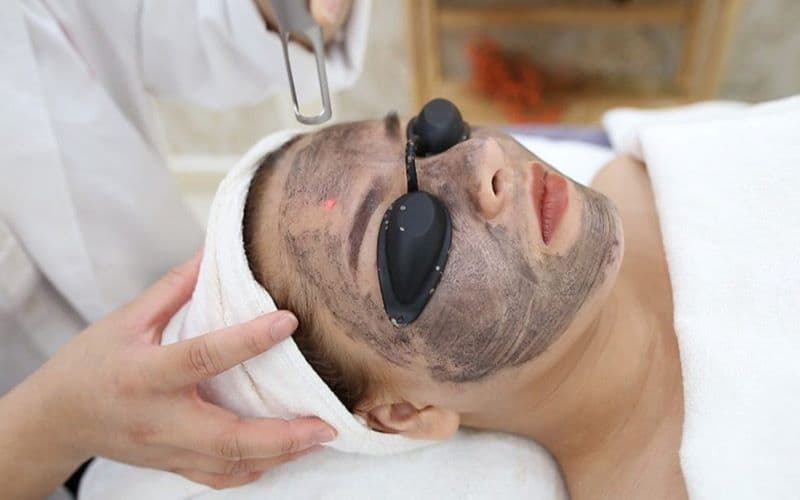
A carbon laser peel works in two acts: a carbon-based lotion is applied and drawn into the pores, and a laser then vaporises it — lifting the trapped oil, dead cells and debris out with it, from inside the pore rather than off the surface. It is a non-invasive way to bring down oiliness, acne and the look of enlarged pores, the session takes about half an hour, and most patients go straight back to work.
For oily, pore-prone skin, that inside-out mechanism is the whole point — and the reason Carbon Laser comes up so often in Bangalore consultations. This post explains what actually happens during the session, what the treatment realistically changes, and how to think about it next to the other options for congested skin.
How does the carbon-and-laser combination actually work?
Think of the carbon lotion as a magnet sent into the pore. Scrubs, masks and most facials work on the surface; the carbon sinks into the pore first, binding to the oil and debris sitting inside it. When the laser passes over, it vaporises the carbon — and everything the carbon has bound to goes with it. The pore is cleared from within, which surface-level cleansing simply cannot do.
The laser is doing a second job at the same time: its energy warms the deeper layer of the skin, prompting collagen regeneration that improves firmness and elasticity alongside the cleansing effect. So one session is both an exfoliation — oil and dead cells lifted photo-thermally rather than by acid or abrasion — and a gentle collagen stimulus underneath.
None of this is as dramatic to sit through as it sounds. The treatment is designed to be comfortable: most patients describe only a slight tingling or warming sensation as the laser passes over the skin. A full session runs about 30 to 45 minutes including preparation and aftercare, and side effects are typically limited to mild redness — if any — that settles within a few hours.
Will it actually reduce oiliness and shrink my pores?
Here is the honest version. Clearing the pore lining and reducing surface oil is what brings breakouts down and makes enlarged pores less obvious — over a series of sessions. Pores are a fixed feature of skin; what makes them look large is the oil and debris stretching and shadowing them. Empty and clean, the same pores photograph smaller and the skin reads matte rather than shiny. That is a real, visible change, and improvements are often noticeable after a single session — but it is an appearance change built by consistency, not a structural one bought in one sitting.
The full effect comes from a series of four to six treatments spaced a few weeks apart, and results last several months with maintenance sessions. The result itself is deliberately understated: a subtly clearer, less shiny complexion rather than anything obviously done — which is exactly why it is a common booking in the run-up to an event, when you want to look freshly rested in photographs rather than freshly treated.
Why is this such a common ask in Bangalore specifically?
Because this city runs a daily experiment on oily skin. The humidity keeps oil production up through most of the year; the traffic and construction dust — the ORR crawl, the Metro work, the perpetual road-cutting — supply a steady film of particulate that settles into that oil; and the swing between sun, sudden rain and air-conditioned offices keeps skin guessing. By evening, oily and combination skin here is carrying a day's worth of city in its pores. Wipe it off and the surface looks clean; the congestion that builds week over week sits deeper than a cleanser reaches.
That is the specific problem an inside-the-pore treatment answers, and it is why patients at both our Indiranagar and Bellandur clinics ask for it by name — often after months of double-cleansing and clay masks that helped the surface and never quite touched the shine or the blackheads.
How does it compare with a chemical peel or a HydraFacial?
All three serve congested, uneven skin, and they are neighbours rather than rivals. A Chemical Peel exfoliates chemically, with its own family of formulations and depths chosen to the concern. Hydra Medi Facials clear and hydrate using a device-based suction-and-serum approach. The carbon laser's distinguishing move is the one described above — the carbon drawn into the pore and vaporised, with the collagen stimulus from the laser's warmth as a bonus.
Which of the three your skin actually needs is a consultation question, not a search-results question: it depends on how oily your skin runs, how your pores and breakouts behave, and what else is going on — pigmentation, sensitivity, texture. At a doctor-led clinic, the answer is sometimes a different treatment than the one you arrived asking for, and being told so plainly is part of what you are paying for.
The practical next step
If your skin is oily, your pores photograph larger than you would like, or the end-of-day shine has outlasted every cleanser you have tried, a half-hour session with no real downtime is not a difficult experiment to run. Book a consultation at The Aesthetic Edge — Indiranagar or Bellandur — and a doctor will look at your skin, tell you whether the carbon laser is the right tool for it, and set out an honest session plan before you commit to anything.