
Oily Skin & Congestion: What Actually Works, and What Only Sounds Like It Does
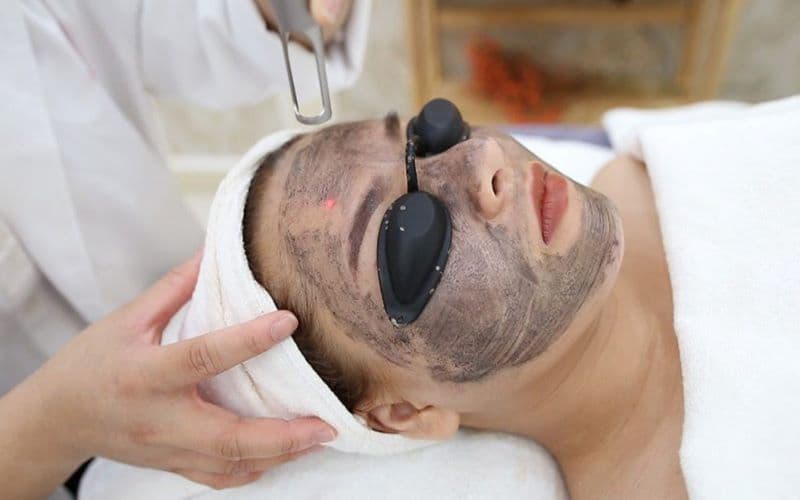
Oil is produced inside the pore, so anything that works only on the surface of your face is treating the wrong depth. Scrubbing harder, stripping foams and skipping moisturiser all feel productive and rarely change how shiny you are by four in the afternoon. What helps is clearing the pore from the inside, on a schedule, and then protecting the result.
What does "congestion" actually mean?
It is a description, not a diagnosis. What people are usually describing is a pore holding trapped oil, dead cells and debris — which is also why the pore looks larger than it is, and why the same few areas break out repeatedly.
Nothing on this page can tell you what is happening on your face. Oiliness has several contributing factors — skin type, hormones, the products already in your routine, the environment you spend your day in — and only an examination sorts them out. In this city a two-wheeler commute under a helmet, in traffic, is a regular contributor patients raise themselves, though it is rarely the whole story.
Why does my skin turn oily within hours?
Here is the expectation worth correcting before you spend anything: no treatment in this article changes your skin type. Oily skin stays oily skin.
What a clinic can change is the congestion sitting in the pores right now, and how quickly it builds back up. That is a real and useful difference — it is the difference between pores that look enlarged and pores that do not, between breaking out regularly and breaking out occasionally — but it is not a conversion of one skin type into another. Anyone selling that is selling something that does not exist.
This is also why results hold better alongside a sensible daily routine rather than instead of one.
What only sounds like it works?
Several things feel like effort and are aimed at the wrong layer:
- Scrubbing. Physical scrubs work on the surface. The material you are trying to shift is inside the pore, and abrasion on already-irritated skin is a poor trade. Scrubs are specifically avoided after in-clinic treatment for this reason.
- Stripping the skin and then skipping moisturiser. Tight skin at 10am and shiny skin at 4pm is a familiar cycle and not a sign the morning routine worked.
- Squeezing and at-home extraction. It empties one pore and inflames the skin around it, and inflamed skin is what leaves marks behind long after the breakout has gone.
- Sun exposure without protection. Daily broad-spectrum sunscreen is not a cosmetic afterthought here — after any in-clinic treatment it is what protects the result and prevents pigmentation showing up afterwards.
- Stacking more actives. Adding a fourth product to a routine that is not working is rarely the answer; it is usually how a routine starts irritating the skin it was meant to help.
What actually clears a congested pore?
A carbon laser peel is built around this specific problem. A carbon-based lotion is spread over the skin and left to sink into the pores, where it binds to the oil and debris trapped inside. A low-energy laser pass binds the carbon to what it has absorbed, and a higher-energy pass vaporises it, lifting the trapped material out with it while a smoke evacuator clears the residue.
The point is the direction of travel. It works from inside the pore outwards rather than taking something off the top.
What that does over a course: clearing the pore lining and reducing surface oil is what brings breakouts down and makes enlarged pores less obvious. The laser energy also warms the deeper layer, which prompts collagen regeneration, so firmness improves alongside the cleansing effect.
The practicalities are what make it usable on a working week:
- A session runs about 30 to 45 minutes, including preparation and aftercare.
- A series of four to six, spaced a few weeks apart, is usual for the full effect — though a difference is often noticeable after a single session.
- Little to no downtime. Mild redness, if there is any, usually settles within a few hours, and most patients go straight back to work.
- Results last several months with maintenance sessions.
- Most patients describe only a slight tingling or warming as the laser passes.
The "noticeable after one session, full effect over four to six" pattern is also why it is a common booking before an event, and why booking one session before an event is a different thing from treating congestion properly.
How is that different from a chemical peel?
They work at different depths by different means. A chemical peel uses a controlled solution to exfoliate the surface and lift away dead cells so fresher skin comes through. A carbon peel draws carbon into the pore and vaporises it, so it works from inside the pore, adds a collagen-stimulating effect, and leaves less flaking afterwards.
Neither is the superior treatment in the abstract. With a peel, the depth and the solution are chosen by a doctor for your skin type — and that choice is the part that decides whether a peel helps or backfires, which is exactly why it is not a self-service decision.
Where does a medical facial fit in?
Differently again. A Hydra Medi Facial cleanses and infuses the skin with actives, exfoliates, then oxygenates so those actives absorb properly. It is described as a maintenance treatment rather than a corrective one, and it suits all skin types including sensitive skin, at roughly one session a month.
That distinction is the useful one for oily, congested skin: something to clear the backlog, and something to keep it from rebuilding. Which order, and whether you need both, is a consultation question.
What if the breakouts are active and inflamed?
Then start there. Oily, congested, breakout-prone skin is exactly what a carbon peel is designed for, but active, inflamed acne may need medical treatment first. Your doctor assesses that at the consultation rather than working around it — treating inflamed skin with the wrong thing at the wrong time is how people end up with marks that outlast the acne.
What should I expect afterwards, and when should I call?
Mild redness or warmth is the usual immediate effect and is typically gone within a few hours. Some patients find the skin a little dry, or slightly flaky, for a day or two as surface debris clears — moisturise, and leave scrubs alone while that settles. Skin is also more reactive to UV straight after a session, so sunscreen daily.
If redness is still there the next day, tell the clinic rather than treating it yourself. That is the one to act on rather than wait out.
Some situations mean postponing rather than proceeding: an active skin infection, recent sunburn, pregnancy, and certain oral acne medications. Your doctor screens for these before the first session, which is another reason to disclose everything you are taking, including anything prescribed for acne.
The sensible first step
If your skin turns oily within hours, your pores look enlarged because of it, and the routine you have been adjusting for two years has not shifted it, the useful next move is to have someone look at it rather than to buy a seventh product.
A consultation is ₹500, waived off against treatment. It establishes what is actually going on, whether anything rules a laser peel out today, and which of these sits first in your plan.
Book an appointment at Indiranagar or Bellandur, and bring your current routine with you — the products already on your shelf change the recommendation more often than people expect.