
Traffic Pollution and Pigmentation on Indian Skin
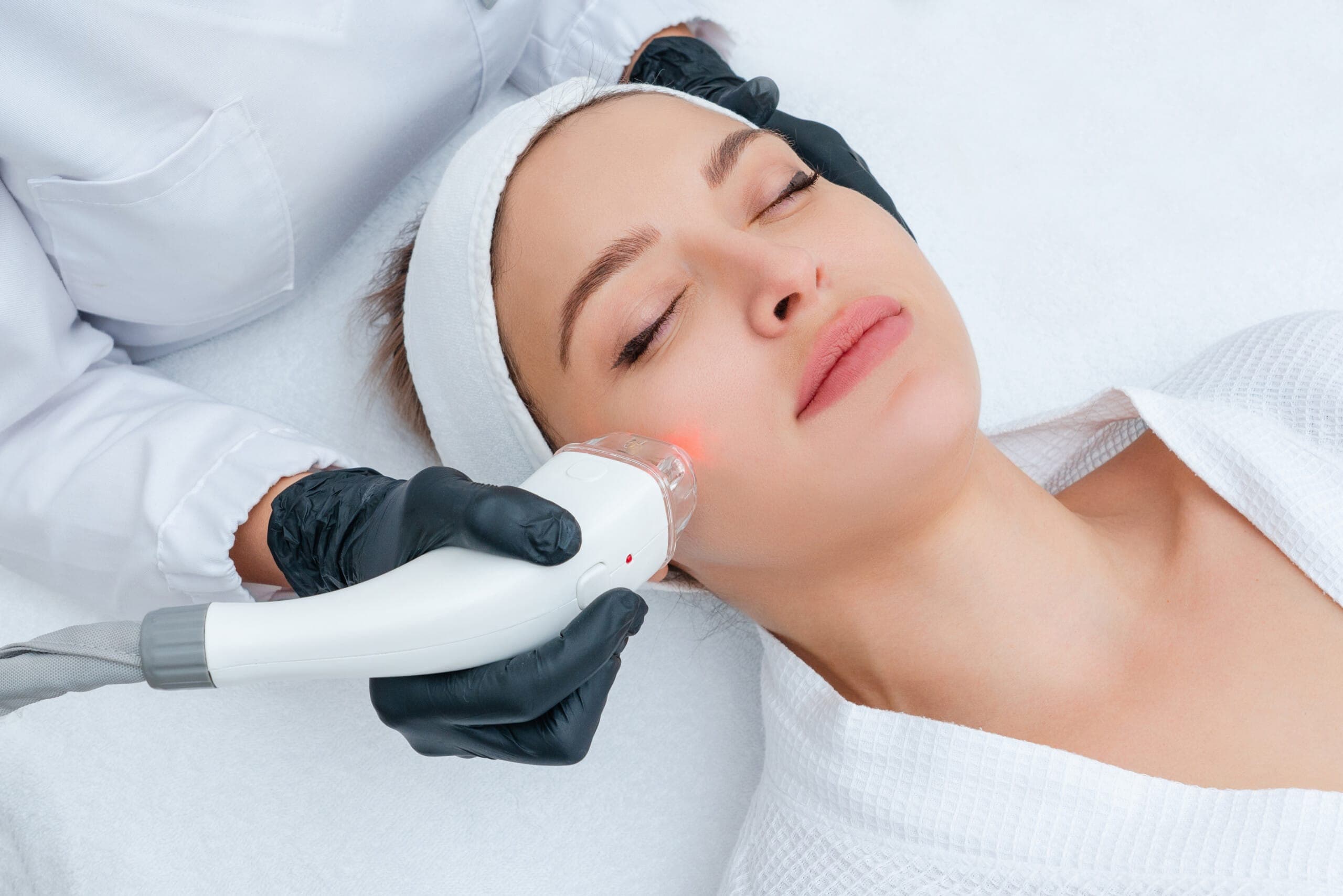
Dark patches that show up after years of commuting are rarely one thing. Particulate exposure and sun exposure arrive together on a Bangalore road, and the marks they leave — sun spots, melasma, post-acne pigment — look similar to the person in the mirror and behave very differently under treatment. Which one you actually have is what decides whether anything works.
Does traffic pollution cause the patches on your face?
Nobody can look at a cheek and tell you the air on Old Airport Road put that patch there. Attribution like that is not something a photograph or a page can do, and a clinic that offers it is guessing.
What can be said is narrower and more useful. Exposure on a commute is not one exposure. You are in traffic, which means you are also in daylight, often at the two times of day when the sun is lowest and hits a face side-on through a windscreen or a helmet visor. Sun exposure is the one variable the treatment core is unambiguous about: it is named as the main cause of pigmentation returning or worsening after treatment. That is a documented clinical fact about the skin we treat, not a theory about air quality.
So the honest version is this. Something about the way a large number of people in this city spend two or three hours a day is leaving marks on their faces. The part of it we can measure, plan around and treat is the pigment itself.
What kind of pigmentation is it?
This is the first thing a doctor establishes, and it is not a formality. The Q-Switch laser protocol begins with a pigment assessment precisely because the cause decides the settings and the number of sessions. Broadly, three things turn up:
- Sun damage — freckles and sun spots, usually on the areas the light actually reaches: cheekbones, nose, forehead, the side of the face that faces the window on a daily drive.
- Melasma — larger, softer-edged patches, often symmetrical across the cheeks. This one matters most to get right, because melasma is a chronic, relapsing condition rather than a stain to be removed once.
- Post-inflammatory marks — flat pigment left behind by acne that healed years ago and never quite faded.
They are treated with the same machine and not the same plan. Someone who books a course expecting melasma to behave like a sun spot will be disappointed at week six, and the disappointment is avoidable by having the conversation at the start.
How does a Q-Switch laser remove pigment?
The pulse is extremely short and high-energy. It shatters pigment into particles small enough for the body to clear, while the tissue around it barely heats. That combination — enough energy to break pigment, not enough sustained heat to injure surrounding skin — is the whole reason the device is usable on Indian and other deeper skin tones, which burn readily with lasers that work by heating.
It also reaches below the level a peel can. Melasma and dermal pigment sit deeper than a topical or a surface exfoliation can get to, which is why Q-Switch remains a mainstay for the stubborn cases rather than the easy ones.
The same mechanism is what breaks up tattoo ink, which is why tattoo removal sits on the same device. It is worth knowing this because it explains the timeline: nothing is removed during the session. The laser fragments pigment, and your immune system carries the fragments away over the following weeks. Lightening continues between visits, which is also why sessions are spaced rather than stacked.
Is it safe on deeper Indian skin tones?
Yes, and for the reason above — the very short pulse duration targets pigment while sparing the tissue around it. That said, it belongs under medical supervision. Sessions here are performed by a doctor, with eye protection and controlled energy settings, and the plan is adjusted between visits based on how your skin actually responded rather than on what was planned in advance.
Q-Switch is not the only laser at the clinic and is not automatically the right one for you. A carbon laser session is a different treatment with different indications. Which of them suits your skin is a consultation question, not a browsing one.
How many sessions does pigmentation take?
Around six is typical for overall skin rejuvenation and pigmentation. Tattoos usually take more, and how many depends on the ink. Your doctor gives you a number after seeing the area, not before.
Three days before a session, exfoliants, bleaching creams and retinoids stop, and direct sun is avoided for the two weeks leading in, so the skin is at a safe baseline when the energy goes in.
What happens to your skin afterwards?
Treated pigment often looks darker before it lifts. This is expected, not a sign the treatment has gone wrong, and it catches people out if nobody warns them. Mild redness is common alongside it. Both settle over roughly a week.
There is no downtime in the sense of needing time off — most people go straight back to work the same day — but "no downtime" and "fully settled" are different claims, and only the first one is true on day one.
Will it come back if I keep commuting?
It can, and sun exposure after a session is the single largest reason it does. Daily SPF 50 and avoiding direct sun for a week after each session are not optional extras attached to the plan; they are the part of the plan that decides whether the earlier sessions hold.
For melasma specifically, be realistic. Laser toning manages it well, and no one can promise it is gone for good. Maintenance sessions and topical treatment are usually how the result is held, and a patient who understands that from the start does better than one who finds out at month four.
When should treatment wait?
The core rules some situations out for now rather than forever: an active bacterial, fungal or viral skin infection including herpes simplex, psoriasis in the area being treated, skin cancer, and pregnancy or breastfeeding. Tell your doctor about any of these at the assessment — an active infection in the treatment area is a reason to postpone, not something to work around.
After a session, redness and temporary darkening are on the expected list. If something does not follow that pattern — skin that is still inflamed well beyond the week it should have settled in, or a reaction that is worsening rather than fading — contact the clinic and have it looked at rather than waiting for the next scheduled visit.
What is the sensible first step?
Have the pigment identified before committing to anything. A consultation is ₹500, waived off against treatment, and its main output is not a quote — it is an answer to the question this whole post turns on, which is what kind of pigmentation you have and therefore what should be done about it.
If you have spent years on a commute and the marks have stopped responding to creams, that is a reasonable point to have it looked at properly. Book an appointment at Indiranagar or Bellandur and bring the products you are already using — knowing what has already been tried changes the plan.