
Laser Tattoo Removal: The Worldwide Trend, Assessed for Indian Skin
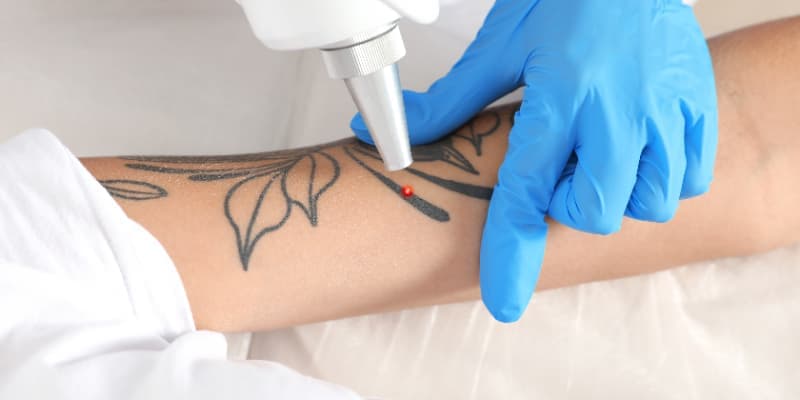
The worldwide surge in laser tattoo removal rests on something genuine: short, high-energy pulses shatter ink into fragments the immune system carries away over weeks. What the trend coverage tends to leave out is that the outcome is decided by variables you do not control — colour, depth and how your own skin behaves — and that on deeper skin tones the pigment response deserves as much attention as the ink.
Search interest in removal has climbed steadily across markets, and the clips that travel are the ones showing a dramatic before-and-after in a caption of a dozen words. This post is an assessment rather than a summary. It sets out what the mechanism actually does, which parts of the trend the evidence supports, and which parts of it need rewriting before they make sense for skin in India.
Why is tattoo removal suddenly everywhere?
Two things collided. A generation that got tattooed casually is now a decade on from those decisions, and short-form video rewards a visible transformation. Removal is unusually well suited to that format, because the change is photographable and the story fits in one sentence.
The trend is therefore real in the sense that demand is real. It is misleading in the sense that a fifteen-second clip cannot show what sits between the two frames: months of waiting, a course of appointments, and a healing period after each one. The tattoo removal page here is deliberately blunt about that framing — it is a gradual process rather than a single procedure.
What is actually happening in the skin when a laser hits ink?
The laser does not lift ink out. It fragments it. Pulses break the deposited pigment into particles small enough for your body to absorb and clear on its own, and it is your immune system, not the machine, that does the removal over the following weeks.
That single fact explains most of the schedule. Sessions here are spaced several weeks apart precisely so the body can clear the fragments, and booking them closer together does not accelerate clearance — it raises the chance of skin damage while the same biological process takes the same amount of time. Anyone promising a compressed timeline is describing a different mechanism from the one that exists.
The Q-Switch laser page describes the same physics from the pigmentation side: pulses short enough to shatter pigment while the surrounding tissue barely heats. That selectivity is the whole trick, and it is also the reason this class of laser is used on deeper skin tones that burn easily with other devices.
Does the evidence support the trend, or the marketing around it?
The mechanism, yes. The implied outcome, less often.
Where honest clinical practice and viral content diverge is on completeness. Tattoos frequently fade to the point of being unnoticeable. Some do not. Ink that sits deep, or that resists the wavelengths available, can leave a faint shadow after a full course, and no one can promise complete clearance for every tattoo. That is stated upfront at consultation here rather than discovered at session eight, and a reader assessing the trend should treat any content that skips it as advertising.
The second divergence is on count. A realistic estimate is typically six to ten sessions, moving with size, colour and how deep the ink was placed. A tattoo shown clearing in one clip is either small, black, shallow, or edited.
Which ink colours actually shift, and which do not?
Black and dark inks respond fastest, which is convenient, because they are also the most common. Green and blue are the stubborn ones and generally need more sessions.
This matters for anyone reading global content, because the tattoos that photograph well for a trend piece are overwhelmingly black linework. A multi-coloured piece is a different proposition, and a doctor should tell you which parts of your own tattoo are likely to resist before you begin rather than after you have paid for four sessions.
Does laser tattoo removal suit Indian skin tones?
It is performed on deeper skin tones routinely, and the reason is the selectivity described above — energy absorbed by pigment rather than dumped into surrounding tissue. The Q-Switch platform used here is documented as suitable for Indian and other deeper skin tones.
The honest caveat is pigment, not safety. Treated skin can look paler or darker than the surrounding area while it settles. It usually evens out, and sun protection substantially improves the odds that it does. On skin that already pigments readily in response to inflammation, that window deserves respect rather than a shrug — which is an argument for correct settings, an unhurried schedule and real aftercare, not an argument against the treatment.
A keloid history changes the assessment again. Scarring risk with modern removal is low but not zero, and it is higher if you are prone to keloids or if aftercare is skipped. Say so at consultation; it is one of the specific things being asked about.
Does Bangalore's climate change anything?
The aftercare, yes. The treated area needs to be kept clean, dry and out of the sun while it heals over the following weeks, and there is no low-UV month here to plan around. For a forearm or ankle tattoo on a daily two-wheeler commute, covering the area is a practical problem worth solving before the first session rather than improvised afterwards.
This is not a reason to postpone. It is a reason to be specific: if the piece sits somewhere you cannot realistically keep covered, say so during planning, so the schedule and the aftercare instructions account for it.
What about the devices and brand names people mention online?
Global content leans heavily on device names, and a brand mentioned in a video tells you nothing about what any particular clinic operates. Removal here is performed under doctor supervision using the clinic's Q-Switch platform; we do not claim to stock every device the internet discusses, and you are entitled to ask what is being used on you before you agree to a course.
It is also worth separating lasers that share a word and nothing else. A carbon laser peel treats oiliness, congestion and enlarged pores by vaporising a carbon lotion drawn into the pore. It is not a tattoo treatment and will not touch ink. "Laser" is a category, not a procedure.
What should I expect after a session, and what should I flag?
Redness and swelling in the first days are ordinary, and blistering in particular is part of normal healing rather than a sign something went wrong. Do not pop or pick — that is what turns a routine recovery into a scar. Downtime is otherwise minimal, and most people resume normal activities immediately.
Contact the clinic if the area becomes increasingly sore or inflamed instead of settling, if a blister has broken and you are unsure how to care for it, or if the pigment change is spreading rather than fading as the weeks pass. Describe what you are seeing and let the team decide whether you should be seen, rather than working it out from search results.
What would a consultation here actually settle?
Three things the trend cannot: whether your ink is the responsive kind, how many sessions your specific tattoo is likely to need, and whether full clearance or significant fading is the realistic goal. Partial fading is a legitimate outcome in its own right and takes fewer sessions, which matters if a cover-up is the plan.
Your doctor reviews your medical history, examines the tattoo's size, colour and depth, and patch tests the laser so the response can be seen before anything is committed to. A session itself runs from a few minutes to about an hour depending on size. The consultation is ₹500, waived off against treatment.
If you have been reading about removal and want the version that applies to your skin and your ink rather than to a stranger's, book a consultation and bring the tattoo — the assessment is where the honest estimate comes from.